
EU Considers Adding New Centralised Charge to Schengen Visa Fees in Major Code Overhaul
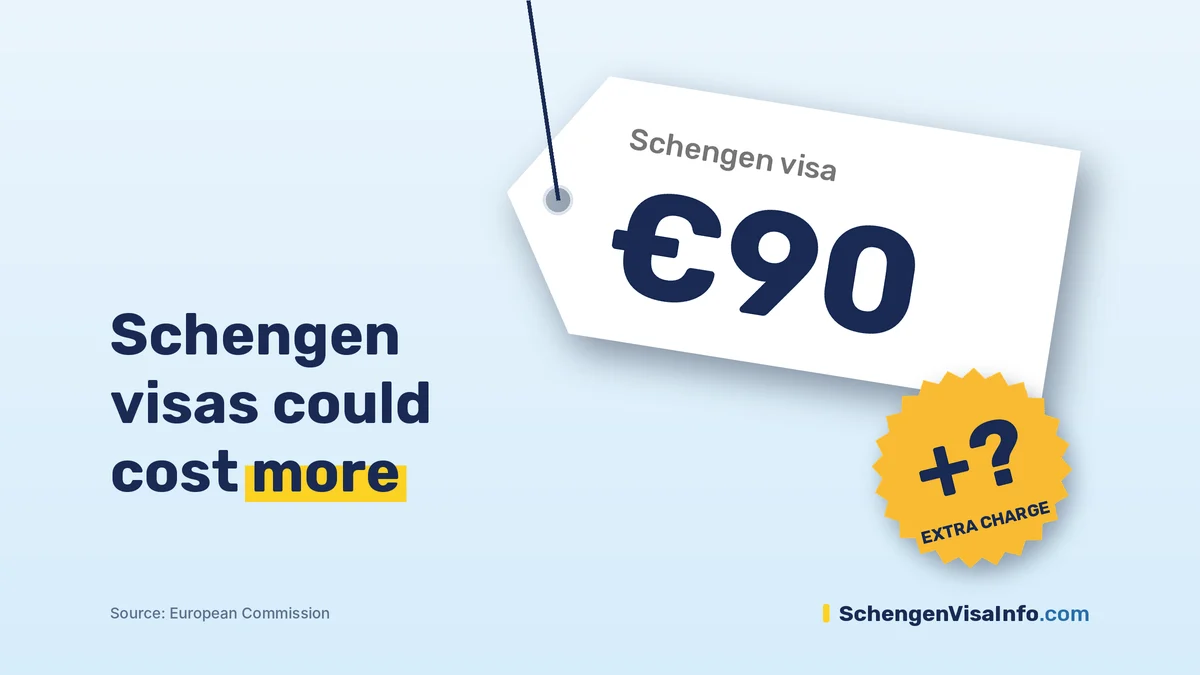
The European Commission is weighing the introduction of a novel, harmonised surcharge levied at the European Union level, which would sit on top of the standard €90 Schengen visa fee. The measure forms a core component of a broader, upcoming legislative overhaul of the Visa Code—the foundational legal framework regulating short-stay travel across the 29-nation Schengen area.
According to official documents published on September 8, 2026, the Commission initiated a call for evidence to explore the feasibility of establishing an extra financial contribution collected centrally. Unlike current visa revenue, which flows directly into the national budgets of the member state handling the application, the proceeds from this proposed EU-level charge would be earmarked to finance and develop the Union’s common visa policy.
While the Commission has not yet proposed a specific monetary figure for the charge, the formal legislative proposal is anticipated in the first quarter of 2027. Any eventual implementation of such a fee would require rigorous negotiation, amendment, and final approval from both the European Parliament and the Council of the European Union, representing member state governments.
What the Commission Is Proposing to Examine
The concept of a centralized financial levy first surfaced publicly in the Commission’s overarching EU visa policy strategy published at the beginning of 2026. At the time, Brussels indicated it would investigate the viability of adjusting and harmonizing visa-related costs across the bloc to better resource shared policy initiatives.
The subsequent call for evidence regarding the modernization of the Visa Code formalized this exploration, noting that the Commission intends to evaluate the introduction of a harmonized additional charge on top of existing baseline fees. Crucially, the foundational planning documents remain silent on several critical operational questions. It remains entirely unclear how the charge would be collected, whether standard exemptions for children or other protected groups would apply, or whether the fee would be levied universally upon application submission or restricted strictly to visas that are ultimately approved.
When contacted by SchengenVisaInfo for clarification, representatives for the European Commission confirmed that no definitive financial amount has been drafted or proposed at this stage. Feedback from stakeholders and the public regarding the call for evidence remained open through October 6, 2026, with the Commission planning to release a comprehensive summary of the consultation responses.
How Much a Schengen Visa Costs Today
The current baseline for Schengen visa applications is legally mandated by Article 16 of the EU Visa Code. Under current regulations, adult applicants pay a standard processing fee of €90, while children aged six to 11 are charged a reduced rate of €45. Minors under the age of six are entirely exempt from the fee. Additionally, nationals originating from countries that maintain formal visa facilitation agreements with the European Union benefit from discounted rates, typically pegged at €35.
Over recent years, the cost of securing a short-stay visa has risen significantly to reflect administrative costs and inflation. Until February 2020, the adult fee stood at €60. This was subsequently increased to €80 in February 2020, before climbing to the current €90 rate following a Commission update that took effect in June 2024.
Beyond the statutory government fee, the vast majority of applicants incur substantial additional costs. When member state consulates outsource application processing to external commercial providers such as VFS Global, TLScontact, or BLS International, these companies are authorized under Article 17 of the Visa Code to charge a service fee of up to half the visa cost, amounting to €45. In regions where a member state lacks a local diplomatic presence, this service cap can escalate to €80, or even €120 in exceptional circumstances. Optional extras, including premium lounge access, courier delivery, and SMS notifications, are billed separately by providers.
The introduction of any new EU-level charge would operate independently of the standard triennial reviews mandated by the Visa Code, which automatically adjust basic fees in response to inflation and shifts in civil service salaries across member states.
What Refused Applicants Already Lose
Because the Schengen visa fee functions primarily as a processing charge rather than a guaranteed entry service, the money is strictly non-refundable regardless of whether an application is approved or rejected. Official European Commission statistics compiled by SchengenVisaInfo indicate that Schengen consulates processed roughly 12.2 million visa applications in 2025. Out of this total, nearly 1.77 million applications were refused, resulting in an overall rejection rate of approximately 14.65%.
Based on these figures, rejected applicants collectively forfeited an estimated €157.1 million in visa fees during 2025 alone, marking an increase from the €145.1 million lost to refusals in the previous year. This calculation is derived strictly by multiplying the number of rejections by the applicable statutory fee, meaning it excludes external service provider fees, mandatory travel expenses to application centres, and the cost of acquiring supporting documents.
The addition of an EU-level charge would further inflate these sunk costs for unsuccessful applicants unless targeted exemptions or refund mechanisms are explicitly integrated into the final legislation—provisions that have not yet been addressed in preliminary Commission drafts. By way of illustrative scale, a hypothetical €10 surcharge applied across the 12.2 million applications lodged in 2025 would have generated approximately €122 million before accounting for standard demographic exemptions.
What Else the Visa Code Revision Could Change
The debate over fees is just one element of a far more comprehensive regulatory package. The comprehensive call for evidence outlines several substantial adjustments intended to modernize how the EU manages short-stay borders and external relations.
One major area of focus involves establishing a structured, common approach for trusted business travellers. Currently, no unified EU-wide mechanism exists to identify reliable commercial travellers or their sponsoring enterprises. The Commission is therefore considering the creation of verified company lists within individual countries, which would streamline and accelerate the visa application process for qualifying employees.
On the geopolitical front, the proposed reforms aim to strengthen enforcement mechanisms against third countries that fail to cooperate with the readmission of their own nationals. While Article 25a of the existing framework permits visa restrictions, the Commission has argued that current options are overly cumbersome and slow. The revision seeks to introduce more flexible, rapid-response restrictive measures.
Furthermore, the updated framework aims to address security crises and hostile acts by establishing a dedicated, swift, and proportionate mechanism for targeted visa restrictions, complete with necessary safeguards for journalists and human rights defenders. In June 2026, Commission spokesperson Markus Lammert explicitly confirmed that targeted restrictive visa measures directed against Russian nationals will form an integral component of the ongoing Visa Code revision.
Finally, the legislative package will align the Visa Code with the bloc’s broader digital transition, ensuring the rules smoothly integrate with the upcoming EU online visa application platform, which is projected to launch around 2030.
What Happens Next
The legislative timeline for the overhaul has experienced minor adjustments. Although initial strategy documents released at the start of the year suggested a formal proposal would emerge throughout 2026, the updated indicative schedule within the call for evidence points toward the first quarter of 2027.
Once the European Commission formally tables its legislative text, the proposal must navigate the standard EU ordinary legislative procedure. Both the European Parliament and the Council of the European Union will be required to negotiate and agree upon the final wording. Historical precedent suggests that reforming the Visa Code is a protracted process; the previous major revision that raised the adult fee to €80 was formally proposed in March 2018 and did not enter into force until February 2020.
Until new legislation successfully passes through the legislative pipeline and is officially adopted, current regulations remain fully in force. The standard application fee stands firmly at €90 for adults and €45 for eligible children, alongside any applicable administrative service charges levied by external visa application centres.
| Source | : | Open Passport |
| Author | : | Jia Lissa |
| Editor | : | Open Passport Editorial Team |
