
EU’s Official Schengen Travel Checker Flawed as Travellers Report Erroneous ‘Not OK’ Status and Zero Days Remaining
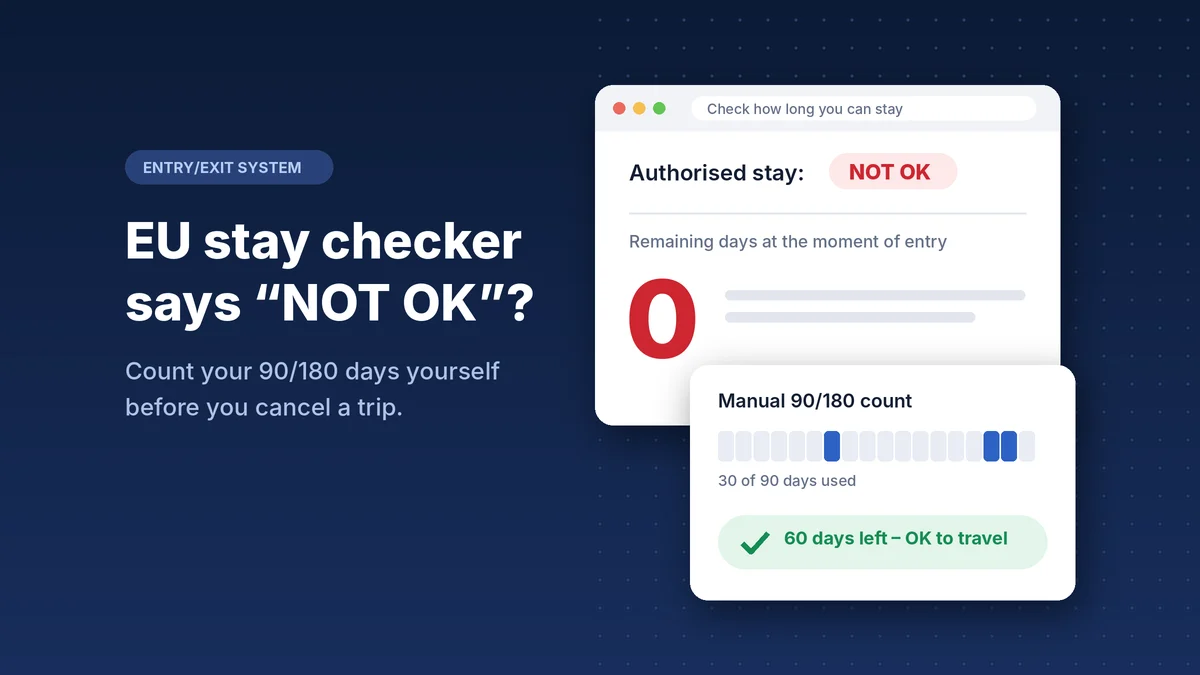
If the European Union’s official online checker has just informed you that your upcoming travel plans are “NOT OK” with zero days remaining under the bloc’s short-stay regulations, travel experts advise holding off on cancelling your trip. Following a wave of inquiries from concerned travellers, journalists and consumer advocates testing the system have discovered that the verification tool is currently returning erroneous calculations, mistakenly stripping legitimate visitors of their remaining travel allowances.
Over the past several weeks, numerous readers have reached out to visa information services and consumer protection agencies asking whether they are still permitted to enter the Schengen Area. Many of these travellers encountered an error on the EU’s official “Check how long you can stay” tool, which repeatedly returned a flat denial despite the individuals having ample days remaining under the standard 90/180-day rule. Independent testing of the platform confirmed these reports, revealing that the digital assistant is currently failing to calculate historical movements accurately for a significant portion of international visitors.
When encountering the glitch, the result screen offers minimal explanation, displaying only a stark notification stating that the authorised stay is not approved and that the remaining days at the moment of entry stand at zero. Crucially, the system provides no underlying reason, no itemized list of the historical entries and exits it has tallied, and no guidance on how to rectify the apparent discrepancy.
The online checker is an integral component of the Entry/Exit System (EES), a massive digital infrastructure that became fully operational across the entire Schengen Area on April 10, 2026. Designed to modernise border management and phase out traditional physical passport stamping for non-EU short-stay visitors, the EES aims to streamline border crossings while rigorously enforcing the limits of the 90/180-day rule. According to European Union guidelines, the accompanying public web tool is intended to allow travellers to verify whether their next entry will be legally permitted and to view their exact balance of remaining days by entering their passport number, issuing country, intended destination, and planned dates of arrival and departure.
However, because the digital platform relies entirely on the underlying automated records compiled by the Entry/Exit System, any gaps, omissions, or configuration delays within the database directly compromise the integrity of the output.
While formal explanations from the European Commission regarding the widespread calculation errors are still pending, analysis of the public record highlights several systemic gaps that likely explain why the tool is miscalculating traveller allowances.
Foremost among these potential flaws is the system’s handling of travel conducted prior to the April rollout. According to announcements from Sweden’s Migration Agency, individuals who were already registered in the EES before April 10, 2026, or whose travel histories predate the system’s launch, may encounter severe tracking issues within the portal. Authorities in several member states have advised such travellers to bypass the digital tool entirely and manually calculate their permissible stay using traditional passport stamps. Prominent consumer groups have similarly warned that the online infrastructure frequently fails to reflect Schengen visits completed prior to the implementation date.

Compounding these historical tracking issues are exemptions granted during the initial rollout phases. Following the April launch, regulatory provisions permitted EU member states to partially suspend standard EES registration procedures for initial periods, with possible extensions granted during peak travel seasons to prevent catastrophic bottlenecks and long queues at major international airports and land borders. During these windows, various border authorities temporarily reverted to manual passport stamping. If an individual’s entry or exit during this transition period was physically stamped rather than digitally recorded, the overarching system may possess only half of a complete travel cycle. In the logic of automated border control, an unrecorded exit creates the false impression that the traveller never actually left the Schengen Area, instantly depleting their 90-day allowance.
Furthermore, the checker operates strictly on the provisional data typed into the form by the user. The platform’s own legal disclaimers note that the generated result is a mathematical projection based entirely on the specific dates provided by the non-EU national, meaning minor typos, missing fields, or discrepancies between planned and actual itineraries can trigger erroneous denials.
Faced with potentially inaccurate digital verdicts, consumer advocates and travel experts strongly urge the public not to treat a “NOT OK” result as an absolute reason to abandon travel plans, just as an “OK” result should never be viewed as an ironclad guarantee of entry. Under European law, the ultimate discretionary authority to permit or deny entry at an international border rests exclusively with the human border guard conducting the inspection, rather than an automated website.
Instead of relying solely on the flawed digital portal, travellers are advised to reconstruct their movements over the preceding 180 days manually. By compiling boarding passes, hotel booking confirmations, transport tickets, and physical passport stamps, visitors can verify their compliance using independent calculation tools that require manual entry of every historical arrival and departure date. Because these external calculators operate independently of the official EES database, they remain unaffected by unrecorded border crossings or system glitches. Furthermore, travellers are strongly encouraged to carry this documentary evidence in their hand luggage when journeying to the Schengen Area.
Consider a practical scenario involving a British traveller who spent ten days visiting Spain, arriving on the first of July and departing on the tenth. If that same individual subsequently plans a twenty-day trip to Italy later in the autumn, calculating the rolling 180-day window reveals a total consumption of thirty days, leaving a comfortable sixty days remaining well within legal limits. If the official EU online checker returns a rejection and zero remaining days for that exact itinerary, the overwhelming likelihood is a technical gap in the digital record—such as an unregistered departure from Spain—rather than an actual overstay violation.
For those who discover that their official EES record contains a significant error, legal avenues exist to request data verification and correction. Consumer organisations advise affected individuals to consult the European Union’s dedicated EES data protection contact directory to identify the designated data controller for the specific Schengen country they last visited. By submitting a formal electronic inquiry accompanied by comprehensive supporting evidence—such as flight itineraries, boarding passes, and accommodation receipts—travellers can initiate a data correction request. Applicants should be prepared to provide a scanned copy of their passport and anticipate that administrative processing times may be lengthy.
Until technical inconsistencies within the newly deployed digital framework are fully resolved by European authorities, travellers navigating the Schengen Area are advised to maintain meticulous personal records of their international movements and carry physical proof of their entry and exit dates directly to the border.
| Source | : | Open Passport |
| Author | : | Pevita Pearce |
| Editor | : | Open Passport Editorial Team |
