
Foreign Nationals Deceived and Coerced into Front-Line Combat in Ukraine, Amnesty International Reveals
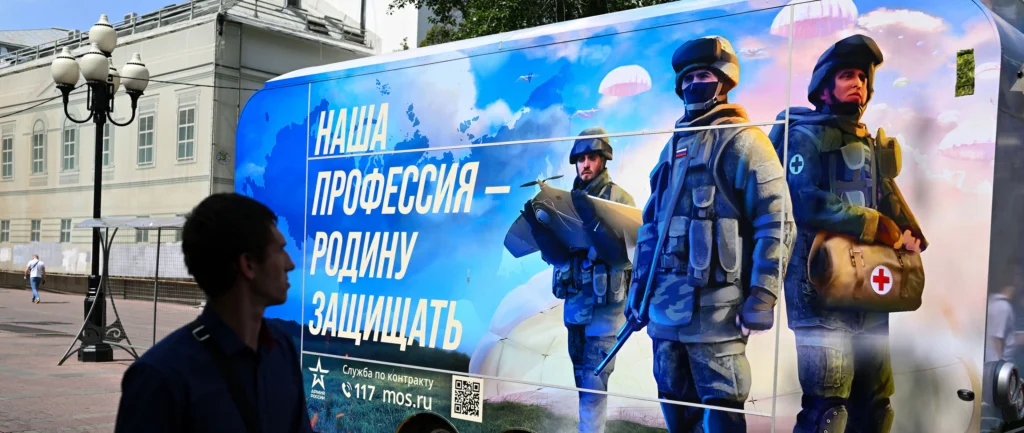
Foreign nationals from low-income countries are being systematically deceived, coerced, and deployed by Russian authorities to the front lines of the illegal war in Ukraine, according to compelling new findings released by Amnesty International.
The widespread recruitment practices frequently rely on false promises of civilian employment, only for victims to find their passports confiscated and themselves thrust directly into active combat zones. In many cases, these predatory operations amount to human trafficking, with Russian state authorities actively enabling, facilitating, and ultimately benefiting from the systematic exploitation of vulnerable workers from abroad.
Human rights advocates stress that this alarming trend must come to an immediate halt, and those responsible—ranging from local recruiters and intermediary brokers to state officials and commanding officers—must be held fully accountable under international law.
What’s the problem?
Over the course of the ongoing conflict, Russia has recruited thousands of foreign nationals to fight in its war against Ukraine. While exact figures fluctuate, investigators have established that a significant proportion of these foreign fighters originate from developing nations and economically distressed regions where individuals are particularly vulnerable to deceptive employment offers.
Amnesty International’s comprehensive research demonstrates that this recruitment pipeline is rarely transparent. Instead, it relies heavily on systematic deception and coercion designed for the ultimate purpose of military exploitation, qualifying under international standards as human trafficking.
The human cost of these operations is starkly illustrated by individual testimonies gathered by human rights monitors. One victim, identified by the pseudonym "Nalin," was recruited in Sri Lanka. He was promised a stable civilian job working as a security guard abroad. Instead, after arriving overseas and signing a binding contract written in a language he could not read or comprehend, he was transported directly to a Russian military training camp. Upon arrival, his personal mobile phone and passport were immediately confiscated by handlers.
"No one explained anything, and I did not understand what was going on," Nalin told researchers, highlighting the profound lack of informed consent and the coercive environment that characterizes these deployments.
A similar fate befell a South African citizen who was similarly lured by false promises. Prospective employers assured him of a legitimate civilian job as a truck driver based in Poland. Instead of being deployed to Central Europe, however, he was flown directly into Russia, where he was subjected to intense psychological pressure and coerced into signing a binding military contract.
His wife shared the harrowing ordeal with Amnesty International, detailing the sudden and terrifying isolation her husband experienced. "Upon arrival in Moscow, everything was taken from him," she recounted. "There were times when I did not talk to him for two months. He was told that he would not be going to Poland and that he is becoming a soldier."
Across numerous documented cases, the pattern remains strikingly consistent. Victims are routinely promised lucrative civilian jobs, high salaries that far exceed earning potential in their home countries, and an expedited fast-track process to obtaining Russian citizenship. Enticed by these prospects, many individuals sign complex legal contracts that they fundamentally do not understand.
Once the agreements are signed, their freedom of movement is severely restricted. Passports and identification documents are seized, and the recruits are quickly dispatched to the front lines of the war following little more than rudimentary, accelerated military training.
Those who realize the deception and attempt to resist or leave the military units are met with severe threats of violence or imprisonment. The ultimate consequences have proven fatal for many. Numerous foreign recruits have been killed in action, while others remain missing in the fog of war or have been captured, ending up as prisoners of war detained by Ukrainian forces.
The gravity of these findings is detailed at length in Amnesty International’s official research briefing, which outlines the structural mechanisms enabling the trafficking ring. International legal experts and human rights defenders emphasize that the crisis cannot be dismissed as the actions of rogue actors alone. A network of recruiters, commercial intermediaries, state officials, and military commanding officers who organize, facilitate, or otherwise enable these abusive practices must face formal investigations and subsequent prosecution.
What you can do to help
Addressing the systemic deployment of trafficked foreign nationals requires concerted international pressure and diplomatic intervention. Human rights organizations and advocates are urging the international community to take a firm stand against these abuses.
Observers and concerned citizens are encouraged to call directly on the Russian Minister of Foreign Affairs to demand immediate, decisive action to end all recruitment practices that amount to human trafficking. Furthermore, advocacy groups stress that all individuals and entities responsible for orchestrating these operations must be brought to account through transparent legal proceedings, and surviving victims must be guaranteed comprehensive protection, safe repatriation, and adequate financial and moral compensation for the severe exploitation they have endured.
| Source | : | Open Passport |
| Author | : | Jia Lissa |
| Editor | : | Open Passport Editorial Team |
