
Six Months On, Amnesty International Demands Answers Over Enforced Disappearance of Malian Politician Mountaga Tall and His Son
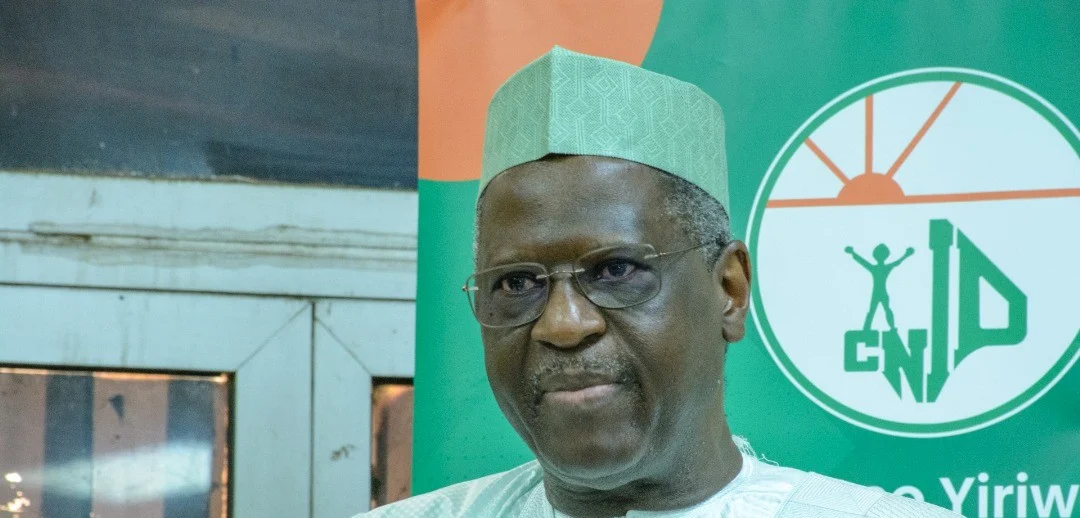
BAMAKO — Six months after the troubling disappearances of prominent Malian lawyer and pro-democracy politician Mountaga Tall and his eldest son, Cheick Mamadou Tall, international human rights organizations and global legal bodies are intensifying pressure on Malian authorities. Amnesty International has issued a stark reminder to the government, demanding that officials urgently disclose the fate and whereabouts of the father and son, who vanished following a wave of abductions in the capital city of Bamako earlier this year.
The case has drawn international scrutiny, highlighting a climate of fear, political targeting, and deteriorating civic space in Mali amid escalating regional conflicts. Rights groups warn that the prolonged silence from authorities points toward an alarming pattern of state-backed enforced disappearances that flouts both domestic and international law.
A Midnight Abduction and a Son Who Never Returned
The ordeal began on the night of May 3, 2026. Just days prior, Mali had experienced a series of coordinated attacks by armed groups across several cities, heightening security tensions. Amid this tense atmosphere, Mountaga Tall—a veteran politician who leads the National Congress for the Democratic Initiative (Congrès national pour l’initiative démocratique)—was snatched from his home in Bamako. According to accounts gathered by human rights monitors, the abduction was carried out by armed and hooded men who arrived in vehicles bearing no registration plates, a hallmark of clandestine operations.
The tragedy deepened less than two weeks later. On May 16, Cheick Mamadou Tall, the politician’s eldest son, went missing under deeply suspicious circumstances. Reports indicate he received an urgent telephone call from his father instructing him to bring personal effects to a designated location. Complying with the request, Cheick Mamadou left his home to deliver the items, but he never returned. Since that day, his fate and whereabouts have remained completely unknown to his family and legal representatives.
Marceau Sivieude, Amnesty International’s Regional Director for West and Central Africa, did not mince words when addressing the Malian government’s failure to act.
"The Malian authorities cannot continue to evade their responsibility to independently, impartially and transparently investigate the disappearances of Mountaga and Cheick Mamadou Tall," Sivieude said. "Six months of uncertainty and anguish for their family must end. The authorities must urgently disclose what happened to them and ensure that those suspected to be responsible are held accountable."
Sivieude emphasized that if the Talls are currently held in state detention, authorities must immediately provide proof of life and reveal their location. Furthermore, they must be granted unhindered access to legal counsel, family members, necessary medical care, and required medication.
"If they are suspected of having committed an offence, they must be promptly brought before a judge, informed of the specific charges against them and afforded all fair trial guarantees. Otherwise, they must be immediately released," he added.
Multiple Calls for Urgent Clarification Remain Unanswered
The disappearance of the Talls has triggered an unprecedented wave of domestic and international condemnation, yet repeated demands for transparency have been met with institutional silence.
Immediately following the initial abduction, Mountaga Tall’s family released a public statement on May 3 denouncing the kidnapping and highlighting that his disappearance amounted to arbitrary, unlawful detention. Amnesty International followed up with urgent public appeals on May 4 regarding the elder Tall, and raised similar alarms concerning Cheick Mamadou Tall on May 18.
The international legal community quickly mobilized in solidarity. On May 26, the International Bar Conference—an umbrella organization uniting bar associations from 42 countries—issued a stern declaration demanding that "the full truth be brought to light immediately regarding the fate" of both men. The global body called for their immediate and unconditional release, or alternatively, that they be brought before a recognized judicial authority without further delay.
As months passed without official acknowledgment from Bamako, the United Nations intervened. In July, the UN Committee on Enforced Disappearances formally called upon Mali’s authorities to take immediate, concrete measures to search for, locate, and protect Mountaga Tall and his son.
Despite these high-level appeals, local authorities have offered no official clarity, reinforcing what human rights monitors describe as a systematic practice of state-sanctioned disappearances.
Political Figures Targeted Amid Escalating Conflict
The backdrop to these disappearances involves a severe security crisis that unfolded in late April 2026. On April 25, armed coalitions including the Group for the Support of Islam and Muslims (also known as Jama’at Nusrat al-Islam wal-Muslimin) and the Azawad Liberation Front launched coordinated attacks across Bamako and five other Malian cities. The assaults specifically targeted military installations alongside the private residences of prominent politicians and military figures.
In response to the violence, the military court in Bamako announced on May 1 that formal investigations were underway. Officials stated that multiple individuals, including politicians and members of the armed forces, had been arrested, with further detentions anticipated. In the days following Mountaga Tall’s abduction, a video surfaced online featuring a former soldier who publicly accused the veteran politician of involvement in the April attacks.
Despite these damaging insinuations, neither Mountaga Tall nor his son has been formally charged with any crime, nor have they ever been presented before a court of law since they vanished in May.
The Talls were not the only high-profile figures swept up in the security crackdown. Early May saw the abductions of other prominent political actors, including Youssouf Daba Diawara, Aboubacar Soumaré, and Moussa Djiré, who were similarly taken from their homes in Bamako. Social media activist Ibrahim Taméga was also arrested on May 23.
Regional human rights bodies expressed immediate alarm over the wave of targeted abductions. On May 16, the African Commission on Human and Peoples’ Rights released a statement voicing deep concern over the disappearances of Mountaga Tall, Youssouf Daba Diawara, and Moussa Djiré, urging Malian authorities to launch immediate search operations.
While the Talls remain missing, the status of some of their fellow detainees shifted after months incommunicado. According to media reports, Youssouf Daba Diawara and Moussa Djiré reappeared in the judicial system on October 20, when they were officially charged with "undermining the credibility of the state, criminal conspiracy, and attempting to destabilize the institutions of the Republic." Following interrogations by a judge, they were remanded into custody at the main prison in Bamako.
Enforced Disappearance: A Crime of Extreme Gravity Under International Law
Under well-established principles of international law, an enforced disappearance occurs when state agents—or individuals acting with authorization, support, or acquiescence from the state—arrest, detain, or abduct a person, followed by a refusal to acknowledge the deprivation of liberty or to disclose the person’s fate or whereabouts. Such practices intentionally place victims outside the protection of the law, exposing them to grave risks of torture, ill-treatment, and other severe human rights violations.
Amnesty International has repeatedly pointed to institutional structures in Mali as the perpetrators behind these violations.
"We have documented a pattern of enforced disappearances carried out by agents of the National Agency for State Security in Mali," Marceau Sivieude stated. "We reiterate the extreme gravity of the crime of enforced disappearance, which no circumstances, however exceptional, can justify."
Sivieude underscored that Mali is a state party to the International Convention for the Protection of All Persons from Enforced Disappearance. Under this treaty, governments are strictly prohibited from invoking situations of war, threats of war, internal political instability, or any other public emergency as a legal justification or excuse for practicing enforced disappearances.
"The authorities must put an end to these violations, protect civic space and uphold the country’s international human rights obligations and the rule of law," Sivieude concluded.
Background on Mountaga Tall’s Career
The disappearance of the 69-year-old Mountaga Tall represents a significant blow to Mali’s political and legal landscape. Tall is widely recognized as a foundational figure in the nation’s democratic transition during the 1990s, having dedicated decades of his life to public service, political advocacy, and constitutional governance.
In recent years, as Mali has experienced political shifts under military-led authorities, Tall used his legal expertise to challenge government overreaches. Over the past three years, he actively contested the controversial dissolution of political parties by the military administration through various Malian courts and tribunals. Furthermore, he took on the defense of several high-profile political figures who found themselves arbitrarily detained by the state, including former Prime Minister Moussa Mara.
| Source | : | Open Passport |
| Author | : | Raul Delapena Setiawan |
| Editor | : | Open Passport Editorial Team |
