
EU Overhauls Air Passenger Rights With Stronger Protections, Free Hand Luggage, and Automatic Refunds
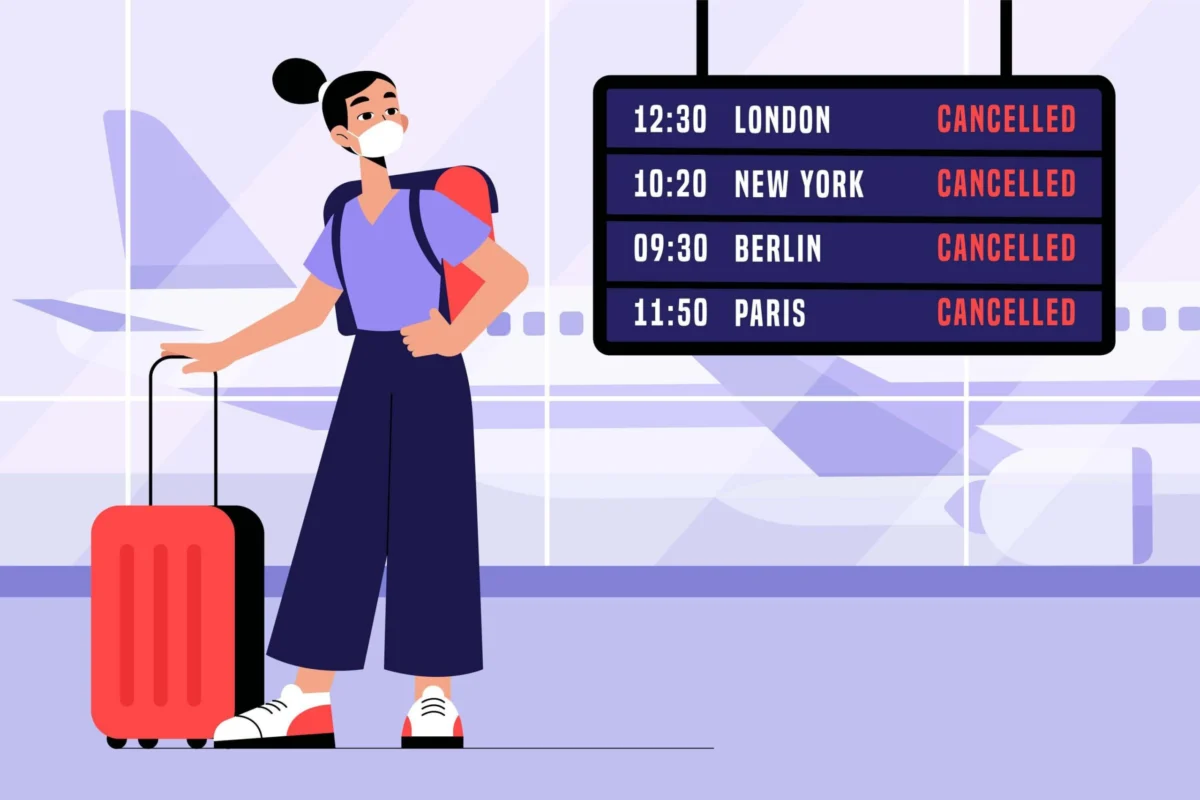
The European Union has officially enacted the most significant overhaul of air passenger rights in more than two decades, introducing a modernized legal framework designed to address long-standing traveler grievances, streamline compensation claims, and eliminate hidden airline fees.
Regulation (EU) 2026/2202 officially entered into force on October 22, 2026. However, to give airlines ample time to adapt their reservation, operational, and customer service systems, the vast majority of the new rules will only apply starting October 23, 2027. Passengers who experience flight delays or cancellations prior to that implementation date remain fully covered by the legacy regulations that have been in place since 2004.
The landmark legislative package amends the existing Regulation 261/2004 rather than replacing it entirely. It preserves the core financial protections that European travelers have relied on for years, while closing regulatory loopholes, introducing strict timelines for refunds and airline communications, and providing long-awaited clarity on baggage allowances and ticketing transparency.
Current Rules vs New Rules at a Glance
For over twenty years, the 2004 regulation served as the global benchmark for passenger rights, yet it frequently sparked legal battles over ambiguous definitions, inconsistent enforcement across member states, and cumbersome administrative hurdles for travelers seeking compensation. The new framework directly addresses these friction points by codifying rules that were previously subject to continuous litigation and judicial interpretation by the EU Court of Justice.
Under the updated law, the fundamental compensation triggers remain tied to significant travel disruptions. Passengers arriving more than three hours late at their final destination, those whose flights are cancelled less than 14 days before scheduled departure, and individuals who face involuntary denied boarding retain their right to financial reimbursement. The established compensation tiers remain unchanged at €250 for journeys of up to 1,500 kilometres, €400 for journeys between 1,500 and 3,500 kilometres, and €600 for longer international routes.
However, the methodology for calculating these distances and applying exceptions has been modernized. Moving forward, distances will be measured over the entire journey to the final destination rather than evaluated flight by flight. Furthermore, airlines on the longest routes will retain the option to halve compensation payments if they successfully reroute passengers to their final destination within a tight arrival window, or if the ultimate delay upon arrival does not exceed four hours.
For the first time, the legislation establishes a formal, written list of extraordinary circumstances that exempt airlines from paying compensation. Previously, these exemptions were defined entirely through piecemeal rulings by the EU Court of Justice. The new open-ended statutory list explicitly includes severe weather events, natural disasters, geopolitical conflicts, unruly passenger behavior, and strikes impacting airports, air traffic control, or ground handling operations.
Compensation Stays at €250 to €600
The preservation of the traditional compensation brackets ensures that air travel within and departing from the European Union continues to offer some of the strongest consumer protections in the world. The regulation applies broadly to all flights departing from airports across the Schengen area and the broader EU, regardless of whether the operating carrier is based within the bloc or internationally.
Legislators and consumer advocacy groups emphasized that maintaining these financial thresholds was essential to holding carriers accountable for schedule reliability. At the same time, the inclusion of clear statutory definitions for extraordinary circumstances aims to reduce the massive backlog of contested claims that has historically clogged national enforcement bodies and civil courts across member states.
By shifting the distance calculation to the cumulative journey, the regulation ensures that multi-leg itineraries booked under a single ticket are evaluated fairly, protecting passengers traveling through regional hubs from losing compensation eligibility due to fragmented segment evaluations.
Refunds Become Automatic
One of the most profound shifts in the new legislation centers on the mechanics of ticket refunds and communications following a disruption. Starting October 23, 2027, passengers who elect to receive a refund after a flight cancellation will no longer need to navigate bureaucratic hurdles or submit formal, manual requests. Refunds must be processed automatically by the airline within seven days.
Crucially, these automatic refunds will encompass the full financial layout, including any fees originally charged by intermediaries such as online travel agencies or ticketing agents. While airlines will still be permitted to offer travel vouchers as an alternative, they may only do so under strict consumer-protection terms, and any unused balance on a voucher must be refunded in cash upon request.
The regulation also empowers passengers when airlines fail to act swiftly during cancellations. If an operating carrier fails to offer a comparable alternative flight within three hours of a cancellation, affected passengers are legally permitted to make their own travel arrangements and subsequently claim back up to 400 percent of the original ticket price.

Administrative burdens are further reduced by imposing strict communication protocols on carriers. Airlines are now required to transmit electronic claim instructions directly to passengers within four days of the conclusion of their journey, operating independently of any requirement for the passenger to maintain an airline-specific user account or download a proprietary mobile application. Passengers are then granted a clear window of nine months to submit their formal claims, while airlines face a strict 30-day deadline to either disburse payment or provide a legally justified explanation for refusal.
Meals, Hotels and Tarmac Delays
The updated regulation enhances day-of-travel comforts and operational safety standards during extended disruptions. Passengers stranded at airports will be legally entitled to receive refreshments every two hours and a substantial meal after three hours of waiting.
While airlines remain obligated to provide hotel accommodations when a delay forces an overnight stay, the new rules cap this obligation at a maximum of three nights in situations where the disruption is demonstrably caused by extraordinary circumstances beyond the airline’s control.
In a major victory for aviation consumer groups, the framework establishes dedicated legal standards for tarmac delays at EU airports for the very first time. Under the new provisions, passengers trapped inside an aircraft on the ground must generally be given the opportunity to disembark after two hours, provided that local security and safety conditions permit it.
Furthermore, the regulation closes loopholes affecting vulnerable travelers. Passengers with reduced mobility who miss a connecting flight because airport assistance failed to transport them to the boarding gate on time will now be formally entitled to full compensation, rerouting assistance, and care. Additionally, airlines are explicitly barred from canceling or refusing a passenger’s return flight segment merely because the traveler failed to check in for or board the outbound portion of their ticket.
A Free Personal Item and Fewer Extra Fees
The legislation directly tackles the contentious landscape of ancillary airline fees, bringing sweeping transparency to ticket pricing and baggage policies. Every passenger traveling under the new rules will be guaranteed the right to bring one free personal item—such as a small backpack, handbag, or laptop case—on board without incurring additional charges.
To prevent deceptive marketing practices, airlines, ticket agencies, and online travel aggregators will be legally mandated to display upfront fares that explicitly incorporate standard hand luggage from the very beginning of the booking process, though carriers remain free to offer distinct, lower-cost promotional fares that exclude cabin bags if clearly indicated.
Furthermore, carriers are prohibited from levying punitive administrative fees for minor clerical corrections, such as fixing a misspelt passenger name, or for printing a physical boarding pass at the airport after online check-in has closed. Passengers can no longer be denied boarding simply for presenting their own printed paper copy of a boarding pass.
Families and vulnerable travelers also receive enhanced protections regarding seating arrangements. Airlines must ensure that children under the age of 14 are seated directly adjacent to an accompanying adult at no extra financial cost. The same mandatory seating proximity rule applies to companions traveling with passengers who have disabilities or reduced mobility.
How the Law Was Agreed
The path to enacting Regulation (EU) 2026/2202 was exceptionally protracted, reflecting the intense lobbying and complex negotiations between industry stakeholders, member state governments, and European lawmakers. The European Commission initially tabled its proposal to revise the air passenger rights framework back in March 2013.
For over a decade, the legislative file stalled amid sharp disagreements between member states, particularly concerning regional disputes and the financial exposure of airlines to widespread operational shutdowns. National governments finally managed to adopt their unified negotiating position in October 2025, paving the way for intensive trilogue negotiations between the European Parliament and the Council of the European Union.
A breakthrough was achieved in mid-June 2026, when institutional negotiators reached a finalized political compromise. Andrey Novakov, the European Parliament’s lead negotiator on the legislative file, hailed the outcome at the time as a balanced result that all stakeholders could ultimately support.
The European Parliament overwhelmingly endorsed the legislative text on July 7, 2026, passing the measure by a decisive margin of 646 votes to 12, with just three abstentions. The Council of the European Union formally adopted the regulation on September 16, 2026, and the finalized text was published in the Official Journal of the European Union on October 2, 2026.
Because the regulation amends the existing 2004 framework rather than establishing an entirely new legal regime, the multi-year transition window leading up to October 2027 provides airlines, airports, and regulatory bodies with the necessary runway to overhaul their internal infrastructure, compliance protocols, and passenger communication systems.
| Source | : | Open Passport |
| Author | : | Dwi Wanna |
| Editor | : | Open Passport Editorial Team |
