
UK and EU Reach Landmark Post-Brexit Mobility Pact as Tuition Fee Dispute Casts Shadow Over Higher Education
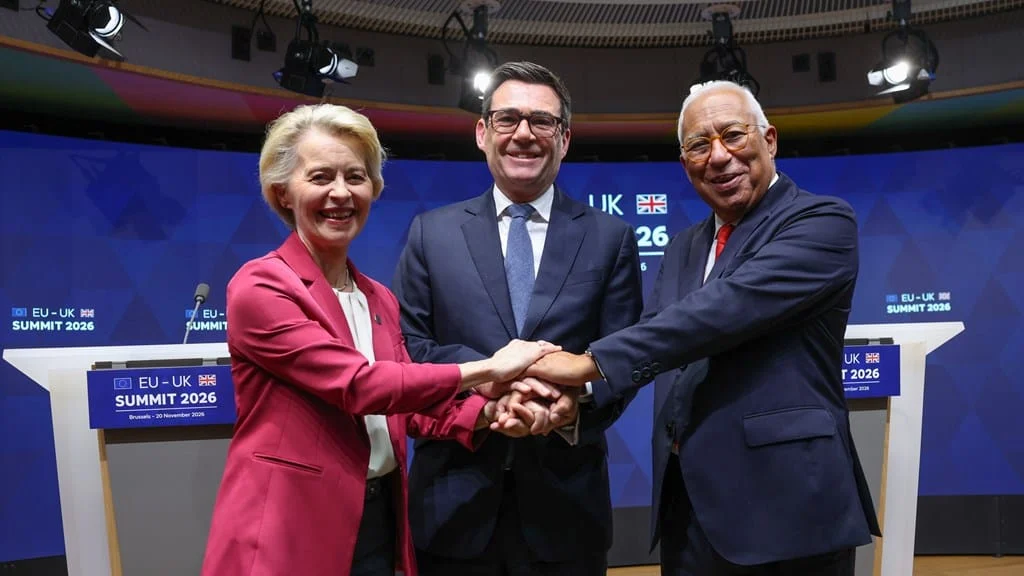
A major new bilateral agreement struck at the UK-EU summit in Brussels marks a significant turning point in rebuilding post-Brexit educational, cultural, and professional ties. Announced on November 20, the diplomatic breakthrough paves the way for the United Kingdom’s official return to the Erasmus+ student exchange programme by 2027, while simultaneously introducing a sweeping reciprocal youth mobility framework.
However, despite widespread optimism over the restoration of cross-border pathways for young people, intense uncertainty remains over the future of university tuition fees. Higher education leaders have issued stark warnings that unresolved negotiations regarding fee structures for EU students could carry severe financial implications for British universities and potentially threaten domestic student enrolment capacities.
At the heart of the new diplomatic accord is the newly established Youth Experience Scheme. Under this bilateral arrangement, up to 100,000 young citizens from the European Union and an equal number of young people from the United Kingdom will be granted the opportunity to reside in each other’s territories for a duration of up to three years. The scheme is designed to accommodate a diverse array of activities, encompassing academic study, employment, volunteering, au-pairing, and general travel, effectively bridging a gap that has separated young Britons and Europeans since the implementation of Brexit.
According to the official joint statement released following the Brussels summit, both negotiating sides are aiming to bring the agreement into full operational effect by 2028. Furthermore, the framework mandates that these mobility opportunities must be fully accessible to eligible participants no later than January 2030.
UK Prime Minister Andy Burnham enthusiastically hailed the agreement as a vital mechanism to restore vital opportunities that were lost in the wake of the Brexit transition. Speaking to reporters in the Belgian capital, Burnham emphasized that the historic pact is fundamentally tailored to empower the younger generation and broaden their global life horizons.
"For young people out there who are wondering how this deal today affects them and their lives, I would say: this deal is for you. This deal really is about lifting your life chances," Burnham told reporters in Brussels, capturing the forward-looking tone of the UK delegation.
Reflecting directly on the legacy of the 2016 referendum and subsequent departure from the European Union, the Prime Minister added, "Brexit did take away opportunity from our young people. It limited their horizons in their lives."
The joint communique also solidified previously discussed timelines, confirming that the UK’s reintegration into the Erasmus+ programme will officially commence in 2027. Both British and European officials have reaffirmed a mutual commitment to exploring further collaborative educational opportunities extending well beyond the 2027 milestone.
Despite the notable diplomatic progress achieved regarding youth mobility and student exchange, negotiators have yet to bridge a profound divide concerning cross-border tuition fees. The question of whether EU students will be granted reduced or preferential tuition fee rates upon enrolling at British universities has rapidly evolved into a major sticking point within the broader framework of the UK-EU policy reset.
While Brussels has consistently pressed for more favourable and accessible financial arrangements for European students seeking to attend UK tertiary institutions, British university administrators and sector representatives have sounded the alarm. They argue that any forced reduction in fee income could destabilize an already fragile higher education funding model.
To address this contentious issue, both negotiating parties have formally committed to concluding intensive discussions within a tight six-month window. This accelerated timeline is intended to produce a supplementary agreement specifically governing the treatment of EU students studying within the United Kingdom and UK students pursuing education across the European Union, regardless of their specific immigration or visa routing.
Nevertheless, stakeholders across the academic landscape maintain that the financial stakes could not be higher. Hollie Chandler, director of strategic policy at the Russell Group representing leading research-intensive universities, acknowledged the valuable cultural and academic contributions that European students traditionally bring to British campuses, but firmly cautioned against any policy changes that might compromise institutional financial sustainability.
"Any reduction in EU student fees would put pressure on UK student places and take more money out of UK higher education, without necessarily achieving the ambition of growing opportunities for EU students to study in the UK," Chandler warned.
At the same time, Chandler expressed cautious optimism regarding the decision by negotiators to carve out a dedicated six-month period to thoroughly evaluate potential policy consequences before rushing into a final binding agreement. "It is crucial that any final package fully protects opportunities for UK students and the financial sustainability of our institutions," she added.
Echoing these cautious sentiments, Universities UK chief executive Vivienne Stern welcomed the bilateral agreement as a pragmatic step forward, while simultaneously underscoring the stark economic realities currently confronting universities throughout the United Kingdom.
"Currently, universities must subsidise the cost of teaching UK students and there is no public funding for international students," Stern explained, pointing to the structural funding deficits facing domestic undergraduate programmes. "It is vital that any agreement meets the full cost of delivery and recognises the financial impact on universities."
The complex interplay between diplomatic negotiations, tuition fees, and institutional strategy has also raised concerns within the legal and operational spheres of higher education. Nathalie Jacoby-Danesh, a partner specializing in the higher education sector at the law firm Browne Jacobson, warned that prolonged ambiguity surrounding fee structures could trigger unintended ripple effects across international recruitment pipelines and transnational education initiatives.
According to Jacoby-Danesh, any sudden fee concessions extended to EU students re-entering the UK domestic market could inadvertently accelerate the retrenchment of transnational education delivery models. Alternatively, such policies could render traditional on-campus recruitment of European students financially unviable when measured against offshore campus delivery alternatives.
Furthermore, Jacoby-Danesh pointed out that many higher education institutions had already begun repositioning their long-term strategies in anticipation of a gradual recovery in EU student fee income following the initial disruptions caused by Brexit. These universities now face the prospect of a complex "double exposure," where both traditional on-campus recruitment channels and overseas collaborative strategies could simultaneously be thrown off balance by the final outcome of the upcoming six-month negotiations.
Beyond purely financial calculations, administrative and compliance questions also loom large regarding how the newly minted youth mobility scheme will interface with existing, highly regulated student visa frameworks. Universities and legal experts alike are seeking urgent clarity from policymakers on administrative practicalities.
"Universities will need certainty on which right-to-study checks apply, what the basic compliance assessment reporting obligations entail and how attendance shall be monitored," Jacoby-Danesh noted, emphasizing that institutional compliance teams will require precise operational guidance well before the scheme’s implementation target dates arrive.
| Source | : | Open Passport |
| Author | : | Siti Muinah |
| Editor | : | Open Passport Editorial Team |
