At its core, a passport is a formal request from one government to another, asking for the safe passage and protection of one of its citizens while they are abroad. It contains vital personal information, including your full name, date of birth, place of birth, and a photograph. In the modern era, most passports also include biometric data to enhance security and prevent fraud.
The Standard Passport: Your Gateway to the Globe
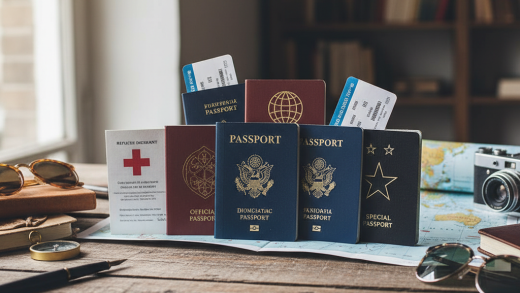
The most common type of passport is the Standard Passport, also known as a Regular, Ordinary, or Tourist Passport. This is the document issued to the general public for personal travel. Whether you’re planning a vacation, visiting family overseas, or embarking on a short-term study program, this is the passport you will use. Its validity typically ranges from five to ten years, depending on the issuing country and the age of the holder.
These passports contain all the necessary information for a person to travel internationally, subject to the visa requirements of the destination country. They are the workhorse of global travel, used by millions of people every day to explore new cultures and connect with the world.
The Diplomatic Passport: A Tool of International Relations
Reserved for the highest echelons of government, the Diplomatic Passport is a symbol of status and official duty. It is issued to diplomats, ambassadors, consuls, and other high-ranking government officials who are traveling abroad on official state business. In many cases, their immediate family members may also be eligible for a diplomatic passport to accompany them on their posting.
The primary benefit of a diplomatic passport is not just travel; it is the set of privileges it confers. The holder is often granted diplomatic immunity, which protects them from prosecution under the host country’s laws. This is a principle of international law designed to ensure that diplomats can carry out their duties without fear of coercion or harassment. Furthermore, holders often experience expedited processing at airports and may be exempt from visa requirements in many countries.
It’s crucial to note that diplomatic immunity is not a license to break the law without consequence. A diplomat can still be expelled from a country, and their home country can choose to waive immunity to allow for prosecution.
The Official or Service Passport: For Government Business
A step below the diplomatic passport is the Official Passport, sometimes called a Service Passport. This type is issued to government employees or officials who are traveling abroad for official work but do not qualify for diplomatic status. This can include a wide range of individuals, such as military personnel on assignment, members of parliament attending an international conference, or other civil servants representing their country’s interests.
While an official passport does not grant diplomatic immunity, it signals to the host country that the bearer is traveling on official government business. This can facilitate easier passage through borders and may come with certain travel privileges, such as visa exemptions, that are not available to holders of standard passports. Like the diplomatic passport, it must be surrendered once the holder’s official duties are complete or they leave their government position.
The Emergency Passport: A Lifeline When Abroad
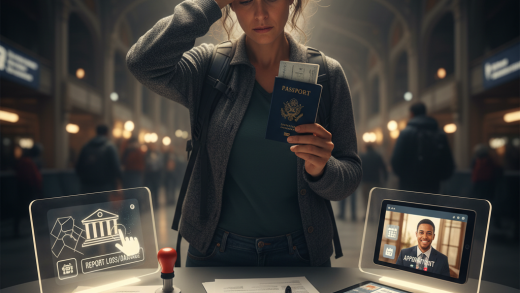
Losing a passport while traveling is a stressful experience. This is where the Emergency Passport, or Temporary Travel Document, comes into play. Issued by an embassy or consulate abroad, this document is a short-term solution for citizens whose passport has been lost, stolen, or damaged.
An emergency passport has very limited validity, often just enough for a single journey back to the holder’s home country or to the nearest embassy where a full-validity replacement can be issued. It contains minimal security features and serves the sole purpose of getting a stranded traveler home safely.
Special and Niche Passport Types
Beyond the main categories, several other specialized passports exist, though they are less common today.
Laissez-Passer (UN Passport)
This is a unique travel document issued by international organizations, most notably the United Nations and the World Bank. It is given to staff members for use during official missions. A Laissez-Passer functions similarly to an official or diplomatic passport, depending on the holder’s rank, and often allows for visa-free travel to many countries when on official business.
Internal Passport
It’s important to distinguish between international travel documents and Internal Passports. Used in some countries like Russia and China (in the form of the Hukou system), an internal passport is primarily an identity document for domestic use. It is used to control internal migration, track residency, and for various administrative purposes within the country’s own borders. It cannot be used for international travel.
Collective and Family Passports
Once more common, a Collective or Family Passport was a single document that covered an entire group of people, such as a school group or a family. For security reasons and the rise of individual biometric data requirements, these have become largely obsolete in most parts of the world, with almost every country now requiring each individual, including infants, to have their own passport.
Decoding Passport Features and Technology
Modern passports are marvels of security technology, designed to be incredibly difficult to forge.
The Biometric ePassport
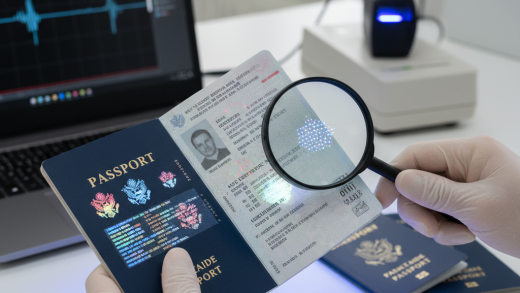
Most passports issued today are biometric passports, also known as ePassports. You can identify one by the small, gold camera-like symbol on the front cover. These passports contain an embedded electronic microprocessor chip that stores the holder’s biographical information from the data page, as well as a biometric identifier—typically a digital version of the passport photo. Some countries also include fingerprints or iris scans.
This technology allows for faster and more secure verification at border control, especially at automated e-gates. It confirms that the person holding the passport is its legitimate owner, significantly reducing the risk of identity fraud.
Visible Security Features
In addition to the chip, passports are filled with security features you can see and feel. These include:
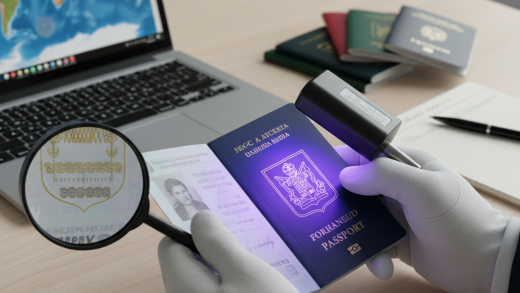
- Watermarks: Faint designs embedded in the paper, visible when held up to the light.
- Holograms: Complex, multi-layered images that change appearance when tilted.
- Special Inks: Inks that may be visible only under ultraviolet (UV) light or change color depending on the viewing angle.
- Intricate Printing: Extremely fine lines and detailed guilloché patterns that are difficult for counterfeiters to replicate.
What Do Passport Colors Mean?
While there are no strict global rules governing passport colors, certain patterns have emerged. The choice of color is a matter of national identity and preference.
Red or Burgundy: This is the color used by member states of the European Union. Countries aspiring to join the EU have also sometimes adopted this color. It’s also common among nations with a historical or current communist system.
Blue: Often chosen by countries in the “New World.” The United States, Canada, and many countries in South America and the Caribbean use blue passports. It is the color of the passport for the 15 CARICOM (Caribbean Community) states.
Green: Many Muslim-majority nations use green passports, as the color holds special significance in Islam. It is also the color chosen by members of ECOWAS (Economic Community of West African States), including Nigeria, Senegal, and Ghana.
Black: A less common and more practical choice, as dark colors show less dirt. Some countries, like New Zealand, use black for their national color. Black is also frequently used for diplomatic passports in several countries, including the United States.
Which Passport Do You Need?
For the overwhelming majority of travelers, the Standard Passport is the only document they will ever need or be eligible for. It provides everything necessary for tourism, business travel, and personal trips.
Eligibility for diplomatic, official, or service passports is strictly tied to one’s profession and role within the government. These documents are not personal property; they belong to the state and must be used only for official duties. When an individual’s term of service ends, the special passport is typically surrendered.
In conclusion, the world of passports is far more diverse than it first appears. Each type, from the common tourist booklet to the exclusive diplomatic document, plays a vital role in the intricate system of global mobility, security, and international relations. Understanding your passport is the first step in being a responsible and informed global citizen.