
EU’s Official Schengen Stay Calculator Flawed: Travelers Warned After False ‘Not OK’ Error Messages
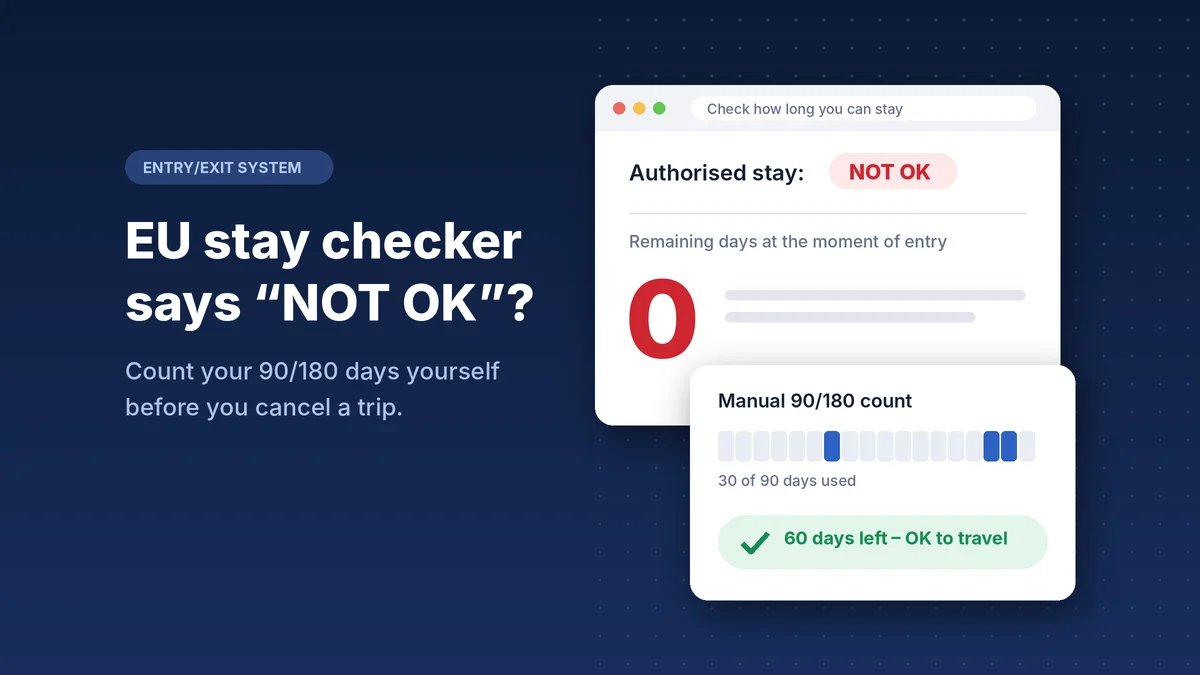
Travelers planning a journey to the Schengen Area are being urged not to immediately cancel their trips if they receive an alarming "NOT OK" result from the European Union’s official online calculator. Recent testing has revealed that the system is currently issuing erroneous warnings of zero remaining days to travelers who, by all accurate accounts under the standard 90/180-day rule, still retain plenty of lawful time to visit.
Over the past few weeks, numerous readers have reached out to travel information desks asking whether they are still legally permitted to enter the Schengen Area. Their concern stems from the EU’s official "Check how long you can stay" tool, which has been persistently returning errors and indicating that visitors have exhausted their authorized stays. Independent testing of the digital checker confirmed these user reports, demonstrating that the system is failing to function as intended.
When generating the erroneous response, the result screen simply states that the authorized stay is "NOT OK," explaining that the verification result and remaining days of the authorized stay were calculated based on the provided dates. It bluntly claims that the remaining days at the moment of entry are zero. Crucially, the system provides no underlying reason for this conclusion, offers no detailed list of the specific entries and exits it has counted, and gives no guidance on what steps the traveler should take next.
The checker is an integral component of the Entry/Exit System (EES), a massive digital infrastructure that became fully operational across the entire Schengen Area and successfully replaced traditional physical passport stamps for non-EU short-stay visitors. According to European Union guidelines, the online portal is specifically designed to let travelers check whether their upcoming entry will be permitted—returning a definitive "OK" or "NOT OK"—while also calculating how many days they continue to hold under the strict 90/180-day limitation.
To utilize the platform, individuals are required to input their passport number, the country that issued the travel document, the specific Schengen destination they intend to visit, and optionally, their intended dates of entry and exit. The underlying technology then accesses the traveler’s digital EES record to perform the necessary calculations. In essence, however, the validity of the tool’s answer is entirely dependent on the accuracy and completeness of the digital record sitting behind it.
While inquiries have been submitted to the European Commission regarding why the tool is returning these flawed results, no official explanation had been provided by the time of publication. In the absence of an official fix or statement from regulatory authorities, a thorough look at current implementation records highlights several systemic gaps that are likely driving the widespread errors.
First and foremost, the system appears to ignore any travel activity that took place before the EES rollout. National authorities, such as Sweden’s Migration Agency, have explicitly noted that individuals who were registered in the EES framework prior to the system’s widespread deployment cannot reliably use the digital tool and must instead continue calculating their lawful stays manually from physical passport stamps. Prominent consumer advocacy groups have similarly warned that the automated tool fails to reflect Schengen visits made prior to the operational cutoff date.

Compounding this issue is the reality that some summer border crossings may have been physically stamped rather than digitally recorded. Following the initial launch of the digital framework, EU operational rules permitted member states to partially suspend the EES for designated periods—such as a 90-day window with a potential 60-day extension during the peak summer travel season—to effectively manage lengthy border queues. Consumer reports indicate that several nations utilized these allowances to temporarily fall back on traditional passport stamping. When an entry or exit is handled with ink rather than a digital scan, the automated system may be missing half of a travel history. A missing exit record, in particular, can make it falsely appear as though the visitor never actually left the territory.
Furthermore, the digital checker works entirely from the specific dates manually typed into the query form. The tool’s own legal disclaimer notes that results depend heavily on the provided parameters and can vary based on actual movements. A minor typo or a missing date in the initial inquiry form can drastically tip the automated answer toward a rejection.
Given these widespread discrepancies, experts advise travelers not to treat a "NOT OK" result as an automatic reason to abandon their travel plans, nor should they treat an "OK" result as an absolute guarantee of entry. The ultimate legal authority at any international border belongs strictly to the human border guard, not an online interface.
Travelers are instead encouraged to reconstruct their own travel history for the preceding 180 days by carefully reviewing boarding passes, hotel booking confirmations, and physical passport stamps. These dates can then be run through independent calculators where every single entry and exit date is manually inputted by the user. Because these alternative calculators operate exclusively on the specific dates provided by the traveler, they remain completely unaffected by missing data or glitches within the central EES database. Bringing comprehensive documentary evidence along during travel is strongly recommended.
To understand how the mathematics are supposed to function, consider a straightforward scenario involving a British traveler who spent the first ten days of July in Spain, counting both the arrival and departure dates. If that same individual subsequently plans a twenty-day trip to Italy later in the year, the calculation requires looking backward across the rolling 180-day window. Because the summer trip falls securely within that timeframe, the traveler has consumed a total of thirty days, leaving a comfortable sixty days remaining. Under this timeline, the visitor remains well within the lawful limit.
If the official EU tool inexplicably displays a "NOT OK" status and zero remaining days for that exact itinerary, the most probable explanation is a gap in the digital record, such as an unrecorded departure from Spain. When faced with this scenario, travelers should formally request a review of their digital record rather than abandoning their travel arrangements.
Individuals who discover errors in their digital files hold the legal right to request that their EES data be checked and corrected. Consumer advisors recommend visiting the official EES data protection contacts page provided by the European Union, locating the specific data controller responsible for the Schengen country last visited, and submitting an inquiry via email accompanied by concrete evidence of international movements, such as flight itineraries and accommodation receipts. Those submitting corrections should expect to provide a scanned copy of their passport and should prepare for a potentially slow response time.
For individuals with imminent travel schedules, carrying identical documentary evidence in hand luggage remains the most prudent safeguard, ensuring that physical proof is readily available to present directly to a border officer if questions arise regarding actual travel dates.
| Source | : | Open Passport |
| Author | : | Sagoh |
| Editor | : | Open Passport Editorial Team |
