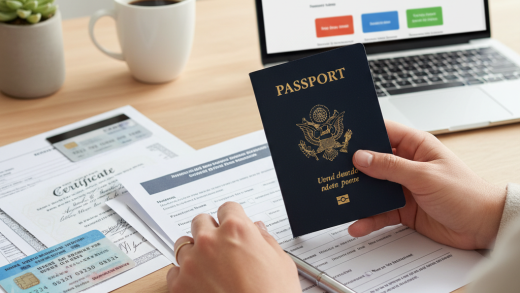
This scenario is a surprisingly common travel nightmare. While most travelers obsess over passport expiration dates—adhering to the golden “six-month validity” rule—far fewer pay attention to the physical space remaining inside the booklet. Understanding passport page requirements is just as critical as checking the expiration date, yet it remains one of the most overlooked aspects of international travel preparation.
Why Do Blank Pages Matter?
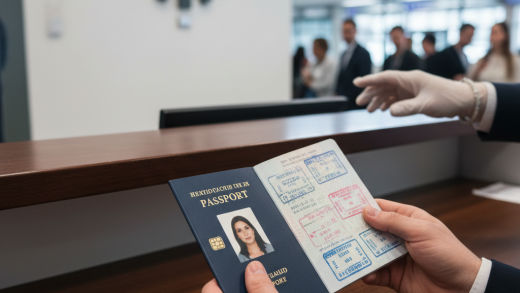
To the average traveler, a passport is just a form of ID. To a border control officer, it is a record-keeping document. When you enter a foreign country, immigration authorities need space to document your arrival and departure. This is usually done via ink stamps. However, the requirements go far beyond simple entry and exit stamps.
If you require a visa to enter a country, that visa is often a physical sticker—officially called a vignette—that is adhered to a page in your passport. These stickers are large, typically taking up an entire page. Furthermore, immigration officers need space on adjacent pages or nearby areas to stamp the entry and exit dates associated with that specific visa.
If your passport is full, authorities cannot issue the visa or record your entry legally. This isn’t just a matter of squeezing a stamp into a corner; it is a bureaucratic necessity governed by international agreements and local laws. Without the required space, you are technically inadmissible.
The Difference Between Visa Pages and Endorsement Pages
One of the biggest pitfalls for travelers, particularly those holding United States passports, is the confusion between “Visa” pages and “Endorsement” pages. Not all blank pages are created equal. If you open your passport to the back, you might see several pages labeled “Endorsements/Amendments.”
These pages are strictly reserved for official government use to amend the passport details. They are used for things like changing a surname after marriage, correcting errors, or adding annotations about limitations. They cannot be used for entry stamps or visas.
Many travelers count these endorsement pages when checking their passport status, leading to a false sense of security. You might think you have three blank pages left, but if they are all endorsement pages, you effectively have zero usable pages for travel. Always check the top or bottom of the page for the label “Visas” to ensure the space is valid for travel use.
The “Two Blank Pages” Rule
While requirements vary by destination, a safe general rule of thumb is to always have at least two to four completely blank visa pages available for every international trip you take. Many countries strictly enforce a “two blank pages” policy.
South Africa is the most famous example of strict enforcement. If you are flying to South Africa, you are required by law to have two completely blank, consecutive visa pages. If you arrive at the airport with only one page, or two pages that are not facing each other, airlines will deny you boarding. This is because South Africa requires a full page for the visa/permit and a full page for the entry stamps and potential extensions.
Other countries with historically strict page requirements include China, Russia, Brazil, and India (though India’s e-visa system has changed some logistics, physical stamping still occurs). Even for countries that do not require a physical visa sticker, having a blank page is often expected to keep entry and exit stamps organized.
What Constitutes a “Blank” Page?
- Faint ink transfer from a stamp on the opposite page.
- A small corner stamp from a previous trip.
- Pencil marks or casual notes.
- Any water damage or stains.
Immigration officers are generally instructed not to stamp over existing stamps. While some lenient officers might squeeze a stamp into a half-filled page, you cannot rely on this. For the purpose of visa applications, a page is only considered blank if it is entirely empty and free of markings.
The Rise of E-Visas and Digital Nomads
With the advent of E-visas (electronic visas), the dynamic is shifting slightly. Countries like Australia, Turkey, and Vietnam often issue electronic approvals that you print out or show on your phone. In these cases, a physical full-page sticker is not placed in your passport.
However, this does not eliminate the need for pages. You still receive entry and exit stamps upon arrival and departure. Frequent travelers, especially digital nomads moving between countries every few months, consume passport real estate rapidly. A standard 28-page passport can fill up in less than two years of heavy travel.
Regional Considerations
The Schengen Area (Europe): While you typically only get one stamp upon entering the zone and one upon exiting, the sheer number of countries involved means you might cross borders frequently. If you are hopping in and out of the Schengen zone (e.g., traveling from France to the UK and back to Italy), you will accumulate stamps quickly.
Southeast Asia: Many countries in this region still utilize full-page visa stickers or require substantial space for stamps. If you are doing a multi-country tour (Thailand, Cambodia, Vietnam, Laos), you should budget at least one full blank page per country to be safe.
Can You Add Pages to Your Passport?
In the past, countries like the United States allowed citizens to pay a fee to have extra packet of pages sewn into their existing passport. This service was a lifesaver for frequent flyers. However, due to security concerns and the modernization of biometric passports, this practice has been largely discontinued.
As of 2016, the U.S. State Department no longer allows the addition of visa pages. If you run out of space, you must apply for a completely new passport renewal, regardless of how many years of validity remain on the document. Other countries, such as the UK and Canada, have similar policies.
Because of this, if you are a frequent traveler, it is highly recommended to request a “large book” or “jumbo” passport when you renew. In the U.S., you can choose a 52-page book instead of the standard 28-page book at no extra cost. This simple selection can save you the hassle of an early renewal down the line.
How to preserve your passport pages
If you are running low on space but have a trip coming up, you can try a few strategies to conserve page usage, though success is never guaranteed.
Ask Nicely: When approaching the immigration officer, you can politely ask them to stamp on a page that already has stamps, rather than a fresh blank one. You might say, “Could you please stamp this page to save space?” Many officers are understanding, though some may refuse purely out of adherence to protocol.
The Post-it Note Trick: Some travelers place a small sticky note on their pristine blank pages with a message like “Please save for Visa.” While this can work, be careful. You should never permanently alter or adhere anything to your passport that could be considered tampering. If an officer asks you to remove it, do so immediately.
What to Do Before You Book
1. Open your passport and find the pages marked “Visas.”
2. Count the number of pages that are 100% free of any ink or marks.
3. Check the specific entry requirements for your destination on the State Department website or the destination’s embassy site.
4. If you have fewer than two to four blank pages, or if you are on the borderline, renew your passport immediately.
Conclusion
Travel is about freedom and exploration, but it relies heavily on documentation. Passport pages are a finite resource that acts as the currency of your movement across borders. Running out of this currency results in the same outcome as running out of money: your trip ends.