Being stateless means that no country recognizes you as a national under the operation of its laws. This legal limbo can result from gaps in nationality laws, the redrawing of borders, or discrimination against specific ethnic or gender groups. One of the most significant consequences of statelessness is the restriction on freedom of movement.
Fortunately, international law provides a solution. While a stateless person cannot get a standard passport, they can often obtain a Stateless Person’s Travel Document. This guide explores how to navigate this complex system, the legal frameworks involved, and the practical steps to securing your right to travel.
Understanding the Difference: Passport vs. Travel Document
It is crucial to clarify terminology before diving into the application process. A standard passport is evidence of both identity and nationality. Since a stateless person lacks a nationality, they cannot legally be issued a standard passport.
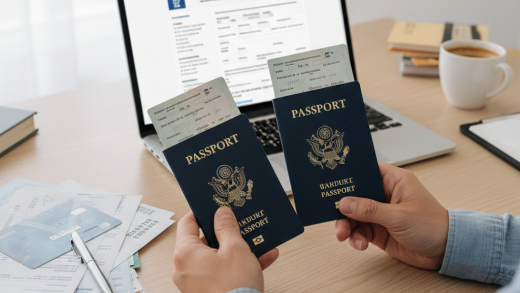
Instead, they are issued a substitute document, commonly referred to as a 1954 Convention Travel Document. This document serves the same function as a passport for travel purposes—it allows the holder to exit and re-enter their country of residence and applies for visas for other countries.
These documents often look like passports but usually have a different color cover (often red, distinct from the blue Refugee Travel Document) and contain two diagonal stripes in the upper left corner of the front cover. They explicitly state that the bearer is a stateless person.
The Legal Foundation: The 1954 Convention
The primary international instrument governing these rights is the 1954 Convention relating to the Status of Stateless Persons. Countries that are signatories to this convention are obliged to issue travel documents to stateless persons lawfully staying in their territory, unless compelling reasons of national security or public order require otherwise.
If you reside in a country that is not a signatory to the 1954 Convention, obtaining a travel document becomes significantly harder. In such cases, you may be issued a ‘Certificate of Identity’ or an ‘Alien’s Passport,’ which often carries more travel restrictions and is less recognized internationally.
Step 1: Determining Your Status
Before you can apply for the travel document, you must be officially recognized as stateless by the country where you reside. This is often the most challenging part of the process. Some countries, like the United Kingdom, Spain, and France, have formal Statelessness Determination Procedures (SDP).
In countries with an SDP, you submit an application proving that you are not considered a national by any state with which you have a relevant link (such as the country of your birth or your parents’ origin). This requires substantial evidence and often legal assistance.
In countries without a formal SDP (such as the United States), proving statelessness is often handled on a case-by-case basis or as part of an asylum or immigration application. You generally need to show that you have a lawful status in the country (like permanent residency) but cannot obtain a passport from any country.
Step 2: Assessing Eligibility
Once your status is recognized, or if you are a permanent resident unable to obtain a national passport, you can proceed to apply for the travel document. Eligibility generally requires three things: lawful presence in the host country, a clean criminal record (in some jurisdictions), and proof that you cannot obtain a national passport.
Authorities will often require a ‘negative response’ from the embassy of your potential country of origin. This means you may have to apply for a passport from your parents’ home country and receive a formal rejection letter stating they do not recognize you as a citizen.
Step 3: Gathering Required Documentation
The documentation required varies by country, but you should prepare a comprehensive portfolio. This typically includes your birth certificate, proof of residency (such as a Green Card or Indefinite Leave to Remain), and two passport-sized photographs compliant with local standards.
You will also need detailed affidavits explaining why you are stateless. If you have previously held a nationality and lost it, you must provide the renunciation certificate or legal decree causing the loss of citizenship.
Step 4: The Application Process
Applications are usually submitted to the interior ministry or immigration department of your host country. For example, in the United States, this is the United States Citizenship and Immigration Services (USCIS). In the UK, it is the Home Office.
In the United States: You must file Form I-131, Application for Travel Document. You will select the option for a ‘Re-entry Permit’ if you are a Lawful Permanent Resident. While the US is not a party to the 1954 Convention, a Re-entry Permit functions similarly for travel, though it does not explicitly label you as ‘stateless’ in the same way a Convention document does.
In the United Kingdom: You apply for a ‘Stateless Person’s Travel Document’ online. You must have permission to stay in the UK (leave to remain) and be officially recognized as stateless under the immigration rules.
Step 5: Biometrics and Fees
After submitting your application, you will almost certainly be required to provide biometric data. This includes fingerprinting and a digital photograph. This ensures the security of the travel document and prevents identity fraud.
Be prepared for fees. These documents are rarely free. The cost can range from roughly $80 to several hundred dollars depending on the country and the processing speed. Fee waivers are sometimes available for those who can prove financial hardship.
Processing Times
Patience is essential. Unlike standard passport renewals which might take a few weeks, processing a travel document for a stateless person can take several months. In complex cases where background checks are extensive, it can take up to a year. Do not book travel until you have the document in hand.
Traveling with a Stateless Document
Having the document is only half the battle; using it requires careful planning. The most significant hurdle is visa requirements. While a German citizen can travel to over 190 countries visa-free, a holder of a Stateless Person’s Travel Document usually needs a visa for almost every international trip.
Border officials may be unfamiliar with the 1954 Convention Travel Document. It is advisable to carry a printed copy of the regulations or a letter from your lawyer explaining the document’s validity, especially when traveling to countries with less developed border control systems.
Furthermore, some countries may not recognize the document at all. Before traveling, you must contact the embassy of the destination country to confirm they accept your specific type of travel document and to inquire about visa processing times, which are often longer than for standard passports.
Validity and Renewal
Stateless travel documents typically have shorter validity periods than standard passports. While a national passport might be valid for 10 years, a Convention Travel Document is often valid for only 2 to 5 years. You must keep track of the expiration date closely.
Crucial Tip: Most countries require your travel document to be valid for at least six months beyond your planned date of return. Because renewal processes are slow, you should begin the renewal process at least 6 to 9 months before the document expires.
Refugee vs. Stateless Documents
It is important not to confuse a Stateless Person’s Travel Document with a Refugee Travel Document (1951 Convention). While they look similar and serve similar functions, they are legally distinct.
A Refugee Travel Document is for someone fleeing persecution who cannot return to their home country. A Stateless Travel Document is for someone who has no home country to return to. If you are both a refugee and stateless, countries typically default to issuing the Refugee Travel Document.
Common Challenges and Solutions
Rejection by Embassies: If an embassy refuses to issue a visa because they don’t understand the document, escalate the issue to a supervisor or consul. Citing the 1954 Convention can sometimes help resolve the misunderstanding.
Loss of Document abroad: Losing a stateless travel document while in a foreign country is a major emergency. You cannot simply go to ‘your’ embassy because you don’t have one. You must contact the nearest embassy or consulate of the country where you reside (the issuer of the document) for emergency travel papers.
Seeking Legal Help
Given the complexities of nationality law, it is highly recommended to consult with an immigration attorney or an NGO specializing in statelessness (such as the UNHCR or local legal aid clinics). They can help you prepare the initial evidence to prove your statelessness, which is the foundation of the entire process.
Conclusion
Obtaining a passport—or more accurately, a travel document—for a stateless person is a rigorous bureaucratic journey. It requires proving a negative (that you are not a citizen elsewhere), navigating complex immigration forms, and dealing with strict visa regimes.
However, holding this document is a vital step toward restoring dignity and freedom. It opens the door to visiting family, pursuing education abroad, or simply experiencing the world. By understanding your rights under the 1954 Convention and following the proper procedures in your country of residence, you can secure the documentation needed to cross borders legally and safely.