Maximizing your passport’s travel power involves a mix of strategic planning, understanding international relations, and potentially diversifying your citizenship portfolio. Whether you are a casual vacationer, a business traveler, or a digital nomad, understanding the full potential of your travel documents can save you time, money, and bureaucratic headaches. In this guide, we will explore how to squeeze every ounce of value out of your little blue, red, or green book.
Understanding Passport Power Rankings
Before you can maximize your passport, you must understand where it stands on the global stage. The concept of ‘passport power’ is usually measured by the number of destinations a holder can access without a prior visa. Indices like the Henley Passport Index or the Arton Capital Passport Index rank nations based on this freedom. A top-tier passport, such as those from Japan, Singapore, or Germany, allows visa-free or visa-on-arrival access to over 190 countries.
However, a lower ranking does not necessarily mean you are grounded. It simply means you need to be more strategic. Knowing your rank helps you plan trips that minimize administrative hurdles. If you hold a passport with weaker mobility, your strategy should focus on regions with bilateral agreements or open-door policies specific to your nation, rather than attempting to brute-force your way into countries with strict visa regimes.
Leveraging Regional Freedom of Movement
Many travelers are unaware of the regional agreements that extend the power of their passport beyond simple visa-free tourism. The most famous example is the Schengen Area in Europe. If you hold a passport from a Schengen member state, you have unlimited freedom of movement to live and work across the entire bloc. But similar agreements exist elsewhere.
For example, the Mercosur agreement in South America allows citizens of member states to travel and often reside in neighboring countries with just a national ID card, bypassing the need for a passport entirely in some cases. Similarly, the Gulf Cooperation Council (GCC) offers specific mobility privileges to citizens of member states in the Middle East. Understanding these regional treaties can turn a standard passport into a multi-national residency permit.
The Game Changer: Second Citizenship
The ultimate way to maximize travel power is to not rely on just one passport. Dual citizenship is the ‘holy grail’ of global mobility. By acquiring a second passport, you effectively combine the visa-free lists of two nations, filling in the gaps of your original citizenship. This is known as building a ‘passport portfolio.’
There are three primary ways to acquire a second passport. The first is Citizenship by Descent. Many countries, including Ireland, Italy, and Poland, allow individuals to claim citizenship if they have parents or grandparents (sometimes even great-grandparents) born there. This is often the most cost-effective route to a powerful second passport, particularly an EU one.
The second method is Citizenship by Investment (CBI). Several nations, particularly in the Caribbean (like St. Kitts and Nevis or Antigua and Barbuda), offer citizenship in exchange for a significant financial contribution to the country’s economy, usually through real estate or a donation to a government fund. These programs can grant you a powerful passport in a matter of months, often providing visa-free access to the UK and the Schengen Area.
The third method is through Naturalization. This requires residing in a country for a specific period—typically three to five years—as a legal resident. Once you fulfill the time and language requirements, you can apply for citizenship. While this is a slower route, it is a solid long-term strategy for maximizing travel power.
Residency Programs as a Bridge
If full citizenship seems out of reach or unnecessary, acquiring legal residency in a strategic location can significantly boost your travel power. This is particularly true for ‘Golden Visa’ programs in Europe. For instance, obtaining residency in Portugal or Greece through investment does not immediately give you a new passport, but it does grant you visa-free travel throughout the entire Schengen Zone.
For a holder of a passport that normally requires a Schengen visa for every trip to Europe, a residency card is a massive upgrade. It eliminates the need for constant embassy visits, interviews, and paperwork. You simply show your passport and your residency card at the border, and you are waved through.
Trusted Traveler Programs
Maximizing passport power isn’t just about where you can go; it is also about how fast you can get there. Time is the most valuable currency for frequent travelers. This is where Trusted Traveler Programs (TTPs) come into play. These programs effectively upgrade your passport’s processing speed at borders.
In the United States, Global Entry allows pre-approved, low-risk travelers to bypass traditional immigration lines and use automated kiosks. This can turn a two-hour wait into a five-minute breeze. Similarly, TSA PreCheck speeds up the security process for departures.
Other regions have their own versions. The APEC Business Travel Card is a powerhouse for those doing business in the Asia-Pacific region. It allows holders to use fast-track immigration lanes in major economies like China, Australia, and Japan, and removes the need for individual visas for short business trips. Canada has the NEXUS program, and the UK offers the Registered Traveller service. Enrolling in these programs maximizes the efficiency of your passport.
The Critical ‘Six-Month Rule’
You cannot maximize the power of an invalid document. One of the most common travel disasters is the ‘six-month rule.’ Many countries require your passport to be valid for at least six months beyond your date of entry or intended departure. If your passport expires in four months, your travel power is effectively zero for dozens of nations, regardless of your citizenship.
To maintain maximum readiness, renew your passport roughly nine months before it expires. Never cut it close. Additionally, keep an eye on your blank pages. Some countries, like South Africa, strictly require two consecutive blank pages for entry stamps. If your book is full, you will be denied boarding. Maximizing power means maintaining the physical condition and validity of the booklet meticulously.
Digital Nomad Visas
In the post-pandemic world, a new layer of passport power has emerged: the Digital Nomad Visa. Traditional tourist visas usually limit stays to 30 or 90 days and strictly forbid working. However, dozens of countries—from Costa Rica to Estonia to Dubai—now offer specialized visas that allow you to live and work remotely for a year or more.
Leveraging these visas transforms your passport from a vacation document into a tool for global living. It allows you to ‘test drive’ residency in a new region without the long-term commitment of immigration. For passport holders with weak visa-free access, these long-stay visas are excellent because they are often easier to obtain than standard work permits since you are not competing for local jobs.
Diplomatic and Official Passports
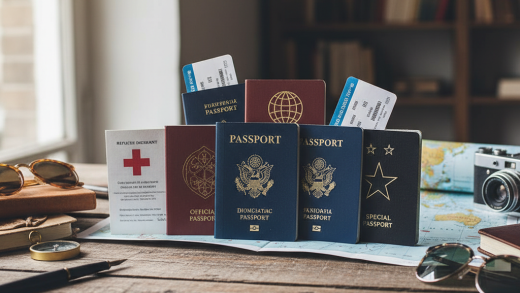
While rare, it is worth noting that not all passports from the same country are equal. Diplomatic (black or red) and Official (maroon or blue) passports are issued to government officials and diplomats. These documents often carry immunity privileges and visa waivers that standard tourist passports do not.
While the average citizen cannot apply for these, those working for international organizations (like the UN or Red Cross) or government bodies should explore if they qualify for an official travel document (laissez-passer). These documents can sometimes facilitate travel into conflict zones or nations with strained diplomatic ties to your home country.
Protecting Your Travel Identity
A stolen passport has negative power; it is a liability. Part of maximizing your travel utility is ensuring you never lose access to it. Modern passports contain RFID chips with biometric data. While convenient, this makes them valuable targets. Use an RFID-blocking wallet or passport cover to prevent digital skimming.
Furthermore, always travel with a backup plan. Keep high-resolution digital scans of your passport information page, your visas, and your driver’s license in a secure, encrypted cloud storage service. If you lose your physical book, having these copies can expedite the emergency replacement process at your consulate, getting you back on the road faster.
Strategic Visa Application
If you must apply for a visa, do it strategically to maximize its value. Instead of applying for a single-entry visa for a specific trip, apply for a multiple-entry long-term visa if the option exists. For example, the United States offers 10-year B1/B2 visas to citizens of many countries. Similarly, frequent travelers to China can apply for 10-year multiple-entry visas.
Having a valid long-term visa in your passport often acts as a ‘substitute passport’ for other countries. For instance, holding a valid US, UK, or Schengen visa allows citizens of countries like India or the Philippines to enter several other nations (like Mexico, Turkey, or parts of the Balkans) visa-free. This is a massive hidden perk that significantly boosts your global mobility.
Conclusion: Mobility is a Mindset
Maximizing your passport’s travel power is about moving from a passive traveler to an active strategist. It involves understanding the geopolitical leverage your citizenship holds, supplementing it with residency or second citizenship, and utilizing logistical tools like Trusted Traveler Programs to smooth your path.
By keeping your documents in prime condition, researching regional agreements, and perhaps investing in a second passport, you can unlock a level of freedom that goes far beyond the standard tourist experience. The world is vast, and your passport is the key—make sure you are turning it the right way.