
Heavy
or unusually frequent rainfall often serves as an unforgiving diagnostic test for a residential property, quickly exposing deep-seated vulnerabilities in a backyard that remain entirely hidden during dry summer months. When intense storms strike, water may begin pooling aggressively in low-lying spots, scouring fertile topsoil away from carefully cultivated garden beds, or turning once-pristine sections of a lawn into soggy, unusable quagmires. Homeowners facing these recurring seasonal challenges are increasingly discovering that superficial cosmetic fixes do little to address the root causes of poor water movement. Instead, managing excess moisture requires a comprehensive understanding of a property’s unique topography, soil composition, and pre-existing drainage pathways.
Implementing the right landscaping interventions can successfully transform a waterlogged yard into an attractive, highly functional outdoor living space. However, industry professionals emphasize that there is no universal template or one-size-fits-all solution for residential drainage problems. A method that dramatically improves conditions on a sloping, sandy lot may fail entirely or even exacerbate issues on a flat parcel dominated by heavy clay. Soil characteristics, overall grading, and the final destination of surface runoff all dictate the long-term performance of any drainage improvement. As communities experience shifting weather patterns and more frequent heavy downpours, homeowners are weighing five primary backyard landscaping strategies to reclaim their outdoor spaces.
Collecting Rainwater and Constructing Rain Gardens
One of the most sustainable approaches to mitigating excess moisture involves capturing precipitation at its source before it can cascade off a roof or rush across an unprotected yard. Installing a rain barrel directly beneath a downspout allows property owners to intercept roof runoff, storing the water for future use in gardens and flower beds during drier spells. While this harvested water can prove invaluable during mid-summer droughts, the actual volume captured is inherently tied to local weather patterns and the physical storage capacity of the containers. Furthermore, maintenance is critical; rain barrels must feature tight-fitting covers or fine mesh screens to prevent debris accumulation and mosquito breeding, while any overflow must be meticulously routed away from the home’s structural foundation.
Regulatory considerations also play a significant role in rainwater harvesting, as municipal and state rules vary widely across regions. For instance, regulatory frameworks in states like Colorado generally permit eligible residential households to utilize up to two rain barrels with a combined storage capacity not exceeding 110 gallons, provided the collected water is applied exclusively to outdoor landscaping on the property where it was gathered.
Beyond simple barrel storage, constructing a rain garden offers an alternative method for managing ground-level saturation. A rain garden consists of a shallow, intentionally landscaped depression engineered to temporarily collect surface runoff and allow it to percolate naturally back into the surrounding soil. These installations typically incorporate specialized plant species capable of surviving both prolonged periods of saturation and subsequent stretches of drought. While rain gardens excel at reducing overall runoff volume and filtering out certain environmental pollutants, they are not universally applicable to every residential site.
Agricultural extension services and landscape architects generally advise positioning a rain garden at least ten feet away from a home’s structural foundation while keeping it well clear of septic tanks and underground drain fields. Depending on local health codes and soil percolation rates, recommended separation distances from septic systems can range from forty to fifty feet or more. Soil must also possess adequate internal drainage to support the feature. Experts frequently recommend conducting a simple percolation test by digging a test hole, filling it with water, and monitoring the drawdown rate. Many established guidelines suggest that water should completely drain within twenty-four to forty-eight hours, though stricter municipal standards advocate for a maximum twenty-four-hour window. If water lingers past these timeframes, the site may require substantial soil amendments, a complete redesign, or an entirely different engineering approach.
Before any excavation begins—whether for a modest rain garden or an elaborate underground drainage network—property owners are legally and practically required to contact their regional 811 utility notification service to request underground line markings. While public utility locating services are generally provided free of charge, privately owned underground infrastructure, such as sprinkler lines or private electrical runs, often requires a separate, private locate. Homeowners must adhere strictly to state-mandated advance-notice timelines and wait for official clearance before breaking ground.

For those drawn to ornamental water features, traditional backyard ponds or decorative fountains can still be integrated into the landscape design. However, industry experts caution that a standard pond or fountain should never be relied upon as a functional drainage solution unless it has been custom-engineered to manage stormwater loads. Conventional water features require rigorous, independent planning regarding water quality, overflow management, and ongoing maintenance.
Utilizing Decorative Rock to Control Surface Erosion
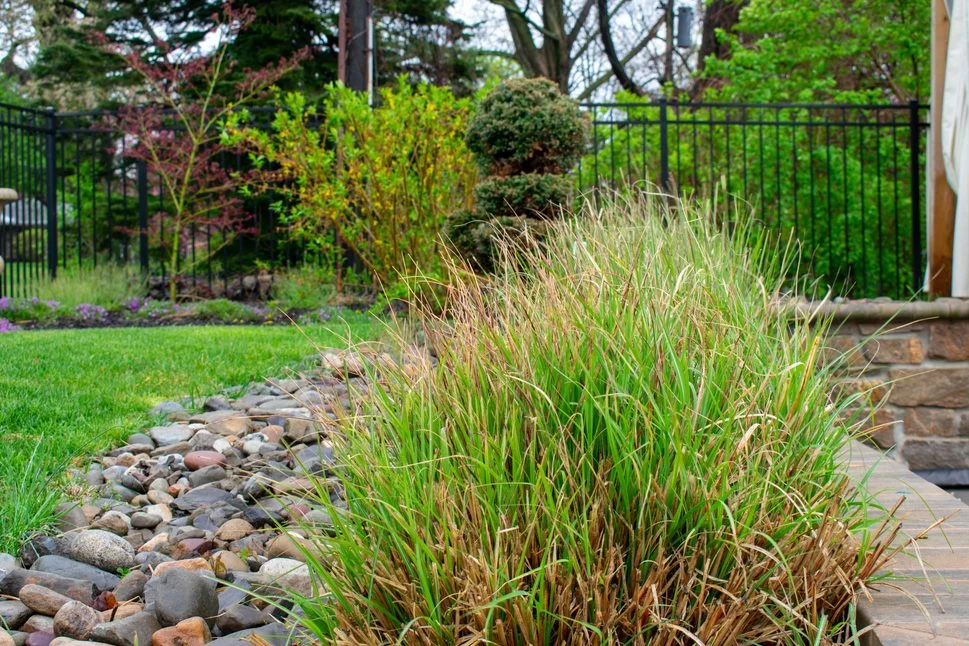
When heavy storms repeatedly wash away decorative mulch or erode bare soil beds, property owners frequently turn to decorative rock as a durable alternative. Incorporating rock beds, gravel borders, and stone-lined drainage channels can effectively armor exposed earth against the abrasive force of falling rain and rushing water. These hardscape elements significantly reduce the amount of loose sediment carried away from garden beds and prevent muddy debris from spilling across walkways and turf areas during severe weather events.
Despite its undeniable utility in controlling surface erosion, landscape specialists stress a fundamental distinction between stabilizing soil and actively improving subsurface drainage. Simply dumping a layer of decorative stone over perpetually wet earth does nothing to enhance the soil’s natural permeability or accelerate absorption rates. If the ground underneath suffers from poor compaction or heavy clay content, water will continue to pool beneath the decorative rock layer. In severe cases, homeowners must integrate dedicated structural drainage features, such as surface swales or French drains, to truly resolve the underlying issue.
A swale operates as a shallow, gently sloped channel designed to safely guide surface runoff toward an appropriate discharge zone, whereas a French drain typically employs a gravel-filled trench housing a perforated pipe to intercept and redirect subsurface water away from trouble spots. Both systems rely heavily on precise engineering, proper sloping, and safe outlets. Water must never be redirected toward a neighbor’s property, a public right-of-way, or a home’s foundation, where it could trigger catastrophic structural damage. For minor landscaping projects, however, decorative rock remains a highly practical and aesthetically pleasing method for curbing erosion along pathways and planting borders, provided the homeowner has accurately diagnosed the specific problem before purchasing materials.
Selecting Resilient Plants to Stabilize Wet Soil
Vegetation plays a vital role in protecting residential topsoil from erosion, particularly on steep slopes or across broad expanses where rainwater gathers momentum as it moves across the landscape. The intricate root networks of healthy plants act as a biological anchor holding the earth firmly in place, while dense above-ground foliage and stems help slow the velocity of surface water. Nevertheless, selecting appropriate flora requires careful consideration, as not every plant species is biologically equipped to withstand consistently soggy conditions.
While certain moisture-loving plants thrive in temporarily flooded environments, others demand well-drained soil and will quickly succumb to root rot if standing water lingers around their base for extended periods. Native plants are frequently recommended as a reliable starting point because they are genetically adapted to regional precipitation and climate patterns. However, horticulturists note that a plant being native to a specific state or region does not automatically mean it can tolerate standing water.
Property owners must evaluate plants based on the precise microclimate of the planting site, factoring in sunlight exposure, soil type, drainage capabilities, and local climate zones. In a rain garden, for example, species planted in the lowest, wettest depression must tolerate temporary saturation, while those positioned along the higher outer edges must possess enough drought tolerance to handle much drier conditions. On sloped terrain, establishing a robust mix of groundcovers, native grasses, and deep-rooted shrubs can substantially curtail erosion once the root systems are fully mature. Local cooperative extension offices and reputable regional nurseries serve as valuable resources for identifying the ideal flora for specific soil and moisture profiles. In zones experiencing active, severe erosion, planting alone is rarely sufficient; temporary erosion-control blankets or professional grading work are often necessary to stabilize the earth while permanent vegetation takes root.
Engineering Retaining Walls and Channels on Sloped Yards
Sloped backyards present a distinct set of hydrological challenges during major rainstorms, frequently causing water to cascade rapidly downhill. This accelerated runoff acts as a destructive force, stripping away topsoil, decimating garden beds, and pooling dangerously near outdoor living areas, patios, and residential foundations. To combat these forces, property owners often construct retaining walls to terrace the slope, stabilize the earth, and carve out functional, level spaces for planting or recreation.

However, retaining walls should not be viewed merely as solid barriers designed to block water movement. Without careful engineering, hydrostatic pressure can build up dangerously behind a wall, leading structural experts to mandate dedicated drainage provisions, specialized backfill materials, and robust foundational support. Absent these crucial elements, retaining walls are prone to shifting, cracking, or suffering catastrophic structural failure. When the primary objective is simply moving unwanted surface water away from vulnerable zones, a thoughtfully designed drainage swale or professional grading plan is often far more appropriate than a massive hardscape structure.
Before altering a yard’s topography or redirecting existing drainage pathways, property owners must carefully evaluate where the displaced water will ultimately flow. Directing runoff onto an adjacent residential property or into a public stormwater system can cause extensive neighborhood damage and frequently violates local municipal ordinances. Furthermore, construction regulations often dictate strict parameters for retaining walls. In many jurisdictions, any wall exceeding four feet in height measured from the bottom of the footing to the top requires a formal building permit and certified engineering. Even shorter walls may trigger permit requirements if they are subjected to external surcharges, such as the weight of an adjacent driveway, a structure, or steeply sloped soil overhead. Because municipal codes vary widely, checking with local building departments prior to construction is essential. For persistent flooding, severe soil erosion, or water infiltrating near a home’s foundation, consulting a qualified drainage engineer or licensed landscape professional remains the most prudent initial step.
Replacing Problem Lawns With Alternative Landscaping
While a lush, green lawn provides an ideal recreational space for children and pets, many residential properties struggle to maintain healthy turfgrass during prolonged periods of wet weather. Waterlogged soil starves grass roots of necessary oxygen, weakens the turf, and leaves the ground too soft to support routine maintenance equipment like lawnmowers. However, the root of the problem is rarely the grass species itself; instead, underlying factors such as severe soil compaction, heavy clay content, improper grading, and concentrated runoff are usually to blame for persistent standing water.
When a specific zone of the yard remains stubbornly soggy while the surrounding lawn drains normally, homeowners are increasingly opting to replace the struggling grass with alternative landscape treatments better suited to wet conditions. Depending on the site’s specific characteristics, these alternatives can include rain gardens, expanded planting beds featuring moisture-tolerant perennials, decorative gravel layouts, or permeable paving systems designed to facilitate water infiltration.
Transitioning away from expansive turf areas can also offer the secondary benefit of reducing overall mowing and lawn maintenance labor. Nevertheless, landscape professionals caution that simply tearing out grass and replacing it with gravel, pavers, or mulch will not magically cure a deficient drainage system. Permeable paving, for example, relies entirely on correct installation methods and favorable underlying soil conditions. If water cannot physically pass through the sub-base or drain away through an engineered outlet, the paved surface will continue to suffer from pooling and saturation. Prior to undertaking major lawn removal projects, property owners must accurately determine whether their primary obstacle is surface runoff, compacted subsoil, or poor grading. Distinguishing between these factors prevents homeowners from investing in cosmetic landscaping changes that alter the yard’s appearance without resolving the underlying hydrological failure.
Identifying and Assessing Backyard Drainage Problems
Recognizing the boundary between normal weather effects and chronic property damage is essential for effective property management. Some degree of temporary standing water is entirely natural following an intense, cloudburst-style storm, particularly when precipitation falls faster than the surrounding earth can physically absorb it. The true warning sign of a compromised drainage system is water that repeatedly collects in the identical low spots, lingers for days after the rain has stopped, or begins causing visible damage to the landscape and hardscape.
Common diagnostic indicators include persistent soggy patches of turf, water stains or moisture lingering near the home’s foundation, dead or dying plants overwhelmed by saturated soil, and visible channels where rushing water has scoured away topsoil. These distinct symptoms, however, can stem from vastly different root causes. Water pooling near a house foundation, for instance, might be the direct result of faulty gutter systems, poorly positioned downspouts, improper surface grading, or deeper subsurface water tables. While a newly installed rain garden or an amended planting bed can successfully manage ordinary surface runoff, such decorative features must never be relied upon to correct active water intrusion into a basement or crawlspace.
When property owners encounter recurring indoor flooding, compromised structural foundations, or widespread changes in neighborhood drainage patterns, enlisting the services of a qualified professional provides a far more reliable foundation for action than attempting cosmetic landscaping fixes. Successful yard management begins with a clear, realistic assessment of where stormwater originates and where it ultimately needs to travel. Whether utilizing rain gardens, decorative stone, erosion-control vegetation, retaining walls, or lawn alternatives, effective property improvements must address the physical realities of soil, grading, and runoff patterns to ensure long-term functionality.
| Source | : | Open Passport |
| Author | : | Sagoh |
| Editor | : | Open Passport Editorial Team |
