
The High-Stakes Leverage Game: Skift Aviation Forum to Tackle the Forces Shaping the Future of Airlines
Opening Talks + Reception: Apella by Alexandria, New York City, November 11, 2026
Main Event: TWA Hotel, JFK, New York City, November 12, 2026
The global airline industry is navigating one of the most volatile economic environments in recent memory, caught in a high-stakes squeeze between soaring operating expenses and shifting market dynamics. In mid-September, jet fuel prices surged by an astonishing 102% year over year, dealing a severe blow to commercial carriers. Even as major airlines report record-setting revenues, top-line financial figures have proven insufficient to fully absorb the dramatic escalation in fuel costs.
Crucially, the financial damage has been distributed unevenly across the sector, highlighting a widening chasm between resilient industry giants and vulnerable low-cost operators. The stark realities of this economic pressure were underscored earlier this year when Spirit Airlines was forced to shut down completely in May, following its second bankruptcy filing in the span of a single year. In sharp contrast, North America’s largest network carriers have remained remarkably upbeat, sustaining profitability on the strength of tightly managed capacity, lucrative loyalty program cash flows, and a resilient base of travelers who continue to pay top dollar for comfort and premium services.
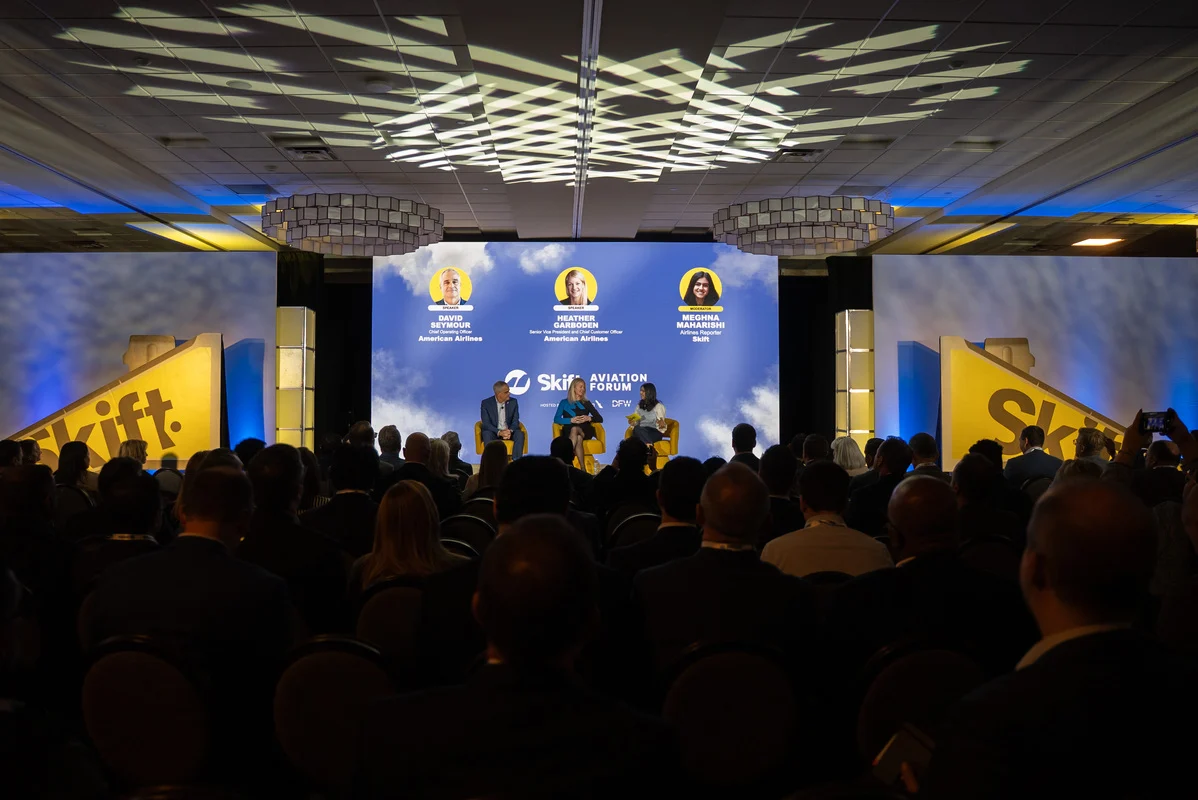
Ultimately, this divergence in financial health comes down to a matter of leverage. During a year when the industry’s single largest variable cost line is heavily influenced by geopolitical conflict and global oil markets, airline profit margins depend heavily on five critical external relationships that fall entirely outside management’s direct control. To dissect these complex dynamics, industry executives, financiers, and innovators will converge in New York City this November for the upcoming Skift Aviation Forum. Featuring an exclusive opening reception on November 11 followed by a full day of main stage programming on November 12 at the iconic TWA Hotel at JFK, the event will bring together leaders from across these vital operational relationships to examine the forces currently reshaping aviation.
The Manufacturers: A Shortage That Props Up Ffares
Among the most pressing operational bottlenecks facing the aviation sector is a persistent constraint in the aircraft manufacturing pipeline. Meaningful narrowbody delivery slots for popular workhorse aircraft such as the Airbus A320neo and the Boeing 737 Max remain exceptionally scarce, with availability largely booked out until roughly 2033. Meanwhile, widebody aircraft availability is expected to stay severely restricted well into the mid-2030s. This ongoing manufacturing deficit was vividly illustrated at the Farnborough International Airshow in July, where aircraft lessors stepped in to place the largest orders, effectively absorbing heavy balance-sheet risks that commercial airlines were increasingly reluctant to carry on their own books.
This widespread supply chain shortage cuts both ways for the airline industry. On one hand, it serves as a rigid cap on every individual carrier’s fleet expansion plans and long-term growth aspirations. On the other hand, that exact same capacity constraint has inadvertently kept industry-wide supply tight enough to support healthy passenger airfares even as jet fuel prices climbed to punishing heights. Ultimately, the manufacturing bottleneck forces airline leadership teams to make critical fleet commitments a full decade out, with lessors holding a much larger share of the underlying capital and financial risk.
The Unions: Costs Locked In for Five Years
Labor relations represent another major pillar exerting immense pressure on airline balance sheets, with long-term compensation agreements locking in significantly higher operational costs for the foreseeable future. In May, United Airlines became the final member of the big four U.S. carriers to successfully settle its protracted contract negotiations with its flight attendants. The resulting five-year labor agreement includes a substantial 31% cumulative pay increase, alongside $741 million in retroactive pay and newly established compensation for boarding duties. The remaining three major U.S. network carriers had already finalized similar high-value deals with their respective workforce groups.
These surging labor expenditures materialized during the exact same twelve-month window in which jet fuel costs doubled, creating a severe dual squeeze that airlines cannot easily hedge against or mitigate. Across the Atlantic, Europe’s largest airline groups are grappling with a remarkably similar financial pinch, as escalating labor and mounting airport charges climb in lockstep with soaring fuel expenses. Consequently, labor has transformed into a rigid, fixed baseline cost that every airline capacity and route plan must successfully clear before management can even begin to factor in fuel costs, ticket fares, or fleet investments.
The Premium Traveler: Revenue That Absorbs Shocks
To offset these compounding cost pressures, commercial airlines have leaned heavily into high-yield passenger segments, transforming premium cabins into a vital financial cushion capable of absorbing macroeconomic shocks. Globally, premium cabins generated an impressive $188 billion in 2024, accounting for approximately 24% of total passenger revenues worldwide. Across the United States, premium seating capacity has expanded by a dramatic 33% since 2020, significantly outpacing the modest 16% growth recorded in the economy cabin sector. Interestingly, market data highlights that self-funded leisure travelers are now driving a substantial portion of this ongoing demand for enhanced onboard comfort.
However, industry analysts warn that this strategic pivot carries its own set of latent hazards. Skift Research has flagged potential oversupply as the next major risk on the horizon for premium travel. If every competing carrier aggressively scales up its premium product offerings simultaneously, market yields risk becoming diluted. The overarching decision facing airline executives moving forward is precisely how much cabin real estate should be converted to premium configurations before the global industry builds more high-end seating than travelers are ultimately willing to purchase.
The Airports: Competing for the Same Traveler
Infrastructure development represents another critical external friction point, with major airports planning their capital investments across decade-long horizons to accommodate projected surges in global passenger traffic. For instance, Dallas Fort Worth International Airport is actively targeting a milestone of 100 million annual passengers by 2030, with the construction of a brand-new Terminal F serving as the centerpiece of this ambitious growth strategy. Commercial airlines will inevitably fly into this newly created capacity, and they will ultimately pay for the multi-billion-dollar expansions through the landing fees and passenger facility charges required to fund them.
Simultaneously, airports are increasingly expanding their own footprints into the lucrative premium travel experience, occasionally bypassing traditional carrier-run lounges. At São Paulo’s Guarulhos International Airport, a fully private terminal operating independently from traditional airline partnerships reached its operational capacity rapidly, effectively compelling carriers to adapt their ground procedures. This evolving dynamic raises critical questions regarding who ultimately commands the premium traveler’s valuable time on the ground, and who bears the long-term financial responsibility for the sprawling terminal infrastructure built to house them.
The Banks: The Most Profitable Seat Is a Credit Card
Perhaps no single revenue stream has proven more lucrative or critical to modern airline profitability than the financial alchemy of co-branded credit card partnerships and frequent flyer loyalty programs. Delta Air Lines alone collected a staggering $8.2 billion from American Express in 2025, translating to roughly 14% of the carrier’s adjusted operating revenue. Industry estimates place the operating profit margins for these co-brand credit card programs at an exceptionally high 35% to 50%. International carriers are mirroring this lucrative model; outside the United States, IAG Loyalty is actively targeting more than €1 billion in operating profit, with over 80% of that revenue generated by external corporate partners purchasing Avios points.
Nevertheless, this massive financial engine remains uniquely vulnerable to regulatory shifts. Much of this domestic loyalty revenue relies heavily on uncapped U.S. interchange fees, a financial mechanism that proposed legislation like the Credit Card Competition Act would place in serious jeopardy. Airline executives face the delicate task of determining how much of their overall corporate earnings should safely be tied to a bank partner and a legislative regulatory environment that remains completely outside their control.
Beyond these primary focus areas, the upcoming forum will feature contributions from prominent aviation figures, including senior leaders representing Allegiant, Porter Airlines, the oneworld alliance, and Homage Ventures & Advisors.
By bringing these key commercial counterparties together under one roof, the Skift Aviation Forum aims to foster direct dialogue across the industry. The event will place airline commercial chiefs alongside the leaders of major labor unions representing flight attendants across U.S. carriers, while connecting network operators directly with the aerospace manufacturers designing and building their future fleets.
Beneath all five of these critical operational relationships lies a much larger, overarching question for the aviation sector: which carriers will still maintain their corporate independence five years from now? As the global airline industry experiences ongoing waves of consolidation, the carriers that emerge from this turbulent era in the strongest competitive position will look fundamentally different from those that entered it. Attendees will hear directly from airline founders and executive leadership teams on both sides of that dividing line, including forward-thinking operators actively betting on sustained, independent growth without relying on mergers or acquisitions.
Additional event sessions and featured speakers will be announced on the official Skift Aviation Forum event page in the coming weeks.
| Source | : | Open Passport |
| Author | : | Lina Irawan |
| Editor | : | Open Passport Editorial Team |
