
Rights Groups Demand Immediate Release of Detained CJP Leaders as Crackdown on Peaceful Dissent Intensifies in Delhi
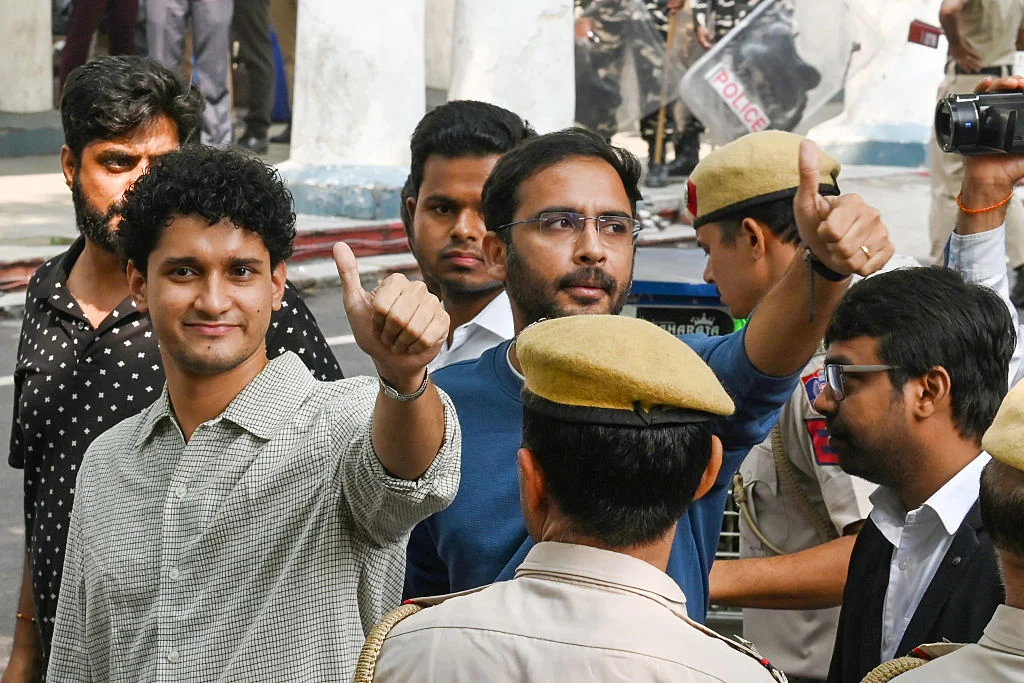
Human rights organizations and civil society advocates have issued urgent calls for the immediate release of two prominent leaders from the youth-led Cockroach Janta Party (CJP). Saurav Das and Ashutosh Ranka have been remanded to five days of judicial custody following their arrest during a demonstration at New Delhi’s historic Jantar Mantar site. Their detention, which occurred shortly after authorities officially stripped the location of its designation as an authorized public protest venue, has reignited intense debate over the shrinking scope for civic engagement, peaceful assembly, and political dissent across India.
According to statements shared by CJP’s legal head, Ratna Singh, the two political figures were ordered into judicial custody following a court hearing. Meanwhile, a third party member, Ajinkya Shinde, was subjected to preventive detention before eventually being released upon executing a personal bond of INR 5,000, equivalent to approximately USD 55. Police authorities have registered a formal First Information Report (FIR) against Das and Ranka, laying down multiple charges that include the alleged breach of legal bonds, criminal trespass, and the disobedience of lawful public orders.
The arrests have drawn sharp rebukes from national and international watchdogs. Aakar Patel, the Chair of the Board at Amnesty International India, strongly condemned the actions taken by law enforcement and municipal authorities.
"The authorities cannot claim to protect the right to protest while denotifying established protest sites and arresting people who attempt to use them," Patel stated. "Peaceful assemblies should not be limited to a few designated sites. Rather, public spaces must remain available for people to peacefully assemble, challenge those in power, demand accountability, and make their grievances heard. Authorities cannot use the criminal justice system to punish people for exercising their right to peaceful assembly. We call for the immediate release of the CJP leaders and an end to the crackdown on peaceful dissent."
The Historical Significance and Recent Loss of Jantar Mantar
For decades, Jantar Mantar has served as a vital democratic pressure valve in the national capital. Situated in close physical proximity to crucial political institutions, including the Parliament house, the avenue has provided a vital platform for citizens from all walks of life—ranging from industrial workers and student activists to marginalized communities—to bring their grievances directly to the attention of lawmakers and the general public. Its value has rested not merely on its geographic capacity to host large gatherings, but fundamentally on its accessibility and visibility to those holding political power.
However, the legal status of the location shifted dramatically when the Delhi Police officially removed Jantar Mantar from the list of legal, permitted zones for public demonstrations and protests. Law enforcement officials justified the move by pointing to directives issued by the Supreme Court concerning the establishment of alternative protest venues. In place of Jantar Mantar, authorities have designated distant locations such as Ramlila Maidan, Burari Ground, and CBD Ground as the exclusive permissible arenas for public dissent.
Human rights advocates and legal scholars argue that merely designating alternative venues fails to adequately safeguard the constitutional right to freedom of assembly. Effective protest requires accessibility, practical location, and the capacity for demonstrators to assemble within the direct sight and sound of their intended audience or targets of critique. Furthermore, international jurisprudence—including explicit guidance from the UN Human Rights Committee—maintains that peaceful assemblies should, in principle, be permitted to take place in any public space to which the citizenry ordinarily enjoys access.
Constitutional Protections and Legal Precedents
The actions taken against the CJP leaders and broader demonetization of traditional protest hubs run counter to foundational principles enshrined in the Indian Constitution. Articles 19(1)(a) and 19(1)(b) explicitly guarantee all citizens the freedom of speech and expression, alongside the right to assemble peacefully and without bearing arms. While the Constitution permits the state to impose reasonable restrictions on these freedoms on specific grounds—such as the maintenance of public order—legal experts emphasize that authorities do not possess unrestricted discretion to entirely purge public spaces of peaceful demonstrations.
This principle was underscored by the Supreme Court of India in the landmark 2018 ruling of Mazdoor Kisan Shakti Sangathan v. Union of India. In that judgment, the apex court explicitly recognized the delicate necessity of balancing the rights of protesters with the ordinary convenience of local residents and other regular users of public spaces. Crucially, the court established that any regulatory framework must genuinely seek to accommodate these competing interests rather than imposing arbitrary, sweeping, or blanket prohibitions on public assembly.
These domestic protections are strongly reinforced by international human rights frameworks. Both Article 19 and Article 21 of the International Covenant on Civil and Political Rights (ICCPR), to which India is a state party, codify and protect the fundamental rights to freedom of expression and peaceful assembly.
A Wider Crackdown on Dissent and Media Freedom
The prohibition of demonstrations at Jantar Mantar does not exist in a vacuum; it forms part of an aggressive, multi-pronged police crackdown targeting public protests over contentious issues, including recent electoral-roll revisions and widespread public demands for institutional accountability from Chief Election Commissioner Gyanesh Kumar.
Reports from media outlets and independent human rights monitors indicate that over a single weekend, law enforcement agencies detained thousands of demonstrators. Authorities imposed severe restrictions that paralyzed public transport, disrupted mobile internet services, and systematically blocked physical access to traditional gathering spaces. In numerous instances, citizens were detained preventively inside their own homes before they even had the opportunity to depart for designated protest points. Furthermore, individuals attempting to travel from distant states such as Gujarat and Maharashtra to join the capital demonstrations were intercepted and forcibly prevented from completing their journeys.
The fallout from the unrest has also severely impacted the press and the legal community. Journalists attempting to document police actions reported widespread detentions, physical mistreatment, the confiscation of professional equipment, and deliberate obstruction by law enforcement personnel, even when reporters prominently displayed official press credentials. Female journalists covering the frontline demonstrations went further, publicly alleging instances of sexual harassment perpetrated by members of the Delhi Police. Concurrently, defense lawyers attempting to gain lawful access to detained individuals faced systematic administrative hurdles, raising profound constitutional concerns regarding the ability of the press to report freely and the rights of detainees to legal representation.
"When protesters cannot assemble, journalists are harassed and cannot report freely, and lawyers face obstacles in reaching detainees, the entire system of public accountability suffers," Patel noted. "By closing Jantar Mantar and restricting peaceful gatherings, the authorities are making dissent increasingly difficult to exercise. A right that exists only on paper, while people are denied places to assemble and face arrest when they try, is a right hollowed out in practice. These restrictions display strong authoritarian tendencies and risk turning public spaces into places where dissent is unwelcome."
Origins of the Cockroach Janta Party and Spread of Arrests
The Cockroach Janta Party itself is a relatively recent phenomenon within the Indian political landscape. Born out of online political satire, the youth-led movement rapidly evolved into a formidable protest force in June of that year. Initially mobilizing students and young professionals against alleged systemic irregularities and examination paper leaks, the group established its presence through high-profile demonstrations demanding the political resignation of Union Education Minister Dharmendra Pradhan.
The recent state clampdown has extended far beyond the borders of the national capital, reflecting a coordinated inter-state containment strategy against youth-led dissent. In Bengaluru, local police detained at least 100 individuals who were attempting to stage a peaceful march toward the office of the Karnataka Chief Electoral Officer. Simultaneously, in Mumbai, law enforcement authorities took more than 600 people into preventive custody as they attempted to congregate at the historic August Kranti Maidan, underscoring the nationwide scale of the restrictions placed on civic mobilization.
| Source | : | Open Passport |
| Author | : | admin |
| Editor | : | Open Passport Editorial Team |
