
Prominent Tunisian Human Rights Defender Sihem Ben Sedrine Hit with Additional Prison Sentence Amid International Outcry
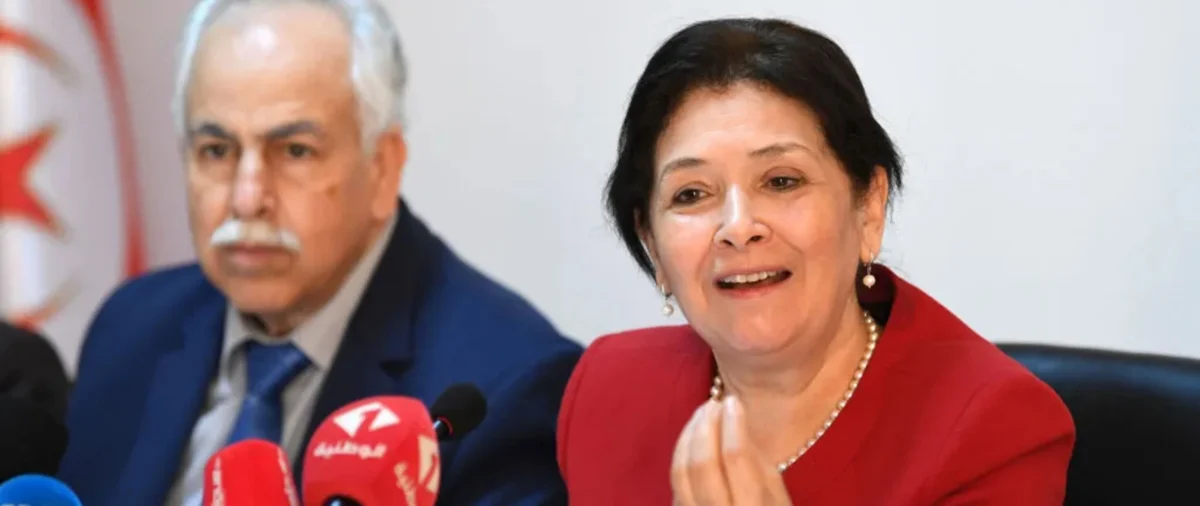
TUNIS — International human rights watchdogs have raised the alarm following a fresh prison sentence handed down to Sihem Ben Sedrine, a prominent Tunisian human rights defender and former president of the country’s landmark Truth and Dignity Commission (IVD). The latest ruling adds another five years of imprisonment to an already staggering array of legal penalties, compounding what civil society organizations describe as a systematic campaign of judicial harassment and a blatant assault on Tunisia’s transitional justice legacy.
Reacting to the verdict, Heba Morayef, Regional Director for the Middle East and North Africa at Amnesty International, issued a searing critique of the proceedings.
“This new sentence compounds the outrageous injustice against Sihem Ben Sedrine, who is being punished for her historic work as head of the transitional justice commission to expose decades of state abuses and for her years of steadfast human rights work,” Morayef stated.
The latest judicial blow centers around a specific arbitration and reconciliation decision adopted by the IVD during its operational tenure, a mechanism that involved businessman Lazhar Sta. This ruling is just one front in an escalating legal battle that has seen Ben Sedrine targeted across multiple criminal cases stemming exclusively from her leadership of the transitional body.
Despite having already been sentenced to a combined 25 years in prison following a previous round of trials, Ben Sedrine has thus far remained free pending the outcome of her appeals. However, legal representatives and international observers note that she now faces an imminent and terrifying risk of actual imprisonment as the state accelerates its efforts to enforce these penalties.
“Sihem Ben Sedrine has already been sentenced to 25 years in prison following an unfair trial on bogus charges in two cases linked to her leadership of the Truth and Dignity Commission,” Morayef emphasized.
According to human rights organizations, the relentless judicial targeting of Ben Sedrine is far from an isolated legal matter. Instead, it is viewed as a calculated attempt by Tunisian authorities to discredit the exhaustive findings compiled by the Truth and Dignity Commission regarding historical state abuses and systemic corruption. Critics argue that these prosecutions are designed to erase the legacy of the commission entirely and to shield individuals allegedly responsible for past violations from accountability.
In response to the escalating crisis, Amnesty International and other advocacy groups are intensifying pressure on the Tunisian government. They are urgently demanding that the authorities quash all of these unjust convictions and drop any outstanding criminal cases against Ben Sedrine that stem from her legitimate human rights work and her service to the nation’s democratic transition.
Background
The origins of the Truth and Dignity Commission are deeply rooted in the historic events of 2011, when a nationwide uprising ousted longtime authoritarian ruler Zine El Abidine Ben Ali and sparked the Arab Spring. In the aftermath of the revolution, Tunisian society faced the immense challenge of reckoning with decades of entrenched state corruption, gross human rights violations, and institutional repression.
To address these historical grievances and chart a path toward national reconciliation, the state established the Truth and Dignity Commission, known by its French acronym IVD. The commission was granted a specific mandate to investigate systemic abuses, document the suffering of victims, and deliver both justice and institutional reparations. Sihem Ben Sedrine, a veteran journalist and fierce advocate for civil liberties, was chosen to lead this monumental effort as its president, guiding its investigations through a turbulent and politically sensitive period in modern Tunisian history.
However, the legacy of the IVD has increasingly come under attack as the political landscape in Tunisia has shifted. The latest verdict against Ben Sedrine is directly tied to an arbitration and reconciliation decision adopted by the commission under its legal transitional justice mechanisms, involving a dispute with businessman Lazhar Sta. Rather than being recognized as a standard administrative function of a state-sanctioned truth commission, the decision has been weaponized by prosecutors to build criminal cases against its former leadership.
Altogether, Sihem Ben Sedrine has faced a barrage of seven separate criminal cases, all intrinsically linked to her professional responsibilities as the president of the commission. The legal campaign reached a harsh milestone on June 26, 2026, when the Tunis Court of First Instance handed down a combined 25-year prison sentence across two distinct cases—imposing five years in one matter and a staggering 20 years in the other.
The charges leveled against her include “fraud,” the “use of forged documents,” and the “abuse of official capacity to harm the administration.” Legal analysts and human rights defenders point out that these accusations fundamentally target the contents of the IVD’s comprehensive final report—particularly its detailed findings regarding deep-seated corruption within the national banking sector. Human rights experts maintain that these findings, and the investigative work required to uncover them, are fully protected under international standards guaranteeing freedom of expression and the mandate of transitional justice mechanisms.
Furthermore, the legal proceedings themselves have been heavily criticized for severe and systemic violations of international fair-trial standards. Throughout the litigation, Sihem Ben Sedrine and her defense team were systematically denied access to essential legal documents. They reportedly never received the formal indictment decision nor were they given adequate opportunity to review the legal grounds and evidence for the charges brought against her when the trials officially commenced, a direct violation of her fundamental right to mount an effective defense.
Procedural irregularities further compromised the integrity of the judicial process. Court hearings were scheduled and conducted during the middle of a nationwide lawyers’ strike, severely hampering legal representation. Simultaneously, members of the public, concerned relatives, local journalists, civil society representatives, and independent international observers—including monitors from Amnesty International—were arbitrarily barred from attending the courtroom sessions without any valid or adequate justification provided by the authorities.
The ordeal has also included severe personal liberty violations. Prior to her provisional release, Sihem Ben Sedrine endured more than six months of arbitrary pre-trial detention. Her imprisonment began on August 1, 2024, when an investigative judge in Tunis ordered her locked up, a status that persisted until she was finally granted provisional release on February 19, 2025. With this new five-year sentence compounding her legal jeopardy, the future remains uncertain as human rights defenders brace for further developments in the courts.
| Source | : | Open Passport |
| Author | : | Pevita Pearce |
| Editor | : | Open Passport Editorial Team |
