
Historic ICJ Ruling Finds Myanmar Responsible for Genocide Against Rohingya
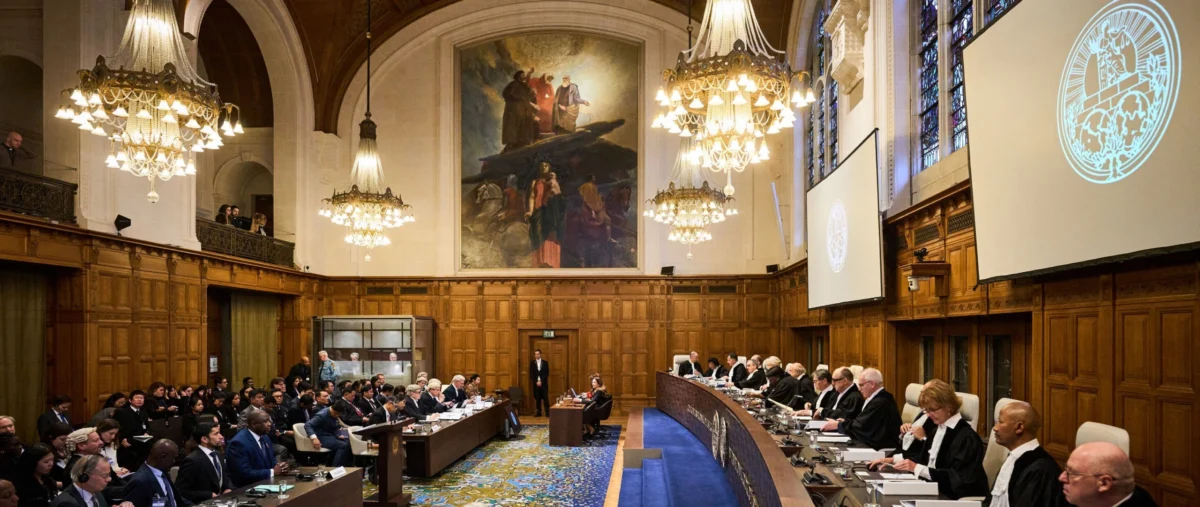
In a landmark decision delivered at The Hague, the International Court of Justice (ICJ) has ruled that Myanmar authorities committed the crime of genocide during their violent military clearance operations against the Rohingya population in 2017. The historic ruling marks the first time the United Nations’ highest judicial body has formally found a state directly responsible for committing genocide under the 1948 Genocide Convention.
The judgment has drawn widespread international attention, hailed by human rights organizations as a vital moment of accountability after years of systemic denial, impunity, and the suppression of truth. Responding to the verdict, Amnesty International’s Secretary General, Agnes Callamard, issued a scathing yet hopeful assessment of the court’s findings.
"Genocide. This is the unequivocal finding of the ICJ," Callamard said. "After years of denial, impunity and suppression of truth, this ruling is a historic and authoritative recognition of the atrocities committed againstलेख the Rohingya and a rare moment of justice for survivors, victims and their families."
For decades, successive Myanmar governments and military leadership have systematically denied the Rohingya population citizenship, relegating them to an institutionalized framework of segregation, severe discrimination, and relentless persecution that human rights experts classify as the crime against humanity of apartheid. Rohingya communities have long been confined to restricted refugee camps, forced from their lands, and subjected to the targeted destruction of their homes and villages. These systemic abuses culminated in the catastrophic violence of the military’s 2017 clearance campaigns, which involved widespread unlawful killings, mass displacement, and profound sexual violence.
Callamard emphasized that the final judgment by the ICJ must serve as an urgent wake-up call to the international community at a critical juncture in Myanmar’s turbulent history. She stressed that the meticulously documented findings of independent investigators and international courts must no longer be ignored or sidelined by geopolitical interests.
The legal path to this momentous decision was set in motion by the government of The Gambia, which instituted proceedings against Myanmar at the ICJ in 2019, accusing the Southeast Asian nation of breaching its obligations under the 1948 Genocide Convention. In July 2022, the court cleared a major legal hurdle by ruling that it possessed the requisite jurisdiction to hear the case. Amnesty International highlighted The Gambia’s legal action as a shining example of how sovereign states can and should respond to international crimes that shock the conscience of humanity.
Legal scholars have noted that a particularly significant aspect of the ICJ’s latest ruling is its clarification regarding genocidal intent. The court established that genocidal intent can legally coexist alongside other concurrent objectives, including broader military aims. This legal principle carries profound implications for other high-profile cases currently pending before international tribunals, most notably the case brought by South Africa against Israel alleging genocide against Palestinians in Gaza.
The timing of the ruling intersects directly with ongoing political realities inside Myanmar. The senior military official who oversaw the brutal 2017 campaign of crimes against humanity—former head of the armed forces, Senior General Min Aung Hlaing—now holds the position of president following a series of engineered elections. Human rights advocates argue that the international community must not normalize his leadership or welcome him on the global diplomatic stage, especially as grave violations continue unabated within Myanmar’s borders.
Amnesty International has urged global governments to immediately halt all transfers of weapons, security hardware, surveillance equipment, and military assistance to Myanmar. Furthermore, the organization called upon the United Nations Security Council to implement a comprehensive global arms embargo and formally refer the entire situation in Myanmar to the International Criminal Court (ICC).
Myanmar authorities are now legally obligated to comply with the ICJ’s ruling immediately. At the same time, regional and international stakeholders, including member states of the Association of Southeast Asian Nations (ASEAN), are being called upon to uphold the judgment. States must meet their binding obligations under the Genocide Convention and general international law by deploying every available diplomatic, political, and economic tool to prevent and punish genocide. Experts warn that any failure to enforce this judgment would only embolden the Myanmar military’s historical defiance of international law and perpetuate a deep-rooted cycle of impunity.
Human rights advocates stress that while the ICJ ruling is a monumental legal milestone, it should not represent the final chapter in the struggle for justice. The millions of survivors and victims of the atrocities are legally and morally entitled to full, comprehensive, and effective reparations for the immense harms they have endured. Additionally, the displaced population requires sustained international support, encompassing vital humanitarian assistance, safe resettlement opportunities, and robust political and financial backing for international accountability mechanisms.
The international community hopes this ruling will catalyze a long-overdue process of comprehensive accountability in Myanmar. Justice advocates maintain that all historical and ongoing crimes under international law—including war crimes, the crime of apartheid, and other crimes against humanity—must be thoroughly investigated, with all suspected perpetrators ultimately brought to trial.
Background
The ICJ’s November 19 ruling in The Hague centers on Myanmar’s state responsibility regarding the military operations conducted in Rakhine State in 2017. This judicial milestone is uniquely historic because it is the first time the ICJ has directly attributed state responsibility for genocide under the Genocide Convention.
In a previous landmark case in 2007—Bosnia and Herzegovina versus Serbia and Montenegro—the ICJ ruled that the 1995 massacres in Srebrenica constituted genocide, but stopped short of finding the state of Serbia directly responsible for committing the act. Instead, the court found Serbia liable for violating its convention obligations by failing to prevent the genocide committed by local armed groups led by General Ratko Mladić, and by failing to cooperate in handing Mladić over for trial to the International Criminal Tribunal for the former Yugoslavia (ICTY).
The origin of the current humanitarian crisis dates back to August 2017, when coordinated attacks by Rohingya insurgents on police outposts prompted Myanmar security forces to launch a devastating campaign of ethnic cleansing against the Rohingya Muslim population in Rakhine State. The military’s scorched-earth tactics resulted in the unlawful execution of thousands of Rohingya civilians, including young children. Soldiers carried out systematic sexual violence against women and girls, tortured men and boys in detention facilities, and razed hundreds of villages to the ground.
Beginning in 2016 and accelerating sharply in 2017, the violence forced more than 800,000 Rohingya—representing over half of the total population living in northern Rakhine State at the onset of the crisis—to flee across the border into neighboring Bangladesh. Today, an estimated 1.3 million Rohingya refugees reside in densely populated camps in Bangladesh, while their ancestral homes and villages in Rakhine State remain largely destroyed. In recent years, the humanitarian situation has grown even more complex as the Arakan Army, an ethnic insurgent group fighting the Myanmar military, has captured large swaths of Rakhine State. The Arakan Army has also faced documented accusations of human rights abuses against remaining Rohingya communities, driving further displacement toward the border.
International demands for accountability regarding the persecution of the Rohingya preceded the ICJ judgment by years. The UN Independent International Fact-Finding Mission on Myanmar previously urged that Senior General Min Aung Hlaing and other top military commanders be criminally investigated and prosecuted for war crimes, crimes against humanity, and genocide. Independent investigations conducted by Amnesty International as early as 2018 similarly identified 13 high-ranking military and government officials as warranting criminal prosecution for crimes against humanity committed against the Rohingya.
Legal analysts emphasize an important distinction between the ICJ proceedings and criminal accountability mechanisms targeting individuals. While the ICJ case addresses the international legal responsibility of the state of Myanmar under the 1948 treaty, separate judicial efforts focus on individual criminal culpability. In 2024, the prosecutor at the International Criminal Court requested an arrest warrant for Senior General Min Aung Hlaing for his alleged individual responsibility for the crimes against humanity of deportation and persecution of the Rohingya across Myanmar and Bangladesh during the 2017 violence. No public decision regarding that warrant request has been issued to date.
Concurrently, various national courts have pursued cases under the legal principle of universal jurisdiction. Notably, in 2025, a court in Argentina issued international arrest warrants for dozens of individuals, including Min Aung Hlaing, in connection with the persecution of the Rohingya. Despite these parallel efforts, the ICJ decision stands as the first definitive international ruling finding the institutional authorities of Myanmar directly responsible for genocide.
| Source | : | Open Passport |
| Author | : | Layla Zulfa |
| Editor | : | Open Passport Editorial Team |
