
North Texas Aviation Landscape Transforms as McKinney National Airport Opens as New Commercial Hub
For anyone who has ever flown out of Dallas/Fort Worth International Airport (DFW), navigating the sprawling 17,000-acre aviation footprint is a familiar exercise in endurance. Consistently ranked among the busiest aviation hubs on the planet, DFW offers world-class global connectivity, but it often comes bundled with a significant amount of travel friction for local passengers. Travelers frequently find themselves contending with congested toll plazas, circling packed concrete parking garages in search of an open space, and navigating an intricate five-terminal system that requires riding the Skylink train just to reach a departure gate.
For decades, the primary alternative for North Texas residents was Dallas Love Field (DAL). While Love Field offers a much smaller footprint, it remains heavily congested with high volumes of regional traffic, extended security lines, and the persistent challenge of navigating downtown Dallas highway traffic. For travelers residing in the rapidly growing northern suburbs of the Dallas-Fort Worth metroplex, the journey to either major airport often meant dedicating an hour or more to driving through heavy gridlock just to catch a domestic flight.
That dynamic has officially shifted. The region has secured its newest commercial-service airport, a development that is set to fundamentally alter the aviation landscape for locals looking to bypass the congestion of the mega-hubs.
The Historic Opening Of McKinney National (DTX)
Enter McKinney National Airport. Located in Collin County—consistently recognized as one of the fastest-growing regions in the United States—the facility has recently undergone a multi-million-dollar transformation designed to accommodate the exploding population and economic growth of North Texas.
For more than forty years, the facility operated strictly as a general aviation airport, serving private jets, corporate charters, and local aviation enthusiasts under its original identifier, TKI. That era came to an end with the official opening of a brand-new, 46,000-square-foot passenger terminal and the adoption of its new commercial IATA code: DTX.
The ribbon was officially cut on Veterans Day, accompanied by a traditional water cannon salute on the tarmac to mark

the occasion. With this launch, DTX officially becomes the newest commercial-service airport in the entire United States. For residents living in fast-growing communities such as McKinney, Frisco, Plano, and Allen, the opening means that the traditional hour-long commute to a major airport can now be replaced by a significantly shorter and more manageable drive.
Avelo Airlines & Nonstop Routes Launching Network
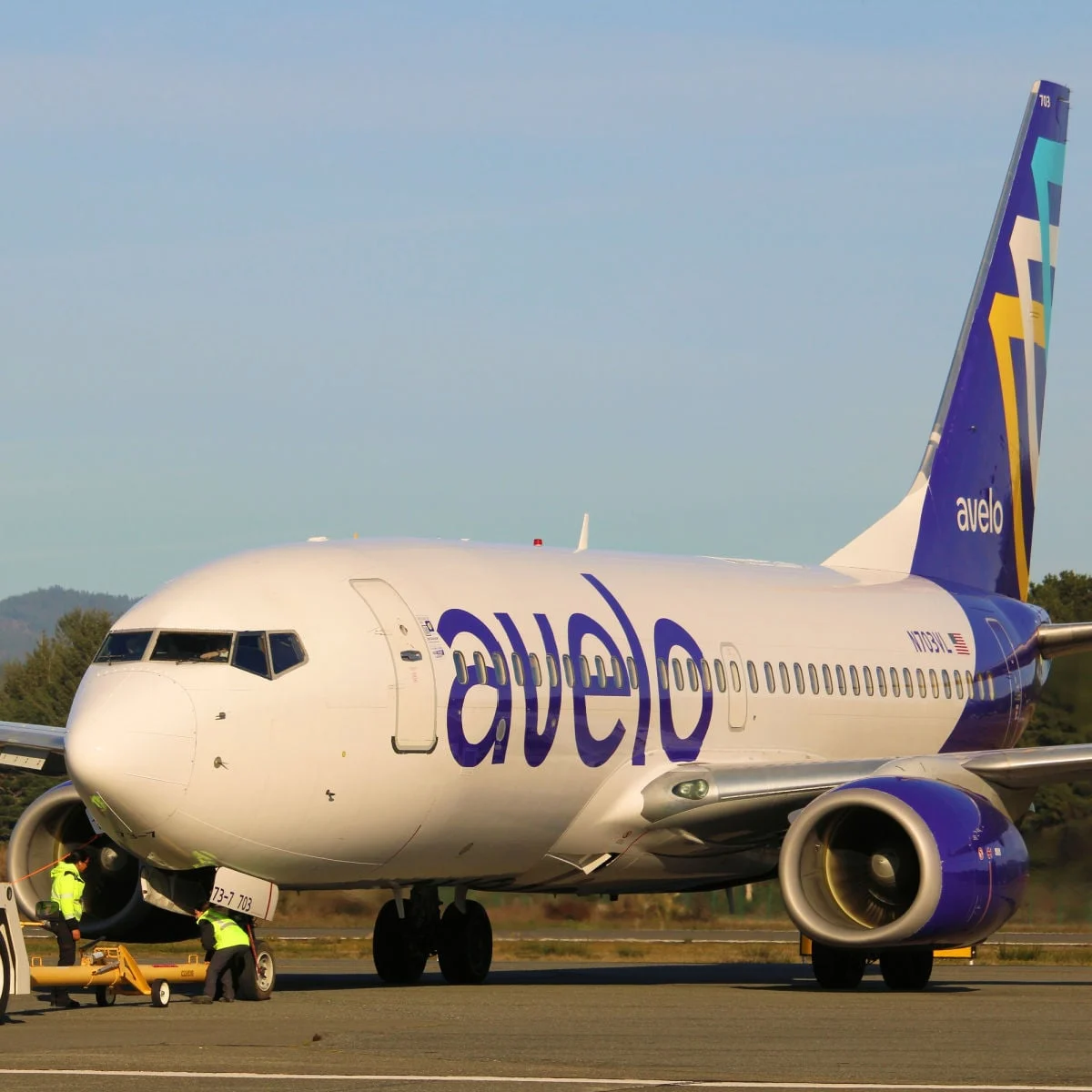
An airport’s long-term success is ultimately defined by the carriers and routes it secures, and McKinney National Airport is launching with a robust initial network. Avelo Airlines has stepped forward as the first and exclusive commercial carrier to serve the new passenger terminal, establishing McKinney as its fifth official base of operations.
To support the new route map, the airline has stationed three 184-seat Boeing 737-800 aircraft on the tarmac. Over the course of the opening weeks and leading into mid-December, the carrier is rolling out nonstop flights to a series of sought-after leisure destinations. With the inaugural flights to Fort Myers, Florida already underway, the broader network is expanding rapidly to connect North Texas travelers with key warm-weather getaways and popular tourism hotspots.

The strategy behind the initial route map focuses heavily on providing direct access to leisure markets, offering northern suburban residents an alternative to connecting through major domestic hubs for their vacations.
A Masterclass In Frictionless Travel
Beyond the convenience of the location and the newly established flight routes, the primary appeal of McKinney National Airport lies in its minimization of traditional travel friction. The entire facility has been designed from the ground up to deliver a modern, streamlined curb-to-cabin experience.
Passengers arriving at DTX will not have to navigate multi-level parking structures or rely on crowded shuttle buses just to reach the ticketing counters. Instead, the airport features a highly accessible, surface-level parking lot equipped with a state-of-the-art ticketless payment system designed to expedite vehicle entry and exit. Furthermore, daily parking rates are capped at a competitive price point, offering a stark contrast to the high parking costs typically encountered at larger metropolitan hubs.

Inside the new passenger terminal, the environment emphasizes efficiency and regional identity. The interior features commissioned murals created by Texas-based artists, highlighting the local history and culture of McKinney. The facility opened with four active gates, though the infrastructure was deliberately engineered to allow for rapid future expansion up to six gates as demand increases.
Because of this compact footprint, Transportation Security Administration (Security) wait times are expected to be significantly shorter than those at larger regional airports. The walk from the main entrance and security checkpoint to the departure gates takes a fraction of the time required at massive international facilities, providing an efficient transit option for travelers seeking a more direct start to their journeys.
Travelers utilizing the new service should note that Avelo Airlines operates as an ultra-low-cost carrier. While base fares are designed to be affordable, the airline applies separate fees for additional services, such as seat selection and full-sized carry-on baggage. Passengers looking to maximize savings on flights out of DTX typically benefit from packing light and adhering to personal-item size requirements.
| Source | : | Open Passport |
| Author | : | Iffa Jayyana |
| Editor | : | Open Passport Editorial Team |
