
Global Government AI City Innovation Summit: Moving From Smart Infrastructure to Proactive Urban Intelligence

From proactive typhoon response strategies in Shenzhen to accelerating digital government initiatives across Angola, Saudi Arabia, and Ethiopia, international public sector leaders convened this week to chart the next evolution of urban governance. Speakers at the Global Government AI CITY Innovation Summit argued emphatically that the future of intelligent city transformations relies fundamentally on trusted digital foundations, open international collaboration, and measurable, tangible improvements for both everyday citizens and government personnel.
Over the past decade, municipal administrations around the world have increasingly turned to smart city initiatives to improve the quality, operational efficiency, and environmental sustainability of urban services. By deploying digitized sensors, municipalities have sought to collect and interconnect vast
streams of data across local transport networks, pedestrian activity patterns, water consumption meters, waste management levels, and regional air quality indicators. Yet, as global leaders emphasized during the summit discussions, achieving these critical societal objectives requires decisive, automated action rather than mere passive insight.
As urban centers enter the next frontier of technological innovation, governments face a pressing operational question: how can they successfully advance their cities from mere digitization to true cognitive intelligence? Furthermore, how can public sector agencies translate predictive data analytics and citizen service requests into timelier civic services and rapid, on-the-ground emergency responses?
According to industry experts and government officials gathered at the event, the answers lie within the emerging "AI city" vision. In this advanced framework, traditional digital foundations and siloed data streams are layered with intelligent AI agents capable of detecting complex patterns, forecasting municipal demands, recommending precise operational interventions, and automating routine administrative tasks. This seamless integration makes public services significantly more accessible, responsive, and efficient for all members of the community.
A Proactive Approach to Urban Challenges
The practical potential of the AI city paradigm was demonstrated through numerous real-world case studies presented at the Global Government AI CITY Innovation Summit, which was held in Shanghai, China, alongside Huawei Connect 2026. The high-profile summit drew more than 500 global participants to highlight the rapid, transformative advancements that artificial intelligence is now introducing to modern urban development and public administration.

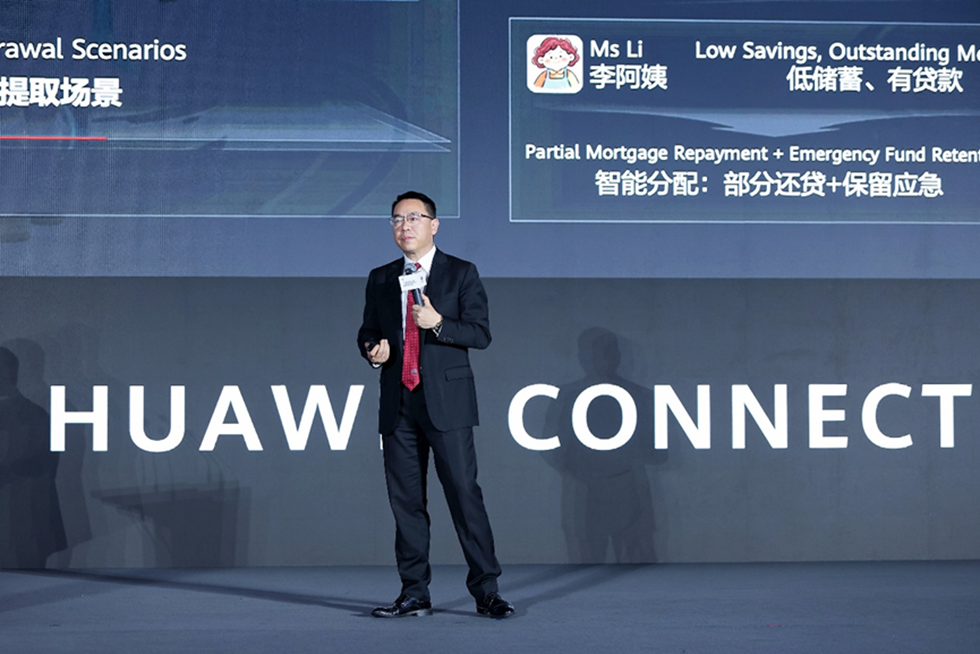
In his comprehensive keynote address, Simon Zhou, Vice President of the Government Public Services Digitalization BU at Huawei, presented artificial intelligence as an essential mechanism for cities seeking to respond more proactively to the escalating pressures of growing populations and increasingly complex urban demands. To illustrate this shift, Zhou detailed how an advanced AI agent known as Long Xiao Er—operating as Longgang’s AI-native urban governance agent—played a pivotal role in helping emergency services in Shenzhen prepare for Typhoon Noul earlier this year.
By aggregating real-time weather data, IoT sensor feeds, and public incident reports to continuously monitor vulnerable low-lying districts across the coastal metropolis, the AI agent successfully analyzed more than 740,000 individual on-site images. Through this deep visual and data analysis, the system identified over 900 abnormal safety incidents that required intervention. Subsequently, more than 2,800 early warning notifications were automatically dispatched to prepare front-line municipal staff well ahead of the typhoon’s landfall. Following the severe weather event, comprehensive patrol and response data were systematically compiled, and detailed flood prevention briefing reports were generated for administrative review.
According to Zhou, the deployment of this specialized agent has driven a fundamental shift in municipal safety operations, effectively transitioning emergency management paradigms away from reactive post-disaster rescue toward proactive risk prediction and automated early response.
Additional use cases highlighted during the keynote included the deployment of intelligent video monitoring terminals, machine learning algorithms, and robotic systems to streamline routine city governance chores. Zhou described a completely autonomous operational procedure now utilized in Shenzhen for detecting and addressing unlicensed street vendors without requiring immediate human intervention. Moreover, he emphasized how modern artificial intelligence can render public services far more inclusive for diverse populations, sharing the example of a personalized chatbot agent designed to guide citizens through complex financial services procedures with tailored, easy-to-understand advice.
Technology continues to transcend traditional municipal boundaries, bringing inclusive public services directly to everyone, Zhou concluded during his presentation.
Building the Foundations for an AI City
During the core panel sessions of the summit, Huawei welcomed public sector customers and digital transformation leaders from Angola, Saudi Arabia, Ethiopia, and China to share their unique practical experiences, strategic insights, and cautionary advice regarding AI city development. Several presenters reiterated the absolute necessity of establishing robust core technical foundations before attempting to scale artificial intelligence applications enterprise-wide. Huawei noted that it has already assisted more than 30 cities worldwide in constructing this essential technical architecture, deploying secure public cloud environments and Ascend-powered computing infrastructure as a unified base for device-edge-cloud collaboration.

The major Chinese city of Guangzhou is already two years into its ambitious journey deploying advanced government AI applications. The municipal administration currently maintains 20 active AI agents, with firm plans to expand that portfolio to 50 distinct agents by the end of the year. Public sector adoption across Guangzhou is scaling at a remarkable pace. For instance, the city’s dedicated smart office agent now actively serves 55 distinct government agencies and supports 26,000 public servants, having accumulated more than 5 billion token invocations to date.
Nevertheless, Cheng Ou, Deputy Director-General of the Guangzhou Municipal Government Services and Data Administration, began her presentation by outlining the rigorous administrative groundwork required before technological scaling could occur. Specifically, she detailed eight critical administrative and technical unifications that had to be executed to establish common foundational platforms upon which individual municipal departments could safely build.
Building upon these unified foundations, Guangzhou partnered closely with Huawei to establish a citywide intelligent computing platform. This collaboration also facilitated the launch of Huawei’s AI Foundry agent marketplace, a centralized repository where various government bodies can securely access, configure, and deploy pre-built AI agents specifically curated for public sector workflows.
Notable achievements stemming from this initiative include Guangzhou’s newly deployed civic hotline agent, which has successfully reduced ticket dispatch times from one hour down to mere seconds while maintaining first-contact resolution rates above 69%. Furthermore, specialized data governance and cataloguing agents have collectively reduced manual administrative workloads by more than 80% and 90% respectively, freeing up human personnel for higher-value civic tasks.
Lessons Learned in AI City Construction
Addressing international peers from an African perspective, Meick Afonso, General Director of the Administrative Modernization Institute (IMA) in Angola, stressed that any meaningful artificial intelligence adoption strategy must originate from the actual needs of the citizenry. With a young population characterized by a median age of 17 and an overall population size projected to double by the year 2050, the societal demand for responsive public services is escalating rapidly across Angola. For artificial intelligence to deliver the profound level of transformation necessary to meet these expanding needs, the Angolan government first had to overcome significant operational obstacles stemming from historically fragmented administrative processes.
Afonso urged fellow government leaders not to rush the foundational groundwork. Instead, he advised administrators to thoroughly redesign bureaucratic procedures and establish connected, interoperable data platforms first, reserving the implementation of advanced AI layers and process automation for a later stage.
Shifting focus to the Middle East, Mohammed Ashgar, CEO of the Center for Monitoring City Operations in the Kingdom of Saudi Arabia, concentrated on the practical application of artificial intelligence to improve municipal issue management, particularly when tackling widespread urban problems such as road surface defects, unmanaged construction waste, and public hygiene infractions. In legacy operational systems, these types of civic complaints were typically reported through multiple disconnected channels, leading to heavily duplicated, contradictory information. Furthermore, without a closed-loop digital management system, municipal officials historically possessed very limited visibility into whether a reported urban defect had actually been permanently repaired in the field.
By establishing an AI-empowered National Command Control Center that integrates disparate detection sources into a single, unified operational workflow, the Saudi government introduced a centralized coordination layer between initial issue detection and final operational response. While outlining numerous operational benefits, Ashgar’s primary takeaway for summit attendees was that deploying artificial intelligence alone is never sufficient; cities must rigorously follow up to ensure that field teams take correct corrective actions and that reported civic issues are truly closed out.
The final institutional case study was presented by Melaku, Director of Coordination and Capacity Building at the Modern Ethiopian Service for Organized Benefits (MESOB). MESOB represents an integrated digital and physical service platform launched by the Ethiopian government in April 2025, designed to streamline public service delivery and extend critical administrative services far beyond traditional physical offices and major metropolitan centers.
The presentation highlighted the successful rollout of a unified citizen application alongside mobile service buses tailored to reach populations in remote geographical areas, alongside forward-looking plans to expand access across diverse, localized communities. Melaku’s core messages emphasized the vital importance of designing digital government models that align closely with local socio-economic circumstances, adapting modern technological systems to fit Ethiopia’s unique communities, resource constraints, and national needs. He also argued that digital systems must be intentionally leveraged to reinforce transparency, public trust, and accessibility, rendering bureaucratic processes clearly visible, predictable, and remarkably easy for citizens to navigate.
Launching the Global AI City Innovation and Development Ecosystem Alliance
Global collaboration across the fields of artificial intelligence and public sector data management is entering a new, highly collaborative phase of growth. Speakers at the summit agreed that advancing future AI city innovation will depend heavily on international partners sharing specialized technical expertise, pooling innovative ideas, and working in close alignment toward common societal goals. By strengthening the underlying computing backbone, establishing robust AI-ready data infrastructure, and delivering the specific applications that governments require to better serve their populations, technology leaders intend to chart innovative pathways for the intelligent transformation of urban services worldwide.
To formally mark this shared long-term commitment to technological openness and cross-sector collaboration, Huawei concluded the summit by launching the Global AI City Innovation and Development Ecosystem Alliance alongside 14 founding industry partners. Organizers described the newly formed alliance as a collaborative framework primarily focused on three core pillars: advanced computing power, secure data utilization, and practical scenario innovation. Welcoming representatives from leading technology enterprises and international industry organizations to participate in the launch, Huawei framed the alliance as an essential vehicle to unite global ecosystem partners for the dawning era of intelligent urban development.
| Source | : | Open Passport |
| Author | : | Muslim |
| Editor | : | Open Passport Editorial Team |
