
Government Reaffirms Commitment to Combating Antisemitism at Lancaster House Conference
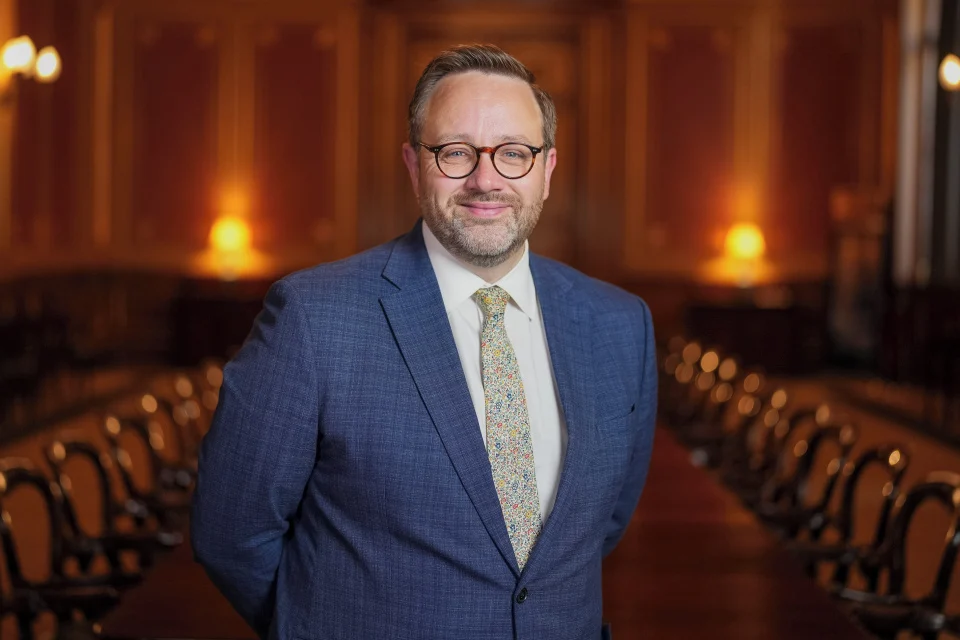
LONDON — Senior government figures gathered at Lancaster House on Tuesday to address the persistent and evolving threat of antisemitism, emphasizing that the hatred is not an abstract issue but a daily reality that impacts the safety and freedom of individuals, families, and communities across the United Kingdom and around the globe.
Addressing delegates at a major conference hosted in partnership with the Antisemitism Policy Trust, officials expressed gratitude to Lord Mann and the organization for their tireless efforts in convening leaders and continuing the vital work of confronting antisemitism in all its forms. The event brought together key stakeholders, policymakers, and community leaders to discuss practical measures for tackling prejudice, sharing international best practices, and ensuring that Jewish citizens can live their lives openly and without fear.
Opening the proceedings at the historic central London venue, speakers highlighted the heavy toll that contemporary antisemitism takes on everyday life. The atmosphere of unease affects people who find themselves hesitating before wearing visible symbols of their Jewish identity in public spaces. It weighs heavily on parents who harbour deep concerns about what their children might encounter while attending school or navigating university campuses. Furthermore, it creates barriers for Jewish professionals, artists, and sports supporters who ought to be fully integrated into every facet of national life, able to participate openly and without intimidation.
When members of the Jewish community feel compelled to hide who they are, or when they are forced to think twice about where they travel, which social events they attend, or how they express their heritage, society as a whole faces a profound moral challenge. Officials stressed that such an environment should concern every citizen, regardless of their background, because the erosion of minority rights and the spread of hatred ultimately threatens the fabric of an open and tolerant society.
Consequently, leaders argued that the responsibility to respond rests squarely upon all parts of society. The government reiterated its unequivocal commitment to combating antisemitism firmly and decisively, wherever and whenever it manifests. While Tuesday’s conference rightly concentrated on domestic strategies and what can be achieved within the United Kingdom, speakers pointed out that domestic efforts are only part of a much broader picture.
Antisemitism, by its very nature, refuses to stop at national borders. In an increasingly interconnected world, hatred, dangerous conspiracy theories, and online intimidation travel rapidly across international boundaries, amplified by digital platforms and social media networks. Just last week, government ministers joined the Foreign Secretary and representatives of the J7 Global Task Force in London to confront these transnational dynamics. A central takeaway from those high-level discussions was the realization of how deeply shared these challenges truly are.
Although antisemitism often assumes different forms and expressions depending on the geographic, cultural, and political context of a given place, no single country is responding to this threat in isolation, nor should they attempt to do so. Nations must recognize the value of mutual learning, sharing effective policies and interventions that have proven successful, and reinforcing a collective international response to a global problem.
Within this broader international framework, the Foreign, Commonwealth and Development Office (FCDO) plays a crucial practical role. Leveraging its extensive diplomatic network and established international partnerships, the UK is uniquely positioned to share approaches that are already making a tangible difference domestically, while simultaneously learning valuable lessons from the experiences of international allies. This diplomatic machinery allows the government to speak out forcefully against antisemitism on the global stage, ensuring that the issue remains a priority for international bodies.
This international engagement encompasses dedicated work through major multilateral institutions such as the United Nations and the Organization for Security and Co-operation in Europe (OSCE). It is also driven forward by the tireless efforts of the UK’s Special Envoys for Freedom of Religion or Belief and Post-Holocaust Issues. The underlying principle guiding all of these diplomatic and domestic efforts is both simple and fundamental: every human being should be granted the freedom to live according to their faith or personal beliefs, openly, peacefully, and without the shadow of fear. For Jewish people, this essential freedom translates into the practical right to live Jewish lives openly and proudly, secure in the knowledge that the state and its institutions will protect them.
Moreover, leaders emphasized that this international engagement must function as a genuine two-way conversation. Where British approaches have demonstrated a measurable practical impact—such as the widespread adoption and implementation of the International Holocaust Remembrance Alliance (IHRA) Working Definition of Antisemitism—the UK should readily share these tools with global partners. Conversely, where international allies have developed innovative strategies or effective countermeasures, British policymakers must listen intently and remain open to adaptation. Where common challenges demand collective and coordinated action, nations must roll up their sleeves and work side by side.
Ultimately, participants at Lancaster House were reminded that the true measure of success lies far beyond the eloquence of the speeches delivered or the quality of the discussions held within conference rooms. What truly matters is the tangible aftermath of such gatherings: whether major institutions summon the institutional courage to change where systematic improvements are urgently needed; whether individuals and organizations accept responsibility rather than deflecting or passing the burden onto others; and, most importantly, whether Jewish people experience a genuine, real, and lasting difference in their day-to-day lives.
The consensus at the conference was clear: the heavy responsibility of confronting and dismantling antisemitism belongs collectively to everyone. While the government must provide decisive leadership and public institutions must take proactive, enforceable action, all efforts must be grounded in attentive listening to Jewish communities, ensuring that policies are shaped in close partnership with those directly affected.
Organizers expressed hope that the day’s discussions would remain candid, pragmatic, and action-oriented, encouraging participants to be entirely honest about which policies are genuinely working, equally transparent about where current approaches are falling short, and remarkably clear about the necessary next steps. With the FCDO proud to have opened the doors of Lancaster House to the delegation, officials confirmed that the valuable lessons, insights, and strategies developed during the conference will be carried forward directly into the UK’s ongoing diplomatic work with international partners overseas, before handing over proceedings to Minister Eshalomi.
| Source | : | Open Passport |
| Author | : | Pevita Pearce |
| Editor | : | Open Passport Editorial Team |
