
Global Government Leaders and Huawei Launch AI City Innovation Alliance at Shanghai Summit

From proactive typhoon response operations in Shenzhen to rapidly accelerating digital government initiatives across Angola, Saudi Arabia, and Ethiopia, public sector leaders gathered in Shanghai for the Global Government AI CITY Innovation Summit to outline the next generation of urban development. Convened during Huawei Connect 2026, the summit drew over 500 participants to examine how intelligent city transformations increasingly depend on trusted digital foundations, open international collaboration, and measurable, tangible improvements for both citizens and government workforce operations.
Over the past decade, municipal governments worldwide have systematically turned to smart city initiatives to elevate the quality, operational efficiency, and environmental sustainability of urban services. By deploying digitalized sensors to capture, aggregate, and analyze vast matrices of data across metropolitan transport networks, pedestrian movement patterns, water consumption rates, waste accumulation levels, and air quality metrics, cities have unlocked unprecedented operational insights. However, as public sector stakeholders enter the next major wave of technological innovation, the central challenge has shifted from mere data gathering to decisive, real-time action.
Industry experts and government officials at the summit addressed a pressing question: How can governments successfully advance their urban centers from basic digitization to true intelligence? Furthermore, once predictive insights or citizen requests are generated, how can public agencies translate them into timelier services and rapid, coordinated on-the-ground responses?
According to speakers at the event, the definitive answer lies within the evolving "AI city" vision. In this advanced framework, core digital foundations and integrated data systems are augmented by specialized artificial intelligence agents capable of detecting complex patterns, forecasting shifting urban demands, recommending precise operational interventions, and automating routine administrative tasks. This multi-layered approach aims to make municipal services substantially more accessible, responsive, and efficient for all urban stakeholders.
A Proactive Approach to Urban Challenges
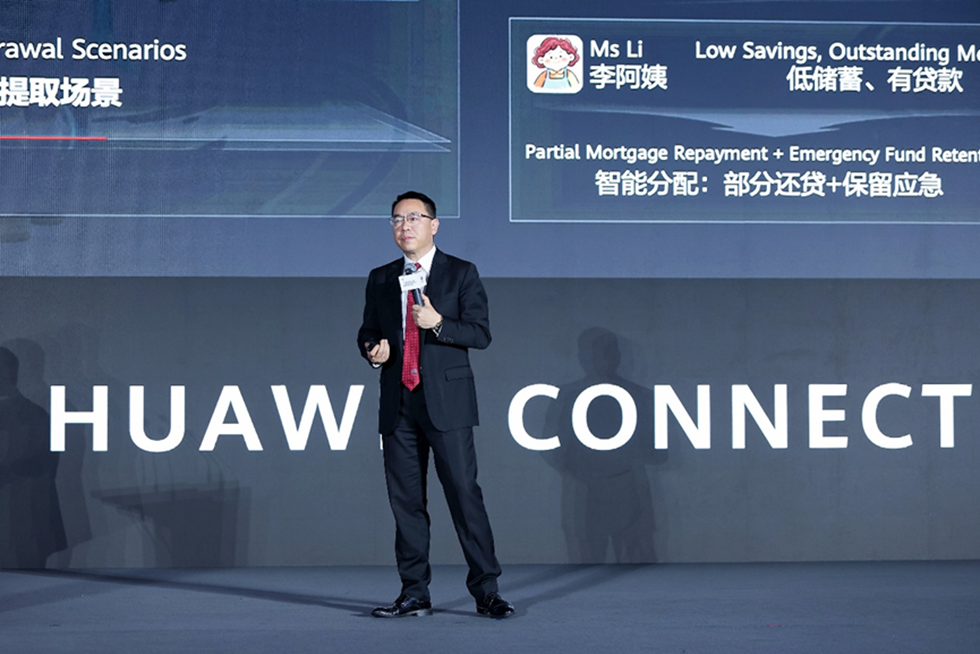
The practical potential of the AI city was highlighted through numerous real-world deployment examples presented throughout the summit. In his keynote address, Simon Zhou, Vice President of the Government Public Services Digitalization Business Unit at Huawei, framed artificial intelligence as an essential mechanism for cities to respond proactively to the escalating pressures of growing populations and increasingly complex urban infrastructure needs.
To illustrate this paradigm shift, Zhou detailed how an advanced AI-native urban governance agent known as "Long Xiao Er"—operating within the Longgang district of Shenzhen—played a critical role in helping emergency response services prepare for Typhoon Noul last July. By aggregating meteorological data, IoT sensor feeds, and public incident reports, the AI agent continuously monitored vulnerable, low-lying coastal areas throughout the metropolis.

During the height of the weather event, the agent analyzed more than 740,000 on-site images and successfully identified upwards of 900 abnormal safety incidents. It automatically issued over 2,800 early warning notifications to prepare front-line personnel ahead of the typhoon’s landfall. Following the storm, the system automatically compiled patrol and response data, generating comprehensive flood prevention briefings for municipal leadership review. According to Zhou, the implementation has "driven a fundamental shift in city safety operations, moving emergency management from reactive rescue toward proactive prediction and automated response."
Beyond emergency management, Zhou highlighted the integration of intelligent video terminals, machine vision, and robotic systems designed to streamline routine municipal governance tasks. He described a fully autonomous operational workflow deployed in Shenzhen to detect and resolve unauthorized street trading. Furthermore, he emphasized how artificial intelligence can foster greater inclusivity in public administration, citing the implementation of a personalized chatbot agent designed to guide citizens smoothly through complex financial services procedures.
"Technology keeps breaking city boundaries, bringing inclusive services to everyone," Zhou concluded, emphasizing the broader social equity dimensions of urban AI deployments.
Building the Foundations for an AI City
During subsequent conference sessions, Huawei executives and international municipal leaders from Angola, Saudi Arabia, Ethiopia, and China shared valuable implementation experiences and strategic advice regarding AI city development. A recurring consensus among presenters was the absolute necessity of establishing robust technical foundations before attempting to scale artificial intelligence capabilities. To date, Huawei has collaborated with more than 30 cities globally to construct this foundational architecture, deploying unified public cloud environments and Ascend-powered computing infrastructure as the bedrock for seamless device-edge-cloud collaboration.
In China, the major metropolitan center of Guangzhou is already two years into a comprehensive municipal AI application rollout. The city currently has 20 active AI agents deployed across government departments, with strategic plans to expand that portfolio to 50 by the end of the year. Public sector adoption is scaling rapidly; Guangzhou’s dedicated smart office agent now actively serves 55 distinct government agencies and 26,000 public servants, having accumulated more than five billion token invocations.
Opening her conference presentation, Cheng Ou, Deputy Director-General of the Guangzhou Municipal Government Services and Data Administration, explained that municipal leadership had to first establish eight administrative and technical unifications to create a standardized foundation upon which individual departments could safely build.

Building upon this standardized core, Guangzhou partnered with Huawei to construct a citywide intelligent computing platform. The city also deployed Huawei’s AI Foundry agent marketplace, providing government bodies with secure access to pre-built, highly specialized agents curated specifically for public sector use cases. Notable achievements resulting from this infrastructure include Guangzhou’s newly deployed hotline agent, which has dramatically reduced ticket dispatch times from one hour down to mere seconds while maintaining first-contact resolution rates above 69%. Additionally, specialized data governance and cataloguing agents have successfully reduced manual administrative workloads by more than 80% and 90% respectively.
Lessons Learned in AI City Construction
International delegations offered candid insights into the structural challenges and strategic lessons learned during their respective digital transformation journeys. Representing Angola, Meick Afonso, General Director of the Administrative Modernization Institute (IMA), stressed that public sector AI adoption must always originate from the genuine needs of citizens. With a national median age of 17 and a total population projected to double by 2050, Angola faces rapidly accelerating public service demands.
To ensure AI could deliver the systemic transformation required to meet these demographic pressures, the Angolan government had to address significant operational obstacles posed by fragmented administrative processes. Afonso urged peer governments to avoid rushing foundational digital work, advising them to redesign administrative procedures and establish connected, interoperable data platforms first, before layering on complex artificial intelligence and automation tools.
From the Kingdom of Saudi Arabia, Mohammed Ashgar, CEO of the Center for Monitoring City Operations, focused on leveraging artificial intelligence to modernize municipal issue management—specifically targeting persistent urban problems such as road surface defects, construction waste accumulation, and public hygiene infractions. In legacy administrative systems, such issues were typically reported through a multitude of disconnected channels, generating duplicated, fragmented, and frequently inconsistent data. Furthermore, without a closed-loop operational framework, municipal officials lacked clear visibility into whether reported problems had actually been resolved by field crews.
By establishing an AI-empowered National Command Control Center that consolidates disparate detection channels into a unified workflow, Saudi Arabia successfully introduced a centralized coordination layer bridging automated issue detection with operational field response. While outlining numerous systemic benefits, Ashgar’s primary operational takeaway was that artificial intelligence deployment alone remains insufficient; cities must rigorously verify whether field teams execute the correct remedial actions and ensure that reported issues achieve official closure.
The final case study of the session was presented by Melaku, Director of Coordination and Capacity Building at the Modern Ethiopian Service for Organized Benefits (MESOB). Launched by the Ethiopian federal government in April 2025, MESOB operates as an integrated digital and physical platform designed to streamline public service delivery and extend administrative access far beyond traditional physical offices and major metropolitan centers.
Melaku’s presentation highlighted the rollout of a unified citizen application alongside mobile service buses tailored to reach communities in remote rural regions, accompanied by broader strategic plans to expand accessibility across diverse linguistic and cultural populations. His core messages centered on the critical importance of tailoring digital government models to local socio-economic circumstances, adapting technical systems to align with Ethiopia’s unique community structures, available resources, and civic needs. He further argued that public sector digital systems should be leveraged explicitly to reinforce transparency, institutional trust, and accessibility, making administrative processes clearly visible, predictable, and simple for citizens to navigate.
Launching the Global AI City Innovation and Development Ecosystem Alliance
As international collaboration surrounding data governance and artificial intelligence enters a dynamic new growth phase, participants agreed that advancing municipal AI innovation will heavily depend on cross-border partnerships, shared technical expertise, and collaborative progress toward common public sector goals. By reinforcing foundational computing backbones, building AI-ready data infrastructure, and delivering mission-critical applications that empower governments to better serve their populations, Huawei committed to working alongside global ecosystem partners to explore sustainable pathways for urban intelligent transformation.
To mark this shared commitment to institutional openness and international cooperation, Huawei concluded the summit by officially launching the Global AI City Innovation and Development Ecosystem Alliance in partnership with 14 foundational member organizations. Leadership described the alliance as a collaborative framework concentrated on three core pillars: advanced computing power, robust data governance, and practical scenario innovation. Welcoming representatives from leading technology enterprises and international industry bodies to the stage, organizers framed the newly formed alliance as a vital catalyst designed to unite global ecosystem partners in shaping the next era of intelligent urban development.
| Source | : | Open Passport |
| Author | : | Pevita Pearce |
| Editor | : | Open Passport Editorial Team |
