
EU Halts Multiple-Entry Schengen Visas for Russian Nationals Amid Escalating Security Concerns
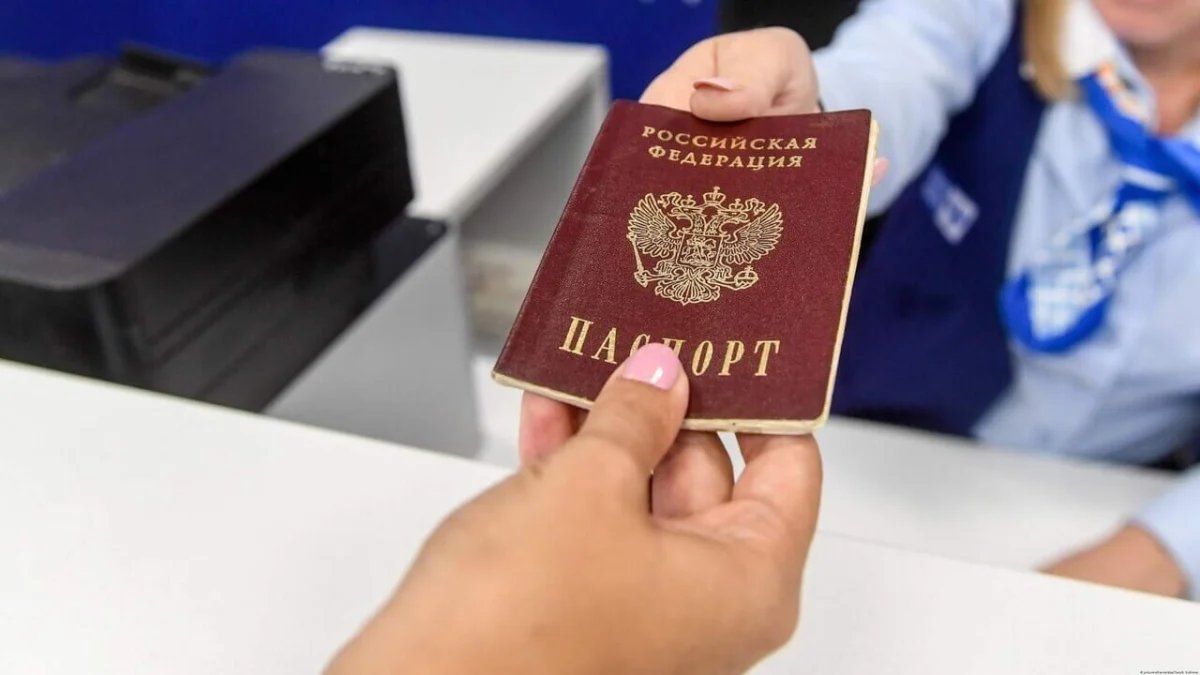
BRUSSELS — The European Commission has officially issued a landmark implementing decision enforcing rigorous new restrictions on visa applications submitted by Russian nationals across the entire European Union.
Effective immediately, European authorities have halted the issuance of multiple-entry Schengen visas to Russian citizens. Moving forward, Russian nationals will be legally required to submit a completely new visa application for every individual trip they plan to make to the European Union. Adopted simultaneously across all 29 member states belonging to the Schengen area, the sweeping directive marks a significant escalation in travel restrictions as the continent enters its fourth year of the ongoing conflict in Ukraine.
The decision is rooted formally in Article 24(2d) of Regulation (EC) No 810/2009, commonly known as the EU Visa Code. It follows a comprehensive, localized assessment conducted within the framework of local Schengen cooperation inside the Russian Federation. According to insights provided by SchengenVisaInfo.com, the policy was formulated in direct response to an urgent requirement for "close and frequent scrutiny" of visa applications. Brussels views these heightened security measures as a vital safeguard to preempt potential threats emerging from Russia’s war of aggression against Ukraine.
European Commission Vice-President Henna Virkkunen addressed the policy shift by emphasizing that the new rules are designed to counter mounting threats rather than serve as a symbolic political gesture against Moscow. Virkkunen pointed out that security risks, including deliberate sabotage, sophisticated disinformation campaigns, and disruptions linked to unmanned aerial vehicles, are persistently intensifying across the European continent.
The official implementing document explicitly highlights multiple systemic hazards, citing Russia’s weaponization of migration flows, acts of sabotage committed both within member state territories and across the international waters of the Baltic Sea, rising cyber and industrial espionage threats, and the potential misuse of travel visas to spread propaganda backing Russia’s military actions in Ukraine. Reinforcing this hardline stance, EU High Representative for Foreign Affairs Kaja Kallas took to social media to state bluntly that traveling to the European Union remains a privilege rather than an absolute right.
Limited Exceptions With Strict Requirements
To effectively plug potential loopholes and prevent circumvention, the newly minted restrictions apply exclusively to visa applications lodged directly at member state consulates operating within the Russian Federation. This geographical focus ensures that applicants cannot easily bypass the rules by seeking travel documents through diplomatic missions located in third countries.
Despite the stringent blanket ban, the framework allows for limited, highly regulated exceptions. Close family members of European Union citizens, as well as Russian residents already living legally within the bloc, may still be eligible to receive multiple-entry visas valid for a maximum duration of one year. However, this concession is conditional: these relatives must demonstrate that they have successfully obtained and lawfully used at least three separate visas within the preceding two years.
For the purposes of this legislation, eligible close family members are defined strictly as spouses, which includes registered partnerships, the children of a spouse under the age of 21, biological or legally adopted children, and the parents of either Russian citizens residing lawfully inside EU member states or of EU citizens themselves.
Professional transport workers face similarly rigorous qualifying thresholds. Individuals working in this sector—including seafarers, truck drivers, bus operators, and members of train crews applying strictly in their professional capacities—must have secured and lawfully utilized at least two visas within the prior two-year window to qualify for consideration.
Furthermore, the implementing decision carves out dedicated pathways for humanitarian cases, ensuring special consideration for dissidents, independent journalists, human rights defenders, representatives of civil society organizations, and their immediate family members. In individual cases deemed duly justified, member states retain the authority to issue multiple-entry visas valid for up to five years for these vulnerable demographics. Additionally, Russian dual nationals who hold citizenship in an EU member state remain fully exempt from the newly introduced regulations.
Moscow offered a swift and critical rebuke of the European Commission’s actions. Maria Zakharova, a spokesperson for the Russian Ministry of Foreign Affairs, was quoted by the TASS News Agency as remarking that Europe apparently has little need for solvent tourists while choosing to accommodate migrants and individuals fleeing mobilization in Ukraine. Meanwhile, domestic Russian experts have cautioned that the policy will disproportionately penalize ordinary citizens who maintain zero ties to the Kremlin, particularly given that hundreds of thousands of Russians have fled their homeland over recent years to escape state persecution or military conscription drafts.
Visa Issuance Statistics
Data published in the European Commission’s official visa statistics reveal that roughly 552,629 Schengen visas were granted to Russian citizens throughout 2025. Although this figure represents a modest increase compared to the 459,198 visas issued the previous year, the volume remains a fraction of the historical peak observed in 2019, when approximately four million visas were issued prior to the outbreak of Russia’s full-scale invasion of Ukraine.
An analysis of the 2024 issuance numbers indicates that Italy was the leading destination for Russian applicants, approving 152,254 visas. France followed closely by issuing 123,890 visas, while Spain authorized 111,537. Compared to various Eastern European member states that adopted near-total freezes, nations like Italy, Spain, France, and Hungary have historically sustained the most permissive visa issuance policies within the bloc.
Enforcement Challenges Remain
Under current European Union law, individual member states retain sovereign authority over their individual visa issuance decisions, meaning the Commission cannot unilaterally enforce a complete blanket ban on all Russian visitors. While the newly enacted implementing decision attempts to harmonize screening practices across national consulates, significant operational divergences persist across the continent.
Countries such as Estonia, Latvia, and Lithuania have enacted nearly comprehensive entry bans for Russian nationals. Conversely, nations like Hungary have maintained far more lenient policies. Earlier this month, Hungarian Prime Minister Viktor Orban signed a decree that extended a fast-track national visa scheme to eight countries, including Russia.
Addressing this fragmented administrative reality, European Commission spokesperson Markus Lammert defended the bloc’s overall trajectory. Lammert noted that through sustained policy actions over a two-year period, the European Union has successfully achieved an impressive reduction in the annual number of visas granted to Russian nationals, driving numbers down from four million toward the 400,000 threshold.
These latest restrictions build directly upon a foundational decision made by the EU in September 2022, which formally suspended the bilateral visa facilitation agreement with Russia. That initial step significantly lengthened administrative processing times and hiked application fees for Russian citizens seeking entry documents into Europe.
Documented Strategy on Visas by EU Planned in December
Looking ahead, the European Commission is scheduled to publish a comprehensive, bloc-wide visa strategy in December 2025. This upcoming blueprint will outline how European authorities intend to leverage visa policy as a geopolitical instrument to counter hostile Russian influence and reinforce external border security across all member states.
The forthcoming strategy is anticipated to recommend deeper institutional coordination among member states, alongside even stricter background screening protocols for visa applicants originating from nations officially deemed hostile to European Union interests.
This latest implementing decision directly mirrors ongoing intelligence assessments issued by multiple European governments in recent months, which have continuously warned of an elevated risk of Russian sabotage, espionage, and clandestine infiltration attempts across the continent.
| Source | : | Open Passport |
| Author | : | Evan Lee Salim |
| Editor | : | Open Passport Editorial Team |
