
Hidden Canadian Roots Can Stall Permanent Residence Applications Under New Citizenship Laws
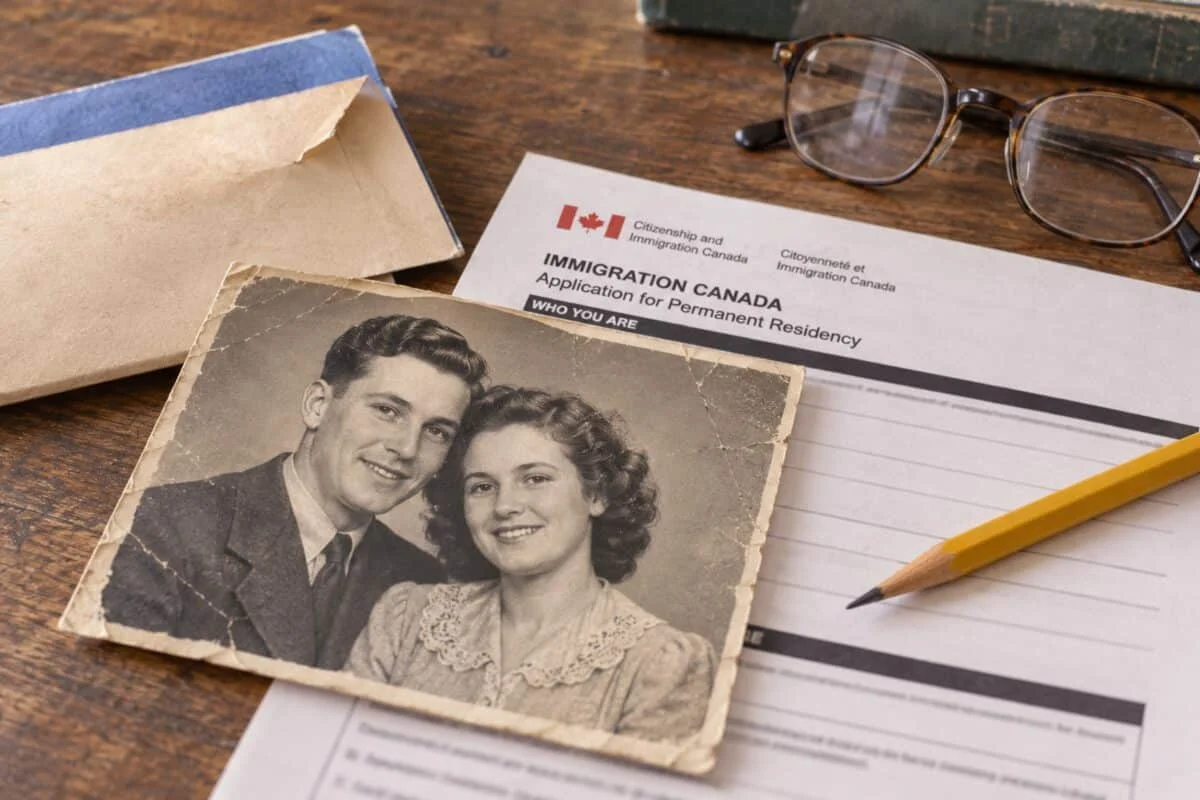
Immigration officials across Canada are halting permanent residence (PR) applications if there is reason to suspect that an applicant might already hold Canadian citizenship by operation of law.
According to Briannah Dale, a senior communications adviser at Immigration, Refugees and Citizenship Canada (IRCC), the department is currently unable to quantify exactly how many permanent residence files have been placed on hold. The uncertainty stems from the fact that individuals caught in this administrative overlap may unknowingly qualify for Canadian citizenship under newly enacted legislation.
The crux of the administrative challenge lies in Bill C-3, a sweeping legislative overhaul of Canada’s Citizenship Act that officially came into effect on December 15, 2025. The landmark bill eliminated the long-standing first-generation limit on citizenship by descent. As a result, individuals born before December 15, 2025, who can trace an unbroken lineage back to a Canadian ancestor, may now be recognized as Canadian citizens by descent, regardless of whether they have ever lived in the country or realized their eligibility.
This legal reality has inadvertently created a complex hurdle for many foreign nationals—particularly Americans with ancestral Canadian roots—who are currently navigating the standard immigration pipeline. Under Canadian immigration law, a person cannot simultaneously hold the status of a temporary or permanent resident while legally recognized as a Canadian citizen. Because citizenship is conferred automatically by operation of law rather than through a discretionary grant, individuals with a valid claim are technically considered citizens from birth, making them fundamentally ineligible for permanent resident visas or permits.
Dale explained that immigration officers have the authority to pause a permanent residence application even if the applicant has not formally applied for a citizenship certificate. This administrative freeze can be triggered whenever an officer uncovers compelling reasons to believe that an applicant may already possess citizenship under Canadian legal statutes.
Immigration experts emphasize, however, that having a Canadian grandparent is not an automatic guarantee of citizenship by descent. The qualifying ancestor must have held official citizenship status at the exact time the subsequent generation was born, and the genealogical chain of descent must remain entirely unbroken.
What Happens During Concurrent Applications?
The interplay between pending immigration filings and potential citizenship claims has raised significant questions regarding how the IRCC handles cases where individuals apply for both tracks simultaneously.
When an applicant submits proof of Canadian citizenship concurrently with a permanent residence application, the IRCC protocol dictates that the permanent residence file must be paused while the citizenship assessment is underway. If citizenship is formally confirmed by the department, the underlying permanent residence application is treated as withdrawn. Conversely, if the citizenship claim is ultimately rejected, the permanent residence application is restored to its original chronological place in the processing queue, allowing normal evaluation to resume.
Guidance released from the IRCC’s Immigration Representatives Mailbox paints a slightly different operational picture for certain applicants. According to correspondence published by immigration lawyer Steven Meurrens, individuals with pending permanent residence applications who show potential eligibility may be contacted directly by IRCC officials and advised to withdraw their immigration submissions in favor of pursuing a formal Proof of Citizenship or adoption application.
The mailbox advisory notes that individuals who believe they possess a legitimate claim based on family history should proactively submit an application for a citizenship certificate. While these operational directives provide a framework, the exact procedural path—whether a file is placed on administrative hold or formally withdrawn—can sometimes depend on the specific discretion of the individual processing officer handling the case.
Comparing Processing Timelines and Status Implications
Navigating the administrative divide between permanent residence and citizenship by descent involves weighing drastically different processing timelines and legal outcomes.
As of October 2026, published IRCC processing times for a standard proof of citizenship application hovered around 34 months, though these timeframes remain fluid and subject to departmental fluctuations. In comparison, standard immigration pathways often move significantly faster on paper. For instance, outside-Canada spousal sponsorships typically require approximately 18 months, while skilled worker applications processed through the Express Entry system generally see processing times closer to seven months.
Given the stark difference in wait times, applicants with legitimate ancestral claims might initially find it tempting to pursue the faster permanent residence route. However, the IRCC maintains a strict stance that individuals who qualify for citizenship by descent are barred from holding permanent resident documents.
Furthermore, acquiring status through citizenship descent yields fundamentally different legal outcomes than standard immigration. A citizenship certificate merely affirms a status that already exists by law; it does not require applicants to fulfill physical presence quotas inside Canada, pass a formal citizenship test, or participate in an official oath-taking ceremony—requirements that are mandatory for permanent residents seeking naturalization.
At the same time, IRCC representatives have clarified that individuals who already hold established permanent resident status will not have their current status revoked while awaiting the adjudication of a citizenship certificate.
Evaluating Family History and Future Implications
For prospective applicants with suspected Canadian lineage, the sequence in which they file paperwork has become critically important. Resolving ancestral citizenship questions prior to launching an immigration application can prevent applicants from investing time and resources into an immigration status for which they are legally ineligible.
Determining whether an individual qualifies as a Canadian citizen by descent often begins with a thorough examination of family history. Clear indicators include parents, grandparents, or earlier direct ancestors whose birthplaces are officially recorded within a Canadian province.
Other subtle genealogical markers, such as a family history of speaking French at home, distinctive French surnames, or historical roots tracing back to New England, can also point toward potential Canadian heritage. While these clues do not confirm a legal claim on their own, they help identify which ancestral branches warrant deeper genealogical research. Consulting older living relatives often proves to be the most efficient way to track down vital family records and documentation required to substantiate a claim.
The scope of a citizenship claim also impacts family members differently. Children born prior to December 15, 2025, generally inherit citizenship by descent and must apply for their own individual citizenship certificates. Spouses, however, are an exception; Canadian citizenship is strictly transmitted through direct lineage and adoption, not through marriage. For children born on or after December 15, 2025, additional statutory criteria apply, requiring the Canadian parent to demonstrate a cumulative physical presence in Canada of at least 1,095 days prior to the child’s birth or adoption.
| Source | : | Open Passport |
| Author | : | Lina Hope |
| Editor | : | Open Passport Editorial Team |
