
Nationwide Ground Stop Lifted After Major FAA Communication Failure Disrupts Air Travel
The Federal Aviation Administration officially ended a nationwide ground stop on Friday night, bringing a tentative halt to an extraordinary multi-hour crisis that crippled air travel across the United States. The sweeping stoppage was lifted at approximately 8:15 p.m. Eastern Time, following a major communication and technology failure that affected high-altitude air traffic control facilities responsible for managing flights between major airports.
While the lifting of the ground stop marks a significant step toward restoring normalcy, aviation authorities and industry analysts have warned that severe disruptions, cascading delays, and schedule adjustments are expected to linger well into the weekend. The technological breakdown struck during one of the busiest travel periods of the week, throwing airline schedules into immediate disarray and stranding hundreds of thousands of passengers at terminals nationwide.
According to live tracking data from FlightAware, the fallout from the system failure has been catastrophic for airline operations. By Saturday morning, airlines had already recorded more than 4,000 flight cancellations globally and domestically as carriers struggled to reposition aircraft and crew members. The situation was even worse on the day of the incident itself, with airlines forced to cancel over 9,000 flights on Friday alone, creating massive bottlenecks at airports from coast to coast.
The crisis began unfolding on Friday afternoon, prompting urgent responses from federal transport and security officials. During a televised press briefing held late Friday night, Homeland Security Secretary Markwayne Mullin addressed the nation to provide reassurance regarding the security of the country’s critical infrastructure. Mullin explicitly stated that, amid the unfolding chaos and initial public concern, there was no indication or evidence to suggest that the widespread system failure was the result of a cyberattack or any malicious foreign interference.
Earlier in the afternoon, Transportation Secretary Sean Duffy took to public briefings to outline the technical nature of the emergency as it was happening. Speaking at 3:36 p.m. ET, Duffy revealed that the Federal Aviation Administration had begun experiencing severe instability involving radar and communication systems at crucial air traffic control centers. Specifically, the technical glitches impacted Air Route Traffic Control Centers—the high-altitude facilities that oversee commercial and private aircraft flying between metropolitan airports—as well as Terminal Radar Approach Controls, commonly known as TRACONs, which manage aircraft arriving and departing within specific regional airspace domains.
At the exact moment the instability was detected and systems began faltering, Duffy noted that approximately 3,500 planes were actively airborne, traversing the skies across the United States. The sudden loss of reliable communication and radar stability forced air traffic controllers and agency supervisors to implement immediate safety protocols. To prevent any potential risk to the thousands of aircraft in flight, the FAA instituted a sweeping nationwide ground stop, halting all departing flights until engineers and technicians could diagnose and mitigate the root cause of the technical failure.
Providing further technical context during his briefing, Transportation Secretary Duffy offered a preliminary assessment of what went wrong within the agency’s digital infrastructure. Indicating that the core network components had buckled under pressure, Duffy stated that their switchers and routers had become overwhelmed, leading to the sudden instability that rippled across regional control centers and paralyzed the nation’s air navigation network.
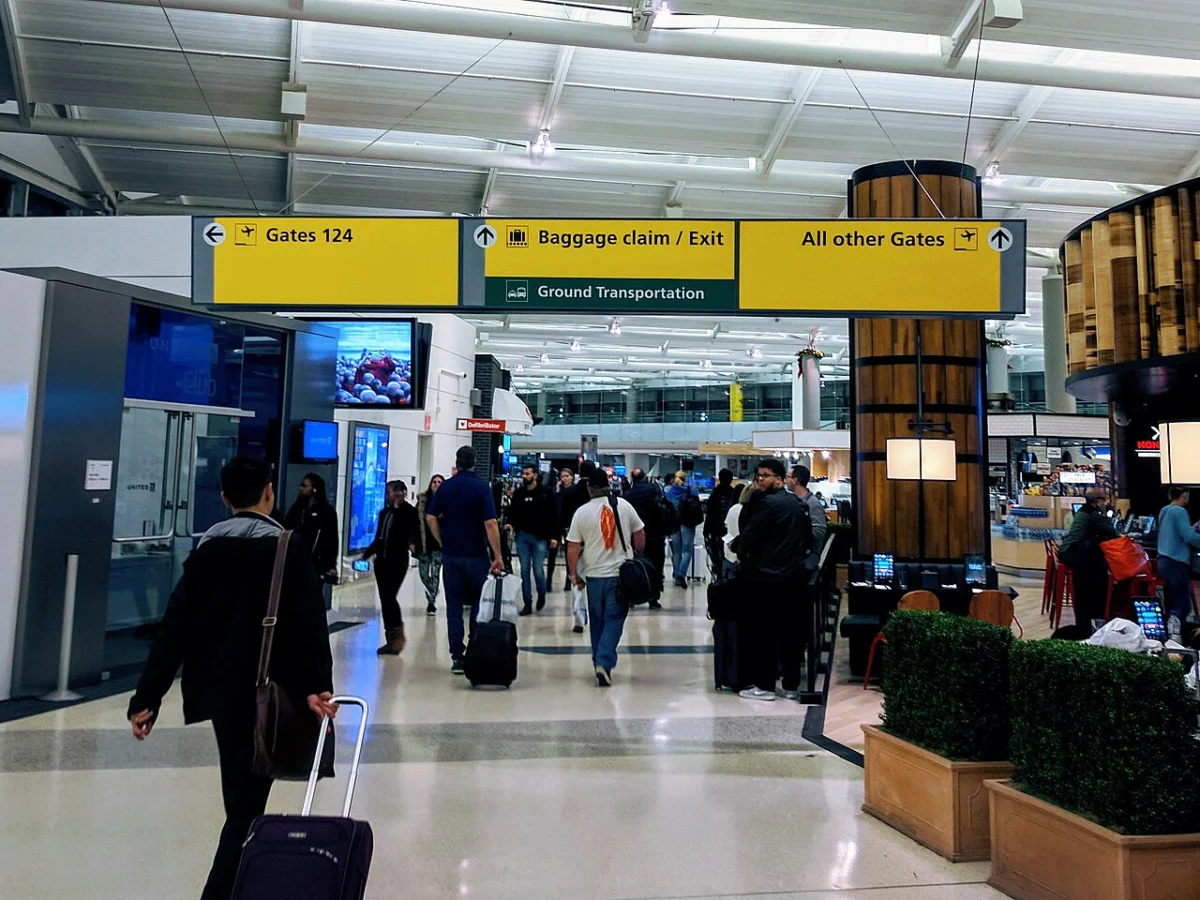
The sweeping ground stop immediately transformed major transport hubs into seas of frustrated travelers, crowded gate areas, and endless lines at customer service counters. Airports from major metropolitan centers like New York, Chicago, Atlanta, and Los Angeles experienced immense congestion as incoming flights landed but outgoing services remained completely frozen for hours. Passengers settled onto terminal floors, while airport operators scrambled to provide water, updates, and logistical assistance to crowds caught completely off guard by the sudden halt in operations.
Airlines, meanwhile, faced an immense logistical challenge once the ground stop was finally cleared at 8:15 p.m. ET. Because modern commercial aviation relies on tightly synchronized schedules where aircraft and flight crews fly multiple legs throughout a single day, a disruption of more than four hours creates a domino effect that takes days to unwind. Planes were left stranded out of position, flight crews timed out under federal safety regulations, and gate assignments were thrown into complete confusion.
As the weekend progresses, aviation officials continue to work alongside technical teams to monitor system stability and assist carriers in returning their fleets to regular schedules. Travelers booked for weekend flights have been strongly advised by airlines and federal authorities to check their flight status directly with carriers before heading to the airport, as airlines work through the massive backlog of delayed and canceled itineraries left in the wake of Friday’s unprecedented communication breakdown.
| Source | : | Open Passport |
| Author | : | Pevita Pearce |
| Editor | : | Open Passport Editorial Team |
