
Unifying HR and Operations is the Key to Guest Experience and Staff Retention, Says Sandman Hotel Group Leader
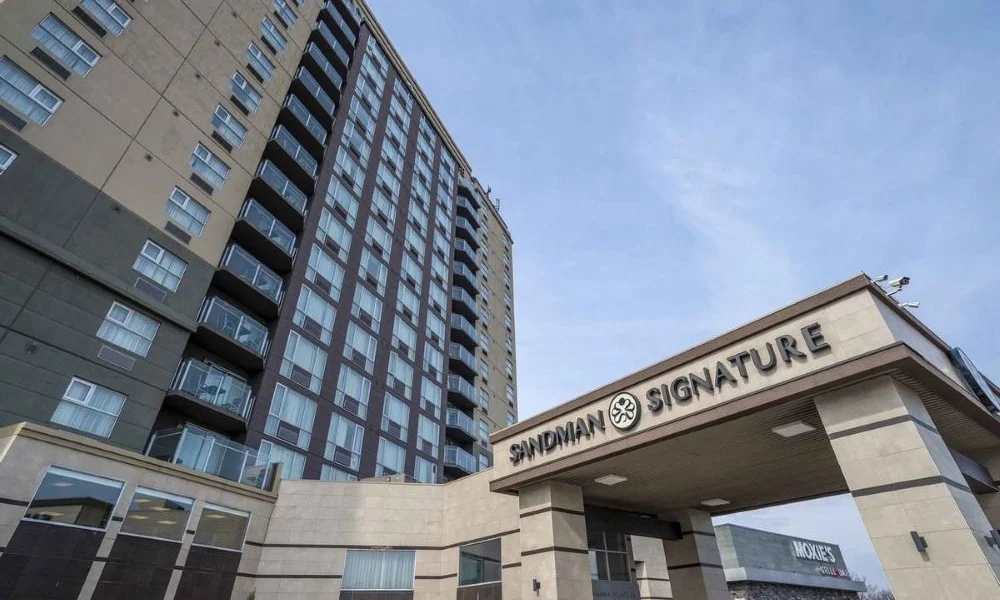
In the fast-paced and demanding world of modern hospitality, the traditional boundaries separating human resources, quality assurance, and daily operations are increasingly proving to be artificial silos. For multinational hospitality organizations managing geographically diverse workforces, aligning these critical functions is no longer just an administrative preference—it is an absolute operational necessity.
Operating more than 60 properties across Canada, the United Kingdom, and the United States, Sandman Hotel Group and Sutton Place Hotels understand the profound complexities of this landscape. Navigating workforce challenges across multiple international jurisdictions requires a cohesive strategy that bridges the gap between back-of-house administration and frontline execution. At the heart of this strategy for the Vancouver-based hospitality company is a dual leadership model embodied by Treva Gardner, who serves as the Director of Human Resources and Quality.
Speaking at HRFest Canada 2026 in Toronto, Gardner shared her insights on why integrating HR, quality control, and operational strategy changes everything for both employee retention and the overall guest experience. According to Gardner, treating these critical functions as separate entities is a recipe for organizational friction. Instead, the company operates under the core conviction that operational quality and human resources are deeply intertwined.
“Quality in operations and quality in HR are two sides of the same coin,” Gardner told HRD Canada. “You can have the best brand standards in the world, but if you don’t have the right people, then you’re not going to deliver the right quality to the team and to the guests.”
This philosophy—that the employee experience and the guest experience are inseparable—has fundamentally shaped how Sandman Hotel Group approaches talent acquisition, workforce planning, and its overarching strategic roadmap over the past two years. By ensuring that human resources and operational quality walk hand-in-hand, the organization aims to build a resilient foundation capable of withstanding industry-wide pressures.
Two Brands, One People Philosophy
Sandman Hotel Group manages a diverse portfolio, balancing value-focused properties under the Sandman banner with high-end luxury accommodations under Sutton Place Hotels. Naturally, the day-to-day expectations of guests vary significantly depending on which brand they are visiting. A guest staying at a value-focused hotel looks for consistency, efficiency, and comfort, whereas a luxury patron at a Sutton Place property expects hyper-personalized, bespoke service.
Despite these differing brand promises and guest profiles, Gardner emphasizes that the underlying people philosophy remains identical across the board. Whether an employee is working in a high-end luxury environment or a bustling value-focused location, the guiding principles of leadership do not change.
“Even though they’re two different brands, it all comes down to leadership and treating people with respect and dignity,” she notes.
This inclusive approach to workplace culture is deeply rooted in the company’s institutional memory. Gardner recalls a guiding principle imparted by a mentor who dedicated more than four decades of service to the hotel group. It is a phrase she continues to return to when navigating organizational challenges: “There is nothing different about us, it’s just our jobs we do.”
For Gardner, the implication of this philosophy is both straightforward and profound. It establishes a workplace culture where hierarchical titles take a backseat to mutual respect. Whether an individual is serving as the Chief Operating Officer or working diligently on the housekeeping team, fundamental respect remains non-negotiable. This egalitarian mindset helps foster a unified corporate culture, breaking down barriers between corporate leadership and frontline hotel staff.
The Retention Window That Matters Most
While the global hospitality industry has largely rebounded from the unprecedented employment disruptions of the pandemic era, persistent hurdles remain. High turnover rates and long-term retention gaps continue to plague the sector, threatening operational stability and service consistency. According to the Hotels Canada 2026 Annual Workforce Report, workforce shortages affected four in 10 hotels and resort properties during the 2025 peak season, while more than half experienced similar staffing gaps during the off-peak season that same year.
Within this challenging environment, Gardner’s strategic focus zeroes in on a critical timeframe: the one-to-five-year employment window. According to her research and internal observations, this is the pivotal period where hospitality organizations either successfully build lasting employee loyalty or permanently lose talent to competitors.
“We try and look at what makes it easier or harder for somebody to stay than what makes somebody leave,” Gardner explains. “Because that’s where the difference is, if you can retain people versus high turnover.”
While the organization takes pride in its cohort of long-term veterans, Gardner’s team places intense strategic emphasis on employees who have crossed the one-year threshold up to their fifth year of service, as turnover risks remain elevated during this phase. Addressing this vulnerability requires more than just competitive compensation; it demands a concerted effort to make employees feel genuinely valued and integrated into the broader corporate family.
“We’re trying to create memories with those people so they stay and become loyal, but it is essentially about how we treat them and how they feel as part of the wider group,” she says.
Extensive research into employee retention and workplace satisfaction consistently demonstrates that when workers feel supported and recognized by their leadership, direct improvements follow in both daily productivity and organizational culture. In the hospitality sector, where employee morale directly translates into guest satisfaction, this connection is especially acute.
To address these retention gaps proactively, Sandman Hotel Group has leaned heavily into cross-functional collaboration over the past two years. Gardner explains that the company’s strategic plan has prioritized breaking down traditional corporate walls, ensuring that human resources, commercial strategy, training, and operations all maintain a permanent seat at the same table.
“We’re all at the table together, we all have a voice,” Gardner says. “If a gap comes up, that’s where we discover it, we fix it, and we work together from all aspects—whether it’s commercial strategy, operations, HR, or training, it all interconnects.”
This deep cross-functional integration is the initiative the leadership team is most proud of, reflecting a broader evolution in modern human resources. Effective HR leadership cannot operate in a vacuum, separated from the operational realities and commercial pressures felt by the teams delivering the guest experience day in and day out.
AI as a Tool for People Work
As artificial intelligence rapidly transforms administrative workflows, automated processes, and data management across virtually every major industry, the hospitality sector faces unique challenges and opportunities. Gardner notes that the hospitality sector has a distinct stake in getting this technological transition right.
The primary risk identified by Gardner is not that AI will displace frontline hospitality workers or replace human staff entirely. Instead, the genuine danger lies in an overreliance on digital screens, which risks eroding the authentic human contact and personal connections that fundamentally define the hospitality experience.
“At the end of the day, it’s a tool. It’s an assistant,” Gardner emphasizes. “We want to use it to make people’s lives easier, not make more work from it.”
By leveraging AI to handle time-consuming administrative burdens, routine scheduling, and back-end paperwork, Gardner envisions a future where technology actually protects and enhances the human element of the industry. The time reclaimed through smart automation should be redirected toward what hospitality depends on most: the capacity of managers and staff to be genuinely present with their colleagues and guests.
For people teams and HR professionals, this means utilizing reclaimed hours to focus on understanding, developing, and retaining staff rather than getting bogged down by bureaucratic paperwork.
“[AI] helps us put the people back in hospitality instead of staring at a screen,” Gardner says. “Being able to talk to a guest, being able to talk to a colleague, being able to think about the greater, bigger picture that a computer can’t do.”
Transformation Success Means Critical Thinking and Data Literacy
However, embracing technological transformation does not mean adopting new systems blindly or uncritically. As AI fluency rapidly emerges as a vital competency for human resources leaders across North America, Gardner stresses that fundamental digital skills are non-negotiable for any modern corporate team.
In particular, employees must develop robust critical thinking and data literacy to ensure that technology serves as an asset rather than a liability. Workers must be willing to question AI-generated outputs and verify that automated insights accurately reflect the underlying operational reality.
“They need to challenge it. They need to not believe it is 100% true,” she warns. “They need to understand data literacy, to make sure that the statistics that are coming out actually match what is going in.”
Looking ahead, Gardner believes the overarching challenge for hospitality HR leaders over the next two years will be mastering this delicate integration balance. Successfully deploying AI to streamline administrative loads while simultaneously reinforcing a vibrant corporate culture of genuine customer service will determine which organizations thrive and which fall behind.
“If you don’t have the customer service excellence and the belief in customer service—and actually looking up from your phone but still using AI—you’re not going to win,” Gardner concludes.
| Source | : | Open Passport |
| Author | : | Muslim |
| Editor | : | Open Passport Editorial Team |
