
Balancing Rewards and Revenue: Airline Loyalty Leaders Discuss the Future of Frequent Flyer Programs
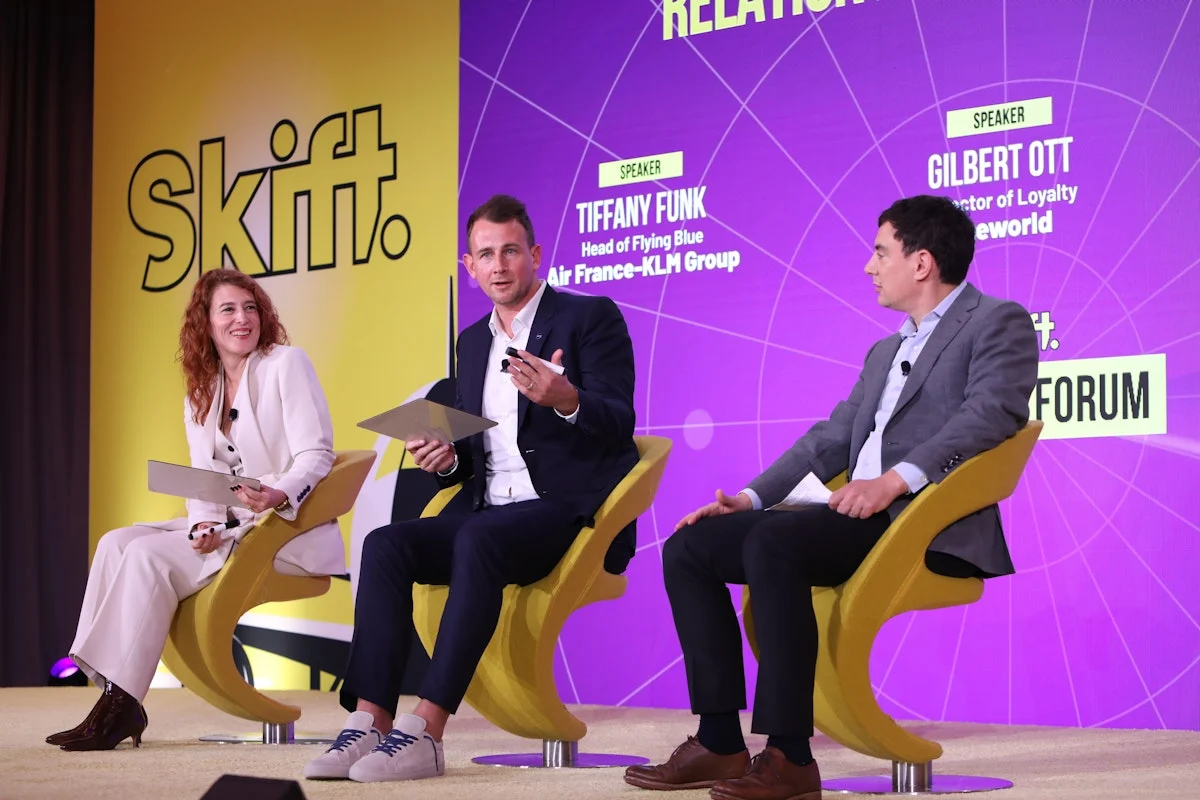
The modern landscape of commercial aviation is facing a complex balancing act, where keeping frequent flyers happy often clashes with the fundamental need to protect airline profitability. This tension took center stage at the recent Skift Aviation Forum, where top loyalty executives gathered to debate the future of airline reward ecosystems.
The discussion, titled "The Decision Brief," brought together industry leaders Tiffany Funk, Head of Flying Blue at Air France-KLM, and Gilbert Ott, Director of Loyalty for the oneworld alliance. The high-level panel was moderated by Brian Sumers, Editor of The Airline Observer, who guided the conversation through the intricate economic realities and consumer expectations shaping today’s frequent flyer programs.
The Decision Brief
As airlines continue to navigate post-pandemic travel demand, fluctuating operational costs, and shifting consumer habits, loyalty programs have evolved from simple marketing tools into powerhouse financial assets. However, this evolution has brought new friction points. Passengers frequently express frustration over the rising costs of redeeming miles, the scarcity of reward seats during peak travel periods, and the overall complexity of navigating modern loyalty tiers.
Conversely, airlines must carefully manage inventory. Every seat given away to a loyalty program member using miles represents a potential revenue-generating ticket sold to a cash-paying customer. Striking the right balance between customer satisfaction and seat yield has become one of the most critical challenges facing airline executives today.
The Takeaway
The central takeaway from the discussion at the Skift Aviation Forum is that airline loyalty programs must urgently make rewards easier to use while simultaneously safeguarding the commercial value of the seats customers redeem.
During the panel, Air France-KLM’s Tiffany Funk and oneworld’s Gilbert Ott shared strategic insights into how major carriers and global alliances are attempting to resolve this ongoing
tension. They emphasized that closer coordination with airline revenue management teams is no longer optional. Traditional silos between commercial loyalty divisions and network yield management are breaking down as airlines seek holistic approaches to inventory control.
Furthermore, the executives discussed how more flexible partner pricing structures can create a more resilient ecosystem. When partner airlines can dynamically price and trade reward inventory with greater agility, it opens up new avenues for members to burn their miles without eroding the underlying value of the primary carrier’s seat map.
Clearer reward offers were also highlighted as a necessary step forward. For years, frequent flyer programs have grown increasingly opaque, with complicated zone charts giving way to dynamic pricing models that often leave consumers guessing about the true cost of a redemption. Simplifying these communications and offering transparent value propositions can help restore trust among passengers who feel alienated by recent devaluations.
Ultimately, Funk and Ott agreed that the long-term sustainability of frequent flyer programs depends on finding a harmonious middle ground. Airlines can no longer afford to treat loyalty programs as isolated marketing departments, nor can they treat frequent flyers as an afterthought in revenue planning. By aligning customer expectations with sustainable program economics, the industry hopes to build a more predictable and rewarding future for both the airlines and the millions of travelers who depend on them.
| Source | : | Open Passport |
| Author | : | Neng Nana |
| Editor | : | Open Passport Editorial Team |
