
Navigating the Aer Day Sling 3 in 2026: What to Know Before Buying Remnant Stock
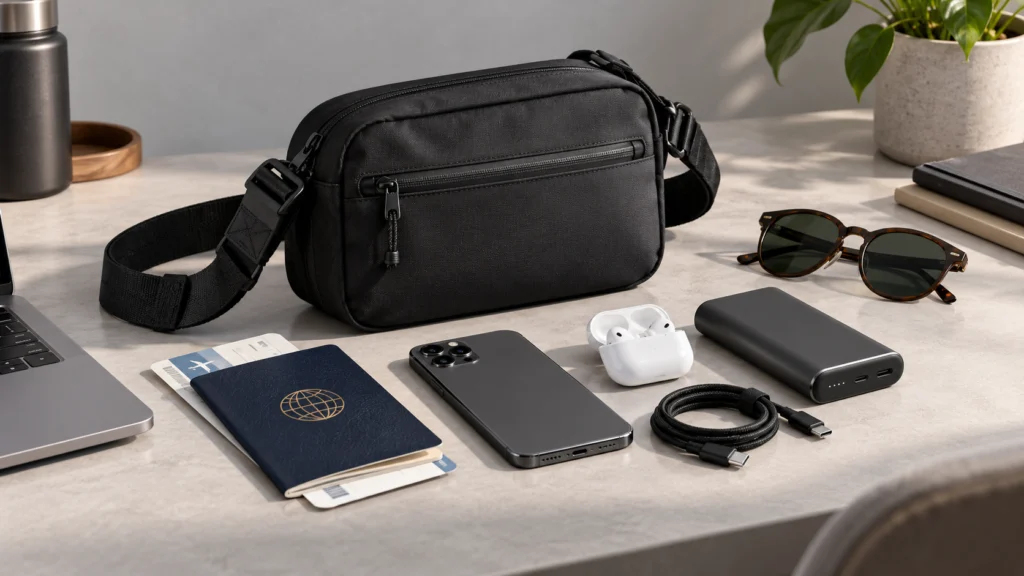
The Aer Day Sling 3 earned widespread attention among travelers and urban commuters as a compact, reliable organizer for passports, phones, portable power banks, and other daily essentials. In 2026, however, prospective buyers face a more pressing question than pocket layout or hardware choice: which specific version of the Day Sling 3 is actually available, and why is it still appearing on the market when Aer has transitioned to its newer Day Sling 4 generation?
This review and market analysis of the Aer Day Sling 3 is based on manufacturer specifications and inventory availability checked on October 21, 2026. Because this assessment relies on desk research rather than a hands-on physical test, the broader market context takes center stage. Aer’s standard product URL for the Day Sling 3 now redirects to a retired page, while surviving pages for the X-Pac, Ultra, and Max variants explicitly point consumers toward the newer Day Sling 4 iterations. Consequently, purchasing a Sling 3 today is primarily a clearance, remaining-stock, or secondhand retail decision.
Current Status: Know the Version Before Buying
Aer’s official product pages reveal a transitional lineup that requires careful navigation. The standard Day Sling 3 URL is fully retired, with no manufacturer price currently listed. Meanwhile, specialty iterations like the Day Sling 3 X-Pac and Day Sling 3 Ultra are marked as sold out or older models, with links directing users to the Sling 4 X-Pac and Ultra equivalents. The larger Day Sling 3 Max and Max X-Pac are similarly categorized as older models sharing space with the current Day Sling 4 Max.
Because prices and stock fluctuate rapidly, retail dynamics require vigilance. Independent resellers and secondary marketplaces frequently use the designation "Day Sling 3" loosely to describe remaining inventory. Buyers must verify exact material compositions, physical dimensions, buckle hardware, and interior fabric colors before committing funds to a third-party offer.
Aer Day Sling 3 Specifications
The surviving official product documentation provides robust measurements for the various 3-liter fabric variants that built the bag’s reputation.
The Day Sling 3 X-Pac utilizes a rugged VX-42 X-Pac exterior, paired with dependable YKK zippers, Duraflex hardware, and a high-visibility orange interior liner. It incorporates a front quick-access pocket featuring an integrated keychain, comprehensive internal organization, a secure rear pocket designed for passports or wallets, and a magnetic Fidlock fastener for swift removal.
The Day Sling 3 Ultra retains the exact stated dimensions, overall volume, and weight of its sibling, but shifts material science toward an Ultra400X exterior paired with a nylon ripstop liner. It similarly relies on a Fidlock magnetic V-BUCKLE to secure the strap.
For those requiring more room, the Day Sling 3 Max expands the envelope into a larger format. Its distinguishing characteristic is an interior tablet sleeve engineered to accommodate devices up to 11 inches. The Max X-Pac variant utilizes VX-42 X-Pac material and registers a slightly heavier build, though official pages listed it as sold out during inventory checks.
What Fits—and What Does Not
A standard 3-liter sling is best approached as an organized replacement for traditional pockets, capable of housing a smartphone, passport, cardholder, wireless earbuds, a compact wall charger, charging cables, sunglasses, and occasionally a small point-and-shoot camera or a collapsible water bottle depending on the gear’s profile. Crucially, the manufacturer does not market an 11-inch tablet pocket for the standard 3-liter Sling 3 variants.
Conversely, the 6-liter Day Sling 3 Max explicitly accommodates an 11-inch tablet within its dedicated compartment. Industry designations such as "up to 11 inches" refer strictly to diagonal screen measurements rather than a guarantee that every specific device and bulky protective case combination will slide effortlessly inside. Buyers should cross-reference their device’s physical outer dimensions with the bag’s internal capacity while accounting for the clearance needed around the zipper track.
Neither version functions as a laptop bag. Digital nomads and professionals carrying even a compact 13- or 14-inch notebook require a dedicated backpack, briefcase, or a larger alternative such as Aer’s Tech Sling 3, which the manufacturer designs specifically to fit up to a 14-inch laptop.
Organization and Access
Throughout its product lifecycle, Aer has emphasized a wide-opening main compartment, a streamlined quick-access front pocket, thoughtful internal partitions, and a secure rear pocket across the Sling 3 family. This layout is optimized for transit days, allowing frequently accessed items to remain near the front while sensitive documents like passports or cards stay pressed securely against the wearer’s body in the rear compartment.
The inclusion of a magnetic buckle facilitates rapid removal when passing through security checkpoints or adjusting gear, though it also warrants mindful placement in dense urban environments. While a rear-facing pocket remains significantly more secure than an outward-facing compartment, no fabric bag is entirely theft-proof. Best practices dictate wearing the bag with the zipper orientation facing inward toward the body, avoiding overt displays of travel documents during routine transactions, and securing important papers in hotel safes when they are not needed for the day’s immediate itinerary.
Materials and Rain Limitations
Advanced material names can occasionally be misinterpreted as waterproofing guarantees. However, Aer’s official documentation clarifies that its bags are strictly water-resistant rather than waterproof. Because the seams are left untaped, prolonged exposure to heavy rain will eventually allow moisture to penetrate the fabric shell.
Material choices primarily influence tactile feel, structural stiffness, and weight rather than altering this fundamental weather limitation. Cordura models offer a classic, durable nylon hand-feel; X-Pac provides added structural rigidity and a technical laminated texture; and Ultra prioritizes a high strength-to-weight ratio. For travelers safeguarding electronics, smartphones, or paper passports during sustained downpours, utilizing an internal waterproof pouch remains a necessary precaution regardless of the sling’s exterior shell.
Choosing between sizes ultimately depends on the intended loadout. The 3-liter form factor is ideal for streamlining pocket carry without the bulk of a tablet, whereas the Max model is tailored for users whose daily routines revolve around an 11-inch tablet, over-ear headphones, or heavier power bricks.
However, the Max’s doubled capacity is not universally advantageous. When packed to maximum density, a single-shoulder sling can prove less ergonomically comfortable than a small, balanced backpack. Buyers are advised to plan purchases around their heaviest realistic day-to-day load rather than the absolute maximum volume the bag can theoretically contain.
Day Sling 3 vs. Day Sling 4
Evaluating the older Day Sling 3 against the current Day Sling 4 generation reveals distinct design shifts. The contemporary Day Sling 4 is slightly more compact at 2.5 liters, measuring roughly 9.5 by 6 by 3 inches and weighing 0.74 pounds. It introduces a padded tablet pocket scaled for devices up to 8.3 inches, a hidden tracker pocket, drop-in front organizers, a removable and repositionable keychain, and an integrated hanging loop.
Meanwhile, the Day Sling 4 Max maintains a 6-liter volume and accommodates 11-inch tablets, though its physical dimensions feature a slightly deeper profile than its predecessor. Opting for the current generation eliminates the ambiguity of purchasing discontinued inventory while ensuring full eligibility for contemporary sales promotions and straightforward return processes.
The Sling 3 remains a viable purchase primarily when buyers specifically prefer its distinct aesthetic or legacy organization, or when substantial clearance discounts offset the presence of older stock. Conversely, the Sling 4 emerges as the more sensible choice whenever retail pricing is comparable, a small tablet sleeve is required, or purchasing directly from the manufacturer with guaranteed stock availability is a priority.
Price, Shipping, Returns, and Warranty
Aer maintains a U.S. return policy accepting unused products in original condition within 30 days of delivery, though a $10 return-label fee applies to items priced at $99 and above. International return pathways are more restrictive, with specific routes established for Canada and the European Union while remaining global orders are generally treated as final sales. Local import duties, taxes, and shipping fees vary considerably by destination.
The brand backs its products with a lifetime warranty covering manufacturing defects, subject to physical evaluation upon receipt. Eligible items are repaired or replaced at the company’s discretion, with typical turnaround times ranging from three to four weeks—though processing may extend beyond six weeks during peak holiday or release periods.
Purchasing secondhand or through unauthorized resellers forfeits these direct manufacturer protections. Buyers acquiring remaining stock from third parties are advised to request original proofs of purchase, inspect the integrity of the magnetic buckles and zippers, and confirm store return policies before paying a premium for discontinued colors or rare fabric editions.
Who Should Buy It?
The Aer Day Sling 3 remains well-suited for travelers seeking a structured, minimalist organizer for passports and everyday pocket items, as well as bargain hunters who locate remaining stock or secondhand units at a meaningful discount.
It is less appropriate for consumers shopping at full original retail prices when the updated Day Sling 4 is available for a similar investment, individuals requiring guaranteed modern features like dedicated tracker pockets or small tablet sleeves, or professionals seeking a true laptop-carrying solution.
Buying Checklist for Remaining Stock or Secondhand Listings
When evaluating a remaining stock offering or a secondhand listing for an Aer Day Sling 3, prospective buyers should systematically verify the exact model variant being offered, as standard, X-Pac, Ultra, and Max configurations feature different materials and dimensions. It is also essential to confirm the precise capacity—determining whether a 3-liter or 6-liter model is required based on the presence of an 11-inch tablet—and inspect the functionality of the Fidlock magnetic hardware, zippers, and interior linings. Finally, buyers must weigh the asking price against the cost of the current Day Sling 4 generation to ensure the discount genuinely justifies purchasing previous-generation inventory.
Frequently Asked Questions
The standard product URL for the Day Sling 3 is retired, and surviving variant pages redirect to newer Day Sling 4 models, meaning it should be treated as a previous-generation product even where remaining stock is advertised. Regarding device compatibility, the 6-liter Day Sling 3 Max is specified for tablets up to 11 inches, whereas the surviving 3-liter pages make no such claim, necessitating a physical check of device and case dimensions.
In terms of weather protection, the bags are water-resistant rather than waterproof, featuring untaped seams that can admit moisture during extended exposure. Material choices like Cordura, X-Pac, and Ultra offer different tactile qualities and durability profiles, but none eliminate the need for internal waterproof pouches during heavy rain. Finally, paying original retail prices for a Sling 3 in 2026 is generally unadvisable unless a buyer specifically prefers the older generation’s layout, as the Sling 4 starts at $79 and often matches the legacy pricing.
Bottom Line
The Aer Day Sling 3 remains a capable and well-organized compact carry option, but the purchasing decision in 2026 hinges entirely on version availability and pricing rather than marketing hype. The 3-liter variants excel at organizing everyday essentials, while the 6-liter Max serves as the designated tablet option. Because the Sling 4 generation is current and frequently priced comparably, securing a Day Sling 3 makes sense primarily when its specific configuration is preferred or when a meaningful discount validates buying previous-generation stock.
| Source | : | Open Passport |
| Author | : | Lina Irawan |
| Editor | : | Open Passport Editorial Team |
